
From Acquisition to Auction


Fleet experts share strategies for improving remarketing outcomes.
Choosing a fleet vehicle based solely on its purchase price or fuel economy, without considering its eventual resale value, can result in a hefty increase in total cost of ownership (TCO).
Experts agree that maximizing the remarketing value of a vehicle should be top of mind long before that vehicle is sent to auction. “Resale should be considered right from the beginning, because depreciation is such a large component of a vehicle's lifecycle cost,” says Greg Grant, Regional Sales Director at Foss National Leasing.
Holly Vollant, Manager, North American Remarketing at Holman agrees. “Resale value should be a core component of the TCO calculation, not an afterthought,” she says. “In many fleets, depreciation represents the single largest ownership cost, making residual value a critical factor in vehicle selection.”
“Resale value should be a core component of the TCO calculation, not an afterthought.”
- Holly Vollant, Manager, North American Remarketing, Holman
Procurement sets the stage
According to Vollant, the most successful fleets view acquisition, operation, and remarketing as one continuous asset strategy, rather than separate decisions. That means considering not only how a vehicle will perform in its intended application, but also how attractive it will be to a future buyer.
“Some of the most important procurement decisions include selecting vehicle models and brands with strong long-term demand and proven resale performance, developing vehicle specs that appeal to the broadest pool of potential buyers, and avoiding over-specialization that can limit future buyers,” she says.
Grant emphasizes the importance of selecting a vehicle that is appropriate for the job. He points to factors such as ergonomics, health and safety, payload requirements and the intended application as important considerations.
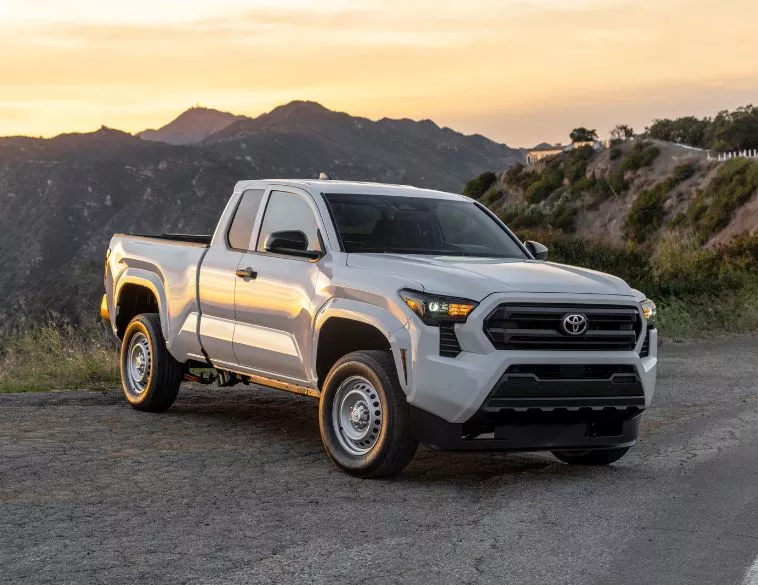
The challenge is finding the right balance between operational suitability and future resale demand. For example, a regular-cab pickup might be the most appropriate and cost-effective choice for a particular fleet application, Grant explains. However, a crew-cab configuration may appeal to a much larger pool of used-vehicle buyers.
The pros and cons of specs
Vehicle specifications can have a substantial influence on remarketing performance. Vollant says mid-level trim packages often offer a useful balance between desirable features and acquisition cost. She identifies all-wheel drive, advanced safety technologies, crew-cab configurations and practical payload capacities as features that can support demand in the used vehicle market.
Neutral colours and mainstream specifications can also help attract a broader range of potential buyers, she adds.
The Element team—Chad Saliba, Director, EV Engagement and Operations; Zach Van de Lagemaat, Manager, National Auction Operations; and Aneerudha Borkotoky, Director, Electrification Strategy—caution against assuming that a particular configuration will always deliver stronger returns.
“It’s easy to rattle lines off like ‘SUVs always win,’ because the data is still very model/market specific,” says Van de Lagemaat. “But more broadly, the secondary market tends to reward utility and usability: practical body styles, competitive real-world range, commonly desired configurations, and equipment that expands the buyer pool rather than narrows it.”
Ultimately, specialization can create residual risk, says Van de Lagemaat. “A very narrowly configured vehicle may be perfect for the first fleet owner, but difficult for the second owner.”
The same principle applies to upfits. Fleets that remove valuable equipment before disposal, or fail to communicate investments made in vehicle technology and maintenance, may miss opportunities to improve resale results.
Forecasting residual values
Predicting what a vehicle will be worth three to five years into the future is challenging, particularly in a market influenced by changing consumer preferences, vehicle supply, manufacturer pricing and economic conditions.
Grant describes the exercise as a “crystal ball,” but says historical data can help fleets make more informed decisions. He recommends examining historical resale performance while accounting for unusual market conditions, including the exceptionally high used-vehicle values experienced during the pandemic.
Fleet managers should also consider current inventory levels, manufacturer pricing and incentive strategies, and broader economic and political developments.
Vollant similarly recommends looking beyond historical depreciation trends. “Current market data on comparable vehicles often provides the best benchmark for future forecasting,” she says.
She advises fleets to use scenario planning, rather than relying on a single residual-value estimate. “A vehicle is only worth what buyers are willing to pay,” she adds.
Remarketing EVs
Electric vehicles (EVs) add another layer of complexity to the procurement and remarketing equation.
According to Grant, EV residual values remain difficult to predict because of limited historical data, rapidly evolving technology and uncertainty surrounding future demand. “We are taking a more aggressive depreciation line on EVs because of the uncertainty in residual values,” he says.
Vollant says EVs have experienced greater depreciation volatility than conventional gasoline, diesel and hybrid vehicles. Rapid improvements in driving range, charging speeds and battery technology can make older models less competitive, Grant explains. Manufacturer price reductions and incentives on new EVs can also influence used vehicle pricing.
The Element team, however, cautions against simply assuming that EVs depreciate faster than internal-combustion vehicles.
“Yes, historically they have been more volatile, but we wouldn’t say they simply depreciate faster,” says Van de Lagemaat. “A big part of what we experienced over the last several years was not battery degradation. It was new-vehicle price resets, incentives, rapidly changing technology, policy changes, and an immature used market.”
They note that recent market data has shown signs of stabilization in EV valuations. “We were already seeing modest improvements in valuations YOY of 5 to 8%, and that was before the oil supply was impacted. Add that in the mix, and some models have seen 10 to 20% appreciation YTD,” Van de Lagemaat explains.
Buying for the second owner
For fleets acquiring EVs today, the question is not simply how well a vehicle meets current operational needs. It is also whether the vehicle will remain competitive when it reaches the secondary market.
“Healthy battery / documented battery condition” and “Strong real-world range” are among the factors the Element team identifies as important to used EV buyers.
They highlight the growing value of battery-health reporting. “Buyers overwhelmingly prefer, and bid much more liberally, on EVs that include battery health scores in their inspections,” Van de Lagemaat says.
Ultimately, the Element team recommends that fleet managers adopt a straightforward approach to procurement: “It’s simple – buy for the second owner too, not just the first.”
That means selecting vehicles with broad market appeal, avoiding unnecessary specialization, establishing an appropriate replacement strategy and maintaining detailed vehicle and battery health records throughout the asset's lifecycle.
“The best remarketing decisions are made the day the vehicle is ordered,” Van de Lagemaat says. “A fleet manager should always be thinking about resale and its timing when choosing a vehicle.”
Acquisition cost and operating savings still matter, Van de Lagemaat explains, “but the vehicle’s total lifecycle economics can change significantly if the residual assumption is wrong by several thousand dollars.”
The bottom line, according to Element: “The decision made at procurement can ultimately have as much impact on remarketing performance as anything the remarketer does three or four years later.”