
ABB E-mobility launches electric truck power management tech
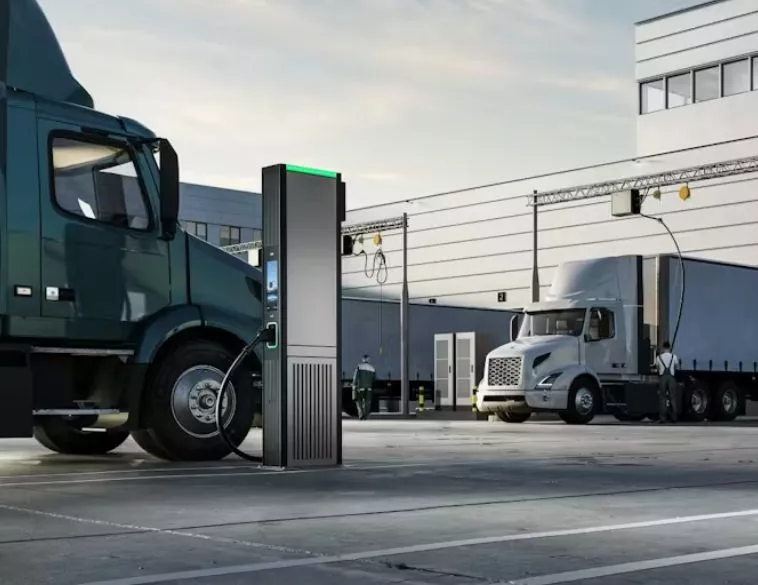
ABB E-mobility, the electric transportation arm of technology company ABB, has launched two new charging infrastructure systems designed for commercial vehicle fleets and high-capacity depots: the OM M-Series and OM X-Series.
The OM M-Series and X-Series are power conversion cabinets for electric vehicle (EV) power dispensers. The equipment is designed for depots that want to scale their charging capacity as fleet demand increases.
Both products use a similar architecture, allowing charging depots to swap out the lower-power M-Series for the more serious X-Series as their demand grows.
The OM M-Series: A more capital-light charging commitment
The M-Series includes four models with power configurations that scale from 200 kW to 1.2 MW:
- M200: up to 200 kW (one cabinet)
- M400: up to 400 kW (one cabinet)
- M800: up to 800 kW (two 400-kW cabinets)
- M1200: up to 1.2 MW (three 400-kW cabinets)
For reference, the vocational Kenworth T880E has a 350 kW peak charge rate and can charge overnight for significantly less power. The 400-kW cabinet from the M-Series handles the fastest charging needs of Class 8 electric trucks—or many trucks’ overnight charging needs—making it a good size for small-scale fleet electrification without a large upfront capital investment.
The system is air-cooled and occupies a relatively small footprint. ABB E-mobility claims the M-Series has a power density of 625 kW per square meter. The M-Series dynamically distributes its power capacity across up to 24 charge points based on real-time demand.
The OM X-Series: Megawatt-scale fleet charging
The X-Series is meant for the full-scale charging depot: fleets with an extensive electric fleet, smaller electric fleets with fast charging needs, or public depots in areas with high demand. The X-Series is comprised of 800-kW cabinet units, which can scale from 800 kW to 10 MW and beyond and can handle more than 100 charge points.
The X-Series cabinets use liquid cooling and continuously achieve 98% AC-DC conversion efficiency. ABB also claims that, because the architecture decouples AC/DC and DC/DC conversion and is specified for future power levels, a site commissioned with a 1,600 kW setup (two 800-kW cabinets) can continue to scale on the same infrastructure.
As of now, the X-Series only offers two configurations:
- X800: up to 800 kW (one cabinet)
- X1600: up to 1600 kW (two 800-kW cabinets)
However, the company plans to extend the X-Series system to a multi-megawatt scale in the future.