
Built For Punishment
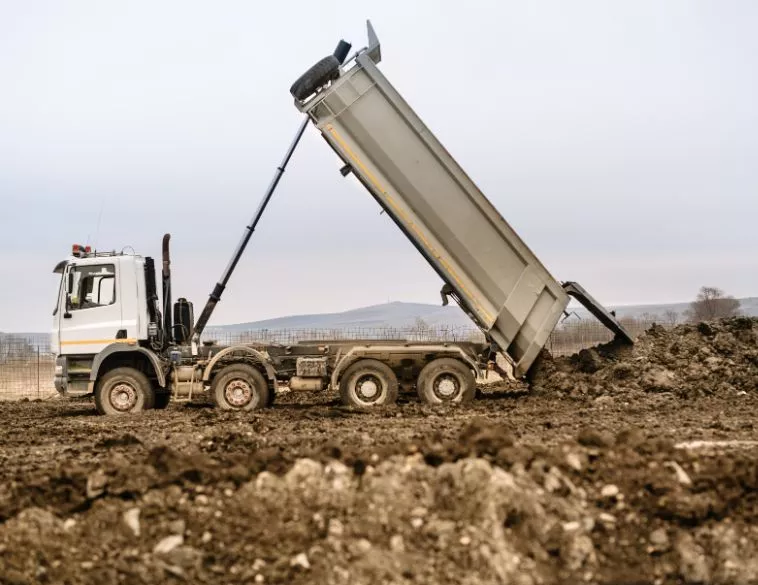

Dump truck tires face heavier loads, harsher terrain, and tougher duty cycles than standard commercial rubber.
Dump truck tires have to endure a unique set of stresses that standard highway tires simply aren’t designed to handle. Insights from four industry experts reveal why dump truck tires are fundamentally different—and what fleet professionals should keep in mind when selecting and maintaining them.
James McIntyre, SVP Sales Canada / Product Development North America for Sailun Tire Americas frames the issue around environment and workload. “Dump truck tires live in a much tougher world,” he says. They’re built to carry higher loads while enduring sharp debris, uneven ground, and high torque at low speeds. As a result, dump truck tires need casing strength, a deeper tread, and specialized rubber compounds. Unlike long-haul tires, he adds, they’re not optimized for straight-line highway efficiency, but for durability under constant abuse.
Built for load, traction and abuse
Mike Matesic, Produce Segment Manager, TBR with Dynamic Tire reinforces that distinction, pointing to construction and mining environments where trucks spend significant time off road. Dump truck tires use reinforced casings, stronger sidewalls, and cut-resistant compounds to survive jagged rocks and debris, he explains.
Tread design is also critical. “Dump truck tires are essentially traction-focussed, featuring deep, aggressive, self-cleaning tread patterns with large lugs that deliver superior traction on mud, gravel, and loose terrain,” he explains, “while many highway tires use shallow, ribbed patterns to reduce rolling resistance and improve fuel economy.” In some severe applications, Matesic notes, speed capability is intentionally sacrificed to prioritize load-bearing capacity and durability.
A practical comparison
Dave Hatch, VP Sales and Operations at Huayi Tire Canada adds a practical comparison, highlighting measurable construction differences. He explains that dump truck tires often feature thicker sidewalls and substantially deeper and more aggressive tread patterns.
Hatch notes that some dump trailer tires carry roughly 25% more tread depth and 5% extra weight compared to regular commercial trailer tires—clear indicators that they’re engineered for harsher conditions. He stresses that fleet managers should look beyond purchase price and consider casing strength, retreadability, and warranty coverage when considering total cost of ownership.
Those decisions become more complicated when dump trucks operate on both highways and job sites. Gus Liotta, GM, Commercial Sales-Canada for Goodyear explains that mixed-use fleets must balance competing demands. Tires need enough traction, cut resistance, and casing strength for off-road work, while still delivering stability and acceptable wear on pavement.
“Dump truck fleet managers should consider the terrain, the percentage of on‑ vs. off‑road usage, load requirements, and the specific demands of their routes when selecting the right tire for their operations,” Liotta explains.
Choosing and maintaining the right tires
The bottom line is clear: Tire selection should start with a clear understanding of real-world duty cycles—terrain, load requirements, and the percentage of on- versus off-road use. Matching the tire to those conditions helps prevent premature wear and unexpected failures.
Maintenance plays an equally important role. Proper inflation, regular inspections, alignment checks, and early damage detection significantly extend tire life. Retreadability and casing quality further influence long-term costs, allowing fleets to extract more value from each tire over multiple life cycles.
The takeaway is straightforward but critical: Dump truck tires are not just tougher versions of highway tires. They’re specialized tools. Fleets that choose tires based on application—and support those choices with disciplined maintenance—can improve uptime, extend casing life, and reduce overall operating costs in some of the industry’s most demanding environments.