
Electric Trucks After a One-Year Trial in Montreal
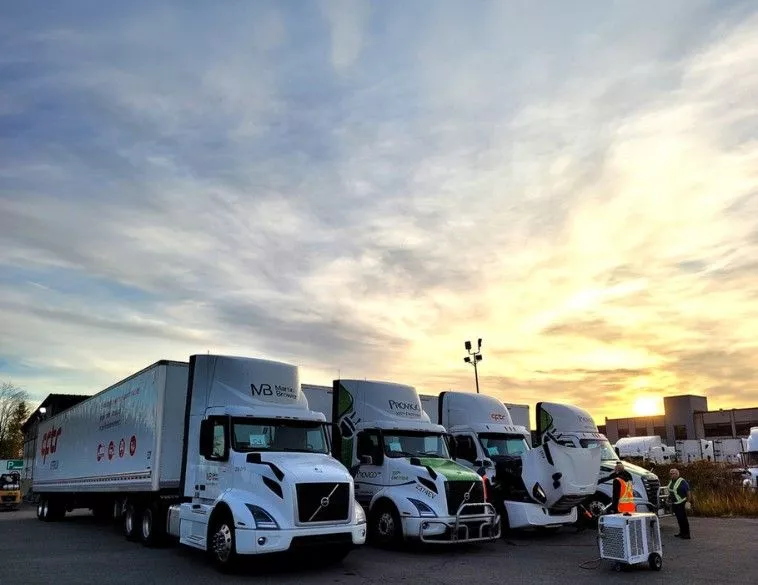
The trucks tested. Credit: PIT Group

PIT Group was mandated by Transport Canada to conduct a technology trial comparing Class 8 electric heavy-duty trucks to their diesel counterparts over a 12-month period in the Montreal area.
The report, titled "Monitoring and Testing of Battery Electric Heavy-Duty Trucks," has just been published on the Group's website:
Five electric trucks covered 200,000 kilometres on Montreal-area roads during commercial operations, spanning a four-season period. This comparative study utilized battery-electric truck models, notably the Freightliner eCascadia P4 and the Volvo VNR Electric, alongside their diesel-powered equivalents.
The data show an energy consumption reduction of over 60% and a greenhouse gas emissions reduction of at least 80% for the electric trucks compared to equivalent diesel trucks. They demonstrated solid performance under load and were preferred by drivers in several respects. However, additional training for drivers and dispatchers could further increase efficiency, particularly by raising driver awareness regarding vehicle range and mileage optimization strategies.
Maxime Tanguay-Laflèche, senior researcher at PIT Group and co-author of this study, points out that drivers, especially in winter, often preferred to disable the regenerative braking system, believing they had better control. "It is not easy to change habits," the researcher notes, "but when the system was activated, the truck gained approximately 15% in additional range."
During the testing, the electric trucks travelled between 150 and 200 km per day, which is about half of their advertised range. This is due to range anxiety, the lack of public charging infrastructure, uncertainty regarding the distances to be covered, variability in loads and terrain, as well as seasonal variations in energy consumption.
The report also indicates that the electric trucks experienced more downtime than their diesel equivalents. When they were out of service for servicing, repairs, or maintenance, the planning and execution of the work took more time than for the diesel trucks.
"We consider that these more frequent downtimes are explained by the real-world use of a relatively new technology," adds Tanguay-Laflèche. "Manufacturers are constantly refining their offerings, and these adjustments seem normal to us." Furthermore, the technical teams responsible for the maintenance and repair of heavy electric vehicles are still in the learning phase, which could explain the longer delays and more frequent stops.
The study also highlights that, given the government incentives offered for deployment, a battery-electric truck must typically travel 74,000 km per year to reach cost parity with a diesel truck over a six-year life cycle, all else being equal. Without these incentives, this threshold rises to 182,000 km per year.
On the drivers' side, the experience proved to be quite positive. Once convinced they had enough range to complete their tasks, operators did not hesitate to get behind the wheel of the electric heavy-duty trucks. "The driving experience with electric trucks was positive in terms of maneuverability and in-cab comfort, thanks to the reduction in noise and vibration levels compared to diesel trucks," the study specifies.
According to Maxime Tanguay-Laflèche, the electric solution proves to be very attractive for transport fleet managers. "However, they must find innovative charging solutions. The charging stations represent a significant financial burden, and some form of sharing could reduce the weight of the investment."
The expert also recommends designating a person responsible for analyzing the benefits of transitioning to electric. "It is even more important that this person then takes charge of the implementation, including communication and staff training."
As a reminder, you can consult the full study for free by following this link:
Catching the Wave
The firm is seeking contacts with heavy transport fleets considering electrification. PIT Group has received funding from Transport Canada to initiate discussions with these fleets, share the results of the trial report with them, and support them in their electric transition by sharing lessons learned from fleets currently using electric trucks.
You can contact Maxime Tanguay-Laflèche directly at this address: Maxime.Tanguay-Lafleche@fpinnovations.ca