
From the Bay to the Bottom Line

The business case for integrated shop systems.
Whether you maintain your heavy-duty fleet in-house, or whether you’re a service provider who caters to the needs of both medium- and heavy-duty trucks, you know how important uptime is in today’s competitive fleet environment.
Fleet operators and service providers are under increasing pressure to move vehicles through the shop faster, reduce operating costs, and ensure repairs are done right the first time. Against this backdrop, a growing number of forward-thinking operations are moving away from piecemeal equipment strategies toward fully integrated systems designed specifically for the trucking industry.
Measurable results
Early adopters of integrated inspection and alignment systes have found that the benefits begin the moment a vehicle enters the facility. Jamie Marshall, Lead Technician and owner of Marshall Truck & Trailer in Hamilton, Ontario made the decision to invest in a drive-through inspection platform from Hunter Engineering as part of a broader commitment to elevate customer service and operational efficiency.
His brand of choice is Hunter Engineering. “We bought our first Hunter equipment more than 12 years ago, and once we saw the quality of their products, we refuse to buy any other brands,” he says. “It’s Hunter or nothing.”
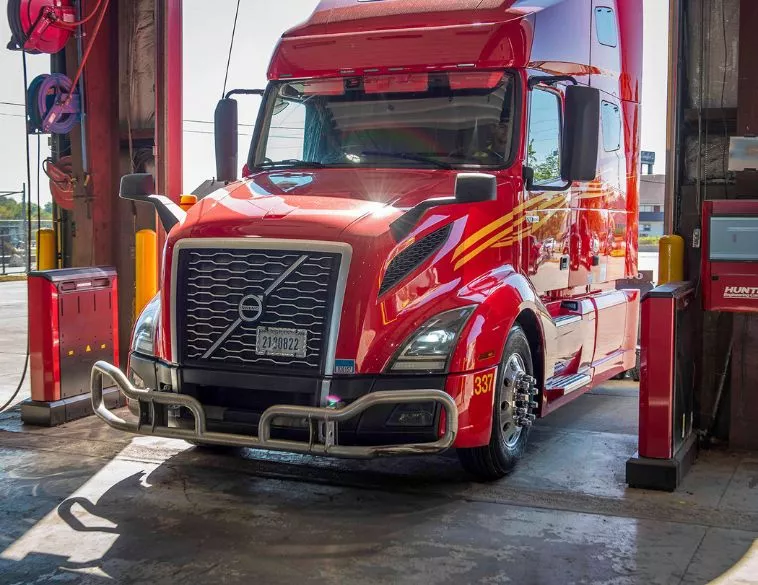
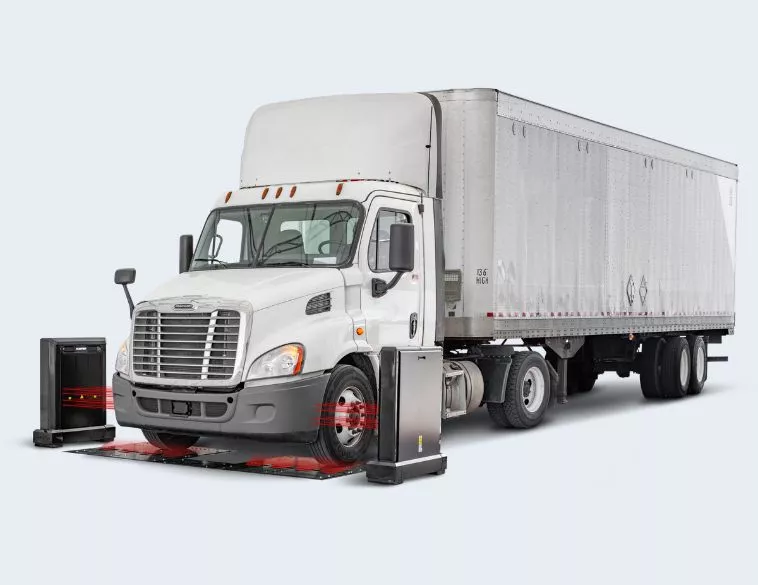
A year ago, Marshall Truck & Trailer installed Hunter’s Quick Check Commercial in their Hamilton shop, and the results were immediate and visible. As trucks entered the bay, Quick Check Commercial was able to generate a real-time “snapshot” of each truck’s condition, including alignment and the condition of each tire, without requiring the driver to exit or technicians to begin manual checks. That instant feedback not only impresses customers, but it also sets the tone for a more transparent and efficient service process.
For fleet customers, this kind of immediate diagnostic capability delivers something invaluable: clarity. Instead of waiting for a manual inspection to uncover issues, they receive objective data upfront, enabling faster decision-making and reducing uncertainty around maintenance needs.
Key to success: Hunter’s system
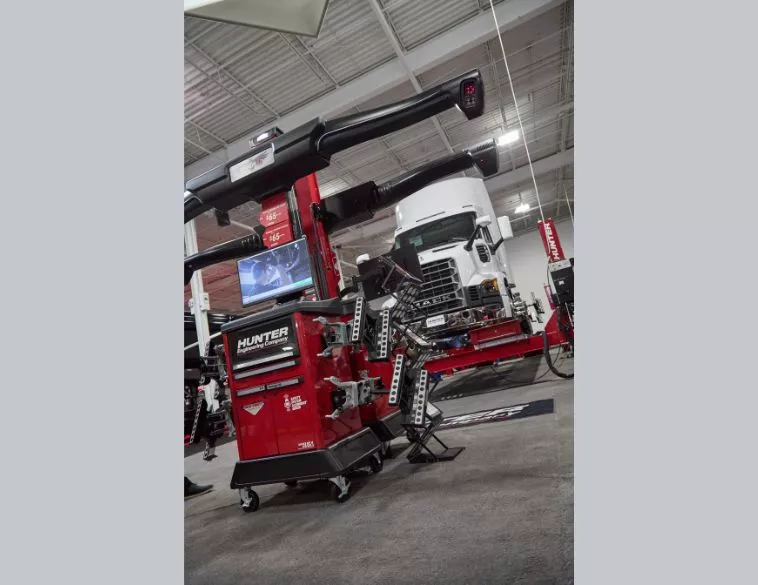
At the heart of this evolution is a simple but powerful idea: a system is greater than the sum of its parts. While many shops still rely on a mix of equipment from different manufacturers (alignment racks from one supplier, balancers from another, inspection tools from a third), this fragmented approach creates inefficiencies that ripple throughout the operation.
Hunter’s integrated system, by contrast, is designed to guide a truck and trailer through a seamless workflow:
- Drive-through inspection provides an initial assessment.
- Physical inspection in the bay identifies mechanical problems, such as alignment issues or tire damage.
- Alignment and adjustment are performed using advanced, connected equipment.
- Verification and reporting confirm that the vehicle is ready for the road.
Each step feeds into the next, eliminating guesswork and reducing redundant work. More importantly, the equipment communicates internally, ensuring that data captured at the front end is available throughout the process.
One of the most significant advantages of an integrated alignment system is its ability to translate diagnostics into actionable instructions. Instead of simply displaying alignment readings, Hunter’s system can guide technicians through the exact adjustments required.
For example, rather than interpreting raw data and consulting external specifications, a technician can see precise instructions on screen: how much to adjust a given axle, in which direction, and by what measurement increment. This level of specificity reduces errors, speeds up the repair process, and minimizes reliance on memory or manual lookups.
For fleet operators, the implications are substantial. Faster, more accurate repairs mean vehicles spend less time in the shop and more time on the road generating revenue. It also ensures consistency across technicians, which is critical in larger operations where skill levels may vary.
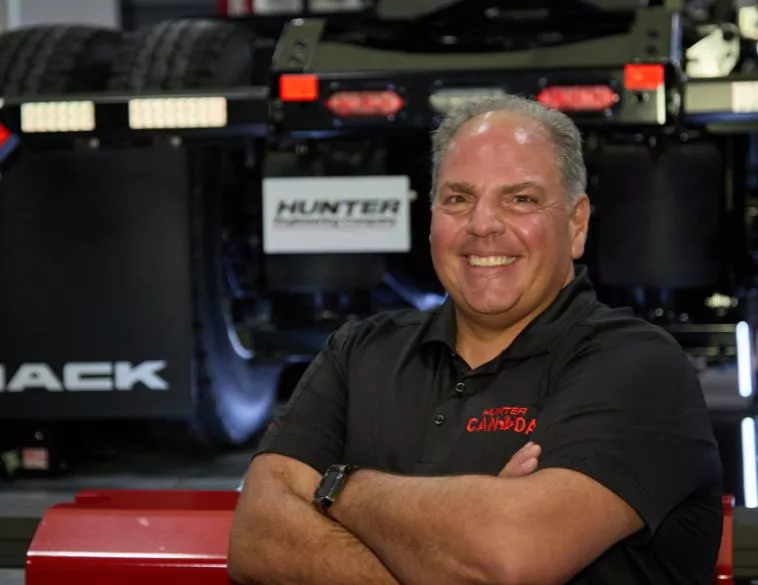
“We’re the only company that offers full solutions for an HD garage,” says Ross Iacobellis, Technical Sales - Training Manager at Hunter Canada. “We’re the only ones to offer a system that can check the truck as it rolls through the door, and send it out with everything repaired properly and confirmed, and we offer the training to back it.”
Adding trailers to the equation
Another key advantage of Hunter’s system approach is the ability to incorporate trailers into the alignment process. While trucks can roll through Hunter’s Quick Check Commercial scanner with or without a trailer, if there’s a trailer in tow, Quick Check Commercial can verify whether that trailer is properly aligned, or if it needs to be worked on as well.
Proper alignment of both the truck and trailer reduces rolling resistance, extends tire life, and contributes to smoother handling.
Calculating ROI
For fleet operators, any investment in shop technology ultimately comes down to return on investment (ROI). Hunter’s integrated system makes a compelling case by addressing three of the largest cost drivers in fleet operations: fuel, tires, and downtime.
Even modest improvements in alignment can yield significant fuel savings and reduce tire wear. Misalignment accelerates wear patterns, leading to premature replacements and increased maintenance costs. By ensuring that trucks and trailers are properly aligned and maintained, fleets can significantly extend tire life.
Finally, there is the issue of downtime. Every hour a truck spends in the shop is an hour it is not generating revenue. By streamlining the inspection and repair process, integrated systems reduce turnaround times and improve overall fleet utilization.
Technician experience and retention
While much of the discussion about integrated systems focuses on operational efficiency and cost savings, there is another critical factor at play: the technician experience.
Modern service bays equipped with reliable, intuitive technologies are more attractive workplaces. Technicians benefit from tools that simplify their jobs, reduce physical strain, and eliminate unnecessary guesswork. Instead of working on outdated or inconsistent equipment, they operate within a structured system that supports their performance.
This has direct implications for retention. In an industry facing a persistent shortage of skilled labour, providing a well-equipped, efficient work environment can be a decisive advantage in attracting and keeping talent.
“We’re the only company that offers full solutions for an HD garage.”
- Ross Iacobellis, Technical Sales - Training Manager, Hunter Canada
Overcoming adoption barriers
Despite the clear benefits, adoption of integrated systems has been slower in some markets. One reason is the perception that these systems require infrastructure changes.
While there is some truth to this, the reality has evolved. Hunter’s solutions are designed with installation in mind, offering streamlined construction processes and support to minimize disruption. In many cases, shops can complete installation and be operational within a matter of days.
For facilities already planning renovations, the opportunity is even more compelling. Incorporating integrated systems during a rebuild or upgrade allows operators to future-proof their operations with minimal additional complexity.
One of the most important considerations for fleet professionals is whether a technology is proven. In the case of Hunter’s Quick Check Commercial inspection and alignment systems, the answer is a clear yes.
With several years of deployment in mature markets and a growing base of installations, Hunter’s system has demonstrated its reliability and effectiveness.
A strategic decision
For fleet operators and service providers alike, the move toward integrated systems is not just a technological upgrade. It’s a strategic decision. As the industry becomes more data-driven and efficiency-focused, the limitations of ad hoc equipment setups will become more pronounced.
Hunter’s system approach offers a path forward: one that aligns operational workflows, enhances data visibility, and delivers measurable financial returns. It also positions organizations to adapt to future innovations, as connected platforms are inherently more scalable and upgradable than standalone machines.
In a competitive landscape where every advantage matters, the question is no longer whether integrated systems will become the norm, but how quickly organizations will adopt them. For those willing to invest, the payoff is clear: faster service, lower costs, and a more resilient operation built for the demands of modern fleet management.