

How carbon markets are turning fleet electrification into a profit engine
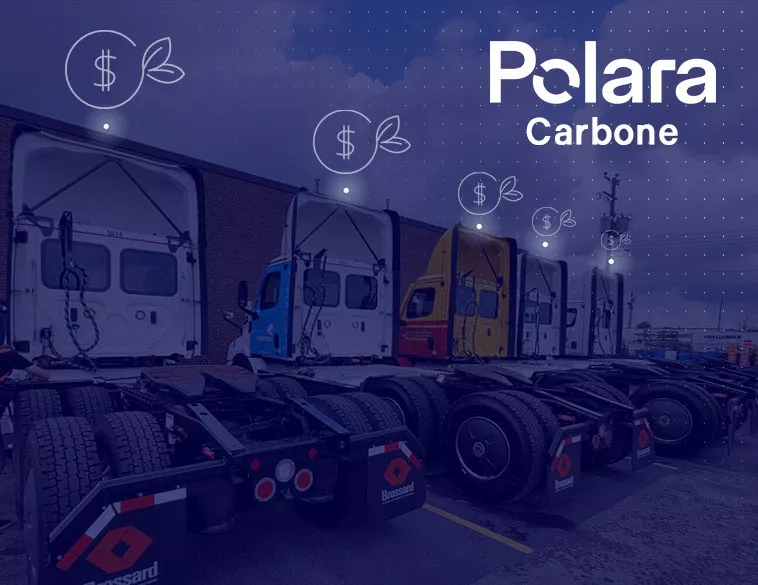
Canada’s electric heavy‑duty truck fleets hold major untapped revenue potential. Photo credit: Polara
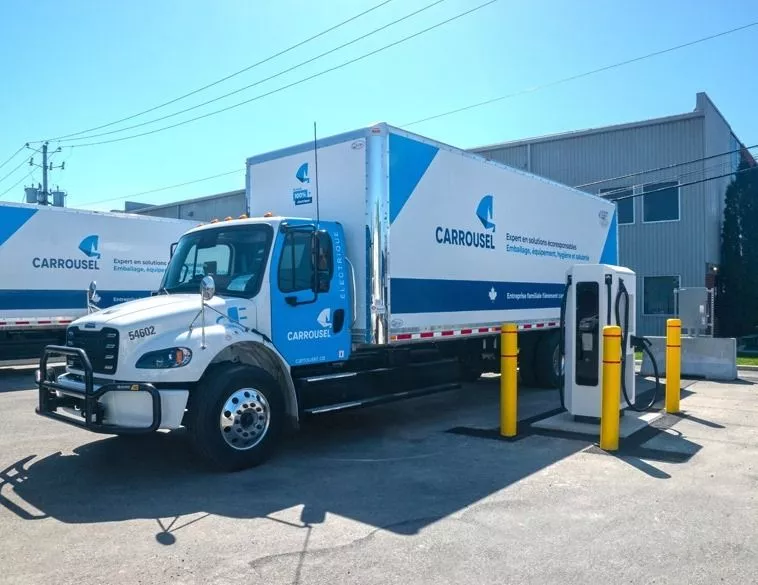
EV trucks help reduce total cost of ownership and generate carbon‑credit revenue, turning every heavy‑duty truck into a more profitable and predictable asset. Photo credit: Polara.

Compared with diesel, electric trucks can deliver up to $60,000 in annual value per vehicle : fuel savings, carbon‑credit revenue, and lower TCO are reshaping investment decisions. Photo credit: Polara.

With reliable data from intelligent platforms like Cleo, every kilowatt‑hour used to charge an electric truck can be turned into a financial asset. Photo credit: Polara.

Turnkey carbon aggregation generates additional revenue without adding complexity to drivers’ or fleet managers’ daily operations. Photo credit: Polara.

A turning point for heavy‑duty trucking
Electrifying heavy‑duty trucks and vocational vehicles is one of the biggest challenges and biggest opportunities of fleet decarbonization. Long‑haul transport, regional delivery, waste collection, municipal operations, construction: these duty cycles combine high fuel consumption and disproportionately high greenhouse gas (GHG) emissions.
Until recently, the high upfront price of electric trucks, layered with charging infrastructure investments, slowed adoption. But today, in addition to provincial incentives, Canada’s Clean Fuel Regulations (CFR) have introduced a powerful financial lever: carbon units revenue.
For the first time, electrification isn’t only about reducing fuel and maintenance expenses, it’s also about generating new, recurring income.
The real question isn’t purchase price, it’s Total Cost of Ownership
For fleet managers, longterm economics drive decisions. The Total Cost of Ownership (TCO)—including fuel, maintenance, energy, capital expenditures, and residual value, remains the most meaningful metric.-term economics drive decisions. The
Electric trucks fundamentally reshape that equation:
- Energy costs far below diesel, with greater price stability
- Substantially lower maintenance costs (fewer moving parts, less wear and tear)
- Greater predictability of operating expenses
These savings already reduce operating costs over the life of the vehicle. Now, with carbon credit monetization layered in, the financial model strengthens even further.
Carbon units: a high‑impact revenue stream for heavy‑duty trucks
The Clean Fuel Regulations operate on a simple principle: reward measurable emissions reductions. Every kilowatt-hour used to charge an electric truck represents avoided diesel combustion, and therefore avoided CO₂ emissions.
These avoided emissions are converted into carbon compliance units, which can be sold to fuel suppliers required to reduce their carbon intensity.
Heavyduty EVs are uniquely positioned to benefit because they tend to have:-duty EVs are uniquely positioned to benefit because they tend to have:
- High annual mileage
- Large energy consumption
- Substantial emissions reductions per vehicle
The result: a single heavyduty electric truck can generate dramatically more carbon units than a lightduty EV.-duty electric truck can generate dramatically more carbon -duty EV.
Numbers that change investment decisions
A concrete example:
A heavyduty electric truck driven 50,000 km per year can generate:-duty electric truck driven
- Up to $17,000 per year in fuel savings compared to diesel
- Up to $45,000 per year in carbon revenue*, depending on duty cycle, efficiency, and prevailing carbon units prices
Altogether, this can represent more than $60,000 in annual economic benefit versus its diesel equivalent.
Over a 5 to 7year horizon, cumulative carbon revenue becomes a central part of the project’s financial structure. It shortens the payback period, improves TCO, and strengthens the business case for charging infrastructure financing.- to 7-year horizon, cumulative carbon revenue becomes a central part of the project’s financial structure. It shortens the payback period, improves TCO, and strengthens the business case for charging infrastructure financing.
For large fleets, this can mean the difference between a small pilot and a meaningful, multivehicle deployment.-vehicle deployment.Sous-titre : Compared with diesel, electric trucks can deliver up to $60,000 in annual value per vehicle : fuel savings, carbon‑credit revenue, and lower TCO are reshaping investment decisions. Photo credit: Polara.
Turning every charge into a financial asset
To access carbon markets, charging data must be accurate, traceable, and compliant.
In the heavyduty trucking sector, where operations are complex, this requirement becomes critical.-duty trucking sector
Regulators mandate:
- Reliable charging data
- Full traceability of consumed kWh
- Strict adherence to CFR calculation methodologies
This is where intelligent charging and energymanagement platforms like Cleo become indispensable.-management platforms like
Cleo automates:
- Data collection
- kWh traceability
- Eligibility identification
- Preparation of regulatorycompliant datasets-compliant
The result: every charge becomes monetizable, without the administrative burden. Without this type of system, a large portion of potential carbon revenue typically goes uncaptured.
Carbon aggregation: the right model for EV fleets
Despite the value at stake, many fleet operators do not want to manage the administrative, regulatory, and market complexities of carbon units generation. That’s exactly why Polara created the Polara Carbon program.
Through turnkey carbon aggregation, Polara:
- Consolidates credits from multiple fleets
- Ensures full CFR compliance
- Manages credit certification
- Negotiates the sale of credits
- Distributes revenue back to fleet operators
This collective model is especially effective for heavyduty fleets, where carbon units volume is high, unit value is strategic, and professional negotiation can significantly increase returns.-duty fleets, where
Operators receive substantial additional income, without adding workload or resources.
Infrastructure, incentives, and carbon revenue: a strategic advantage
Electrifying heavy‑duty fleets requires significant investment in charging infrastructure, but today’s context makes these projects particularly attractive. Infrastructure costs can often qualify for public funding programs.
By factoring grants, operating savings, and carbon‑credit revenue into a comprehensive financial analysis, projects gain strength, predictability, and overall appeal.
Beyond the economics, carbon credit programs strengthen competitiveness, generate recurring revenue, validate decarbonization efforts, and help fleets meet growing requirements from shippers, investors and municipalities.
Electrification stops being a cost center, it becomes a strategic business asset.
Electric heavy‑duty fleets: a mature, profitable Model
For heavyduty trucks and vocational fleets, electrification is no longer a bet on the future. It is now an economically mature model supported by:-duty trucks and vocational fleets, electrification is no longer a bet on the future.
- Lower operating costs
- Strong regulatory incentives
- Monetizable emissions reductions
- Reliable, auditable data systems
Thanks to carbon markets, every kilowatt-hour becomes a lever for financial value.
By combining operational savings, carbon revenue, incentives, and intelligent data management, fleet operators can drastically reduce their TCO, accelerate ROI, and finance electrification in a predictable, sustainable way.
Every electric kilometer reduces emissions.
Now, every electric kilometer can generate revenue.
* 1 ton of avoided CO₂ equals one carbon compliance unit. Over recent years, units prices have ranged from $85 to $370 per unit. Financial values are for illustrative purposes only and based on vehicles charging at a depot in Québec