
Hydrogen's Heavy-Duty Future

Why fuel-cell trucks show promise, but still face significant hurdles on the road to widespread adoption.
When it comes to reducing transportation emissions, few technologies are as appealing as hydrogen fuel cells. By combining hydrogen stored onboard with oxygen from the air through an electrochemical process, fuel-cell electric vehicles (FCEVs) generate electricity to power the vehicle. The only byproduct is water.
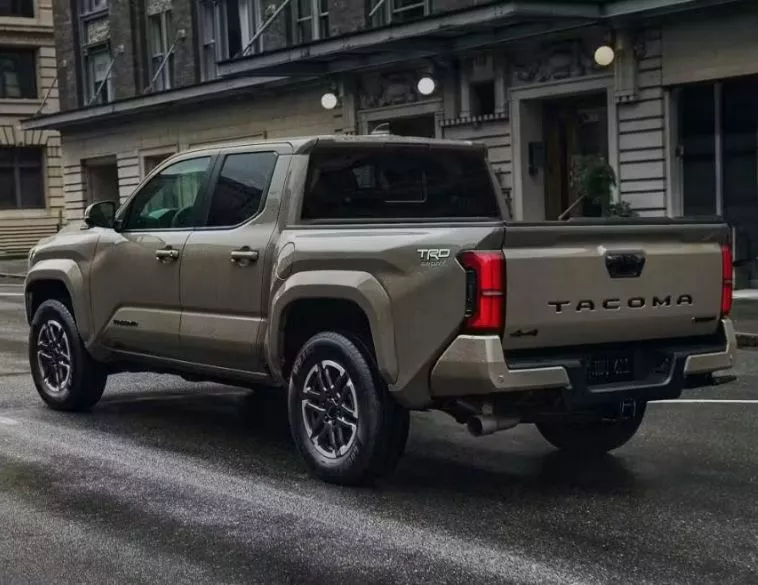
It's an elegant solution that can power everything from a passenger vehicle like the Toyota Mirai to a Class 8 tractor. Yet despite its environmental benefits, an important question remains: Is hydrogen ready for widespread adoption in the trucking industry?
According to Joe Korn, Alternative Fuels and Emission Reduction Consultant at Holman, the answer is not yet.
Korn understands the appeal of hydrogen technology. “When it comes to hydrogen, from a sustainability perspective, when used in a fuel-cell electric vehicle (FCEV), tailpipe emissions are zero and there is the potential for zero life cycle emissions if the fuel was sourced from renewable sources like wind, solar, and hydro (all electrolysis),” he says. “For H2 combustion, it is considered near zero tailpipe emissions as the engines make less than 10 grams (0.010) of NOx emissions (because of the combustion process).”
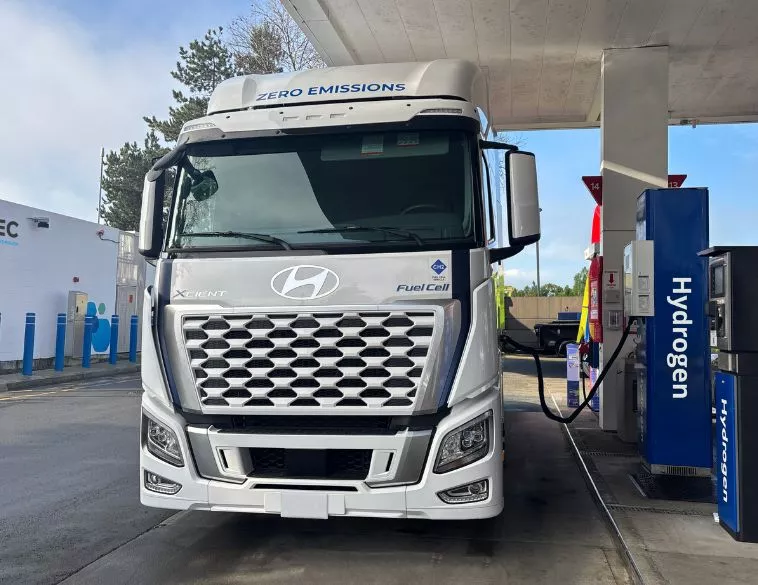
Those environmental advantages are difficult to ignore. However, Korn says the challenges are equally significant. “The cost and complexity of building and fuelling this type of powertrain technology, in both fuel-cell and H2 combustion, has made it prohibitive,” he says. “Today, the hydrogen fuelling infrastructure is the very limited as fuelling stations are extremely costly and highly complex.”
Fuel costs remain another major barrier. “The cost per kilogram for hydrogen fuel can be as much as US $35/kg,” Korn says. “For comparison, a Toyota Mirai FCEV holds 5 kg of H2, which would cost US $175 to fill with a range of approximately 400 miles. This equals about US $0.43 per mile. A similar class gasoline vehicle would cost about US $0.13 per mile. Right now, the value proposition for hydrogen as a viable alternative fuel simply isn’t there for the vast majority of fleet operators.”
Building the foundation
While hydrogen currently struggles to compete economically with diesel, many industry advocates believe the equation could change as production scales up and fuelling infrastructure expands.
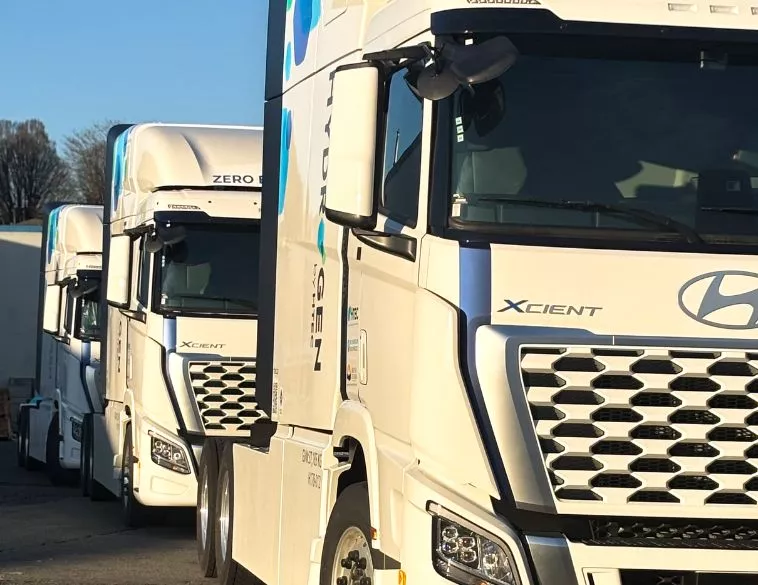
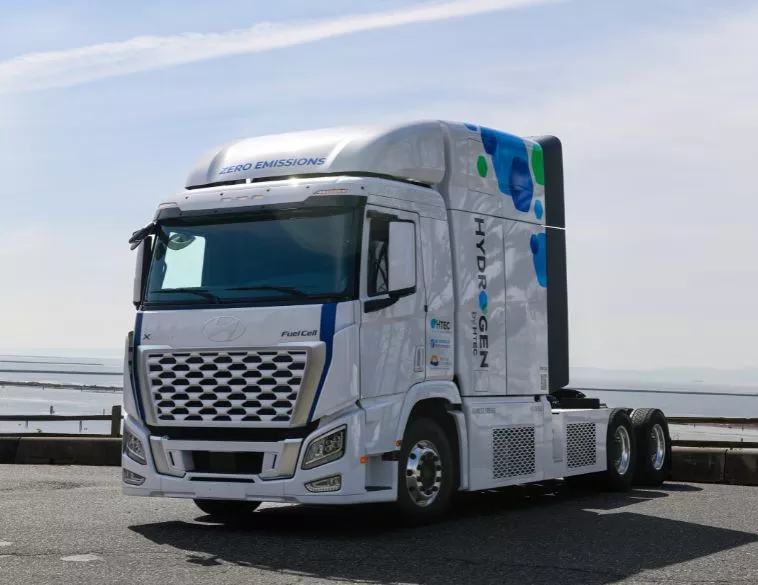
Companies such as HTEC are working to make that future possible. Based in Vancouver, HTEC produces, distributes and dispenses hydrogen while also offering the Hyundai XCIENT fuel-cell Class 8 truck.
The company already operates a light-duty hydrogen network in B.C. that caters to the needs of vehicles like the Toyota Mirai and the Hyundai Nexo. Its focus is now shifting towards heavy-duty transportation.
“We just opening out first Cardlock location,” says Rob Stevenson, Director of Leasing Operations at HTEC, “and we’re planning another one with the idea that we can get the momentum going, get people using this technology, and then work towards creating a link with Calgary.”
According to Stevenson, hydrogen truck activity is already gaining traction in Alberta, particularly along the Edmonton-Calgary corridor.
Fuel-cell versus battery-electric
The environmental benefits of fuel-cell trucks compared to diesel are straightforward: FCEVs produce zero tailpipe emissions. The comparison with battery-electric trucks is more nuanced.
Both technologies eliminate tailpipe emissions, but hydrogen offers advantages in refuelling time and operational flexibility. And while range loss may be an issue when driving an EV truck in the winter, it’s not a concern when driving an FCEV. “The XCIENT delivers a range of 700 km, and it’s consistent in the winter time,” Stevenson adds.
“Hydrogen is a solution for energy sovereignty.”
- Frédéric Delrieu, COO, Elemental Trucks
Making the business case
Despite the operational benefits, cost remains one of the biggest barriers to adoption. Stevenson says many fleets exploring hydrogen are doing so primarily to support greenhouse gas reduction goals and future sustainability reporting requirements.
“These are guidelines now, but they could become reportable requirements in the future, which would make hydrogen an almost drop-in replacement for diesel,” he adds.
Hydrogen fuel remains more expensive than diesel, although Stevenson believes the gap is narrowing. “I wouldn’t call it affordable just yet,” Stevenson explains, “but I think that with the support of programs like the Low Carbon Fuel Standard credit market in B.C., the delta between diesel and hydrogen prices is getting smaller.”
The good news, he adds, is that the cost of hydrogen doesn’t fluctuate as dramatically as diesel prices do, because hydrogen is not susceptible to the whims of international commodity markets. “You don’t get the same price spikes,” he adds. “Our price for a kilo of hydrogen has stayed consistent, to the penny, for the last two years.”
Total cost of ownership
The total cost of ownership of an FCEV vs. a diesel truck, according to Stevenson, is about 20-30% higher, thanks in larger part to a number of available government grants and incentives for FCEVs. However, since there’s no diesel engine to maintain, fleets can save on maintenance costs with an FCEV, which further adds to the overall TCO picture.
“The trucks themselves are anywhere between two-and-a-half and three times more expensive than a diesel,” he adds, “but when you factor in all the incentives, that delta goes down to about 20-30% for a leased vehicle.”
To encourage adoption, HTEC offers short-term lease programs that allow fleets to evaluate the technology without making a long-term commitment. “If you’re not ready to commit to the technology,” says Stevenson, “we can lease you a truck for six months to a year, if you’d like to try it to see how it fits into your fleet.”
As far as fuelling goes, most fleets currently rely on third-party hydrogen suppliers rather than producing their own fuel. “I don’t know of any fleet that’s making their own hydrogen at the moment,” Stevenson adds. “That would be quite an undertaking.”
Beyond long haul
For Frédéric Delrieu, COO of Montreal-based Elemental Trucks, hydrogen's potential extends beyond emission reductions.
“Oil price volatility is a serious concern,” he explains. “Hydrogen is a solution for energy sovereignty, which is the main reason why the Chinese government has invested so much into the hydrogen industry, and are currently the leaders in this field.”
Delrieu sees battery-electric trucks as a practical solution for urban operations and lighter-duty applications, but believes hydrogen becomes increasingly attractive as distances and energy demands increase. “As soon as you want to leave the city, you realize that fast charging an EV is still very slow and quite expensive,” he says.
While significant investment is being directed toward megawatt charging infrastructure, Delrieu argues that charging costs and downtime will continue to challenge battery-electric trucks in some applications. Hydrogen refuelling, by contrast, takes only a fraction of the time required to recharge a large battery pack.
He also points to vocational applications where energy demand is especially high. “Take snowplows as an example,” he says. “You need a lot of power to push snow, and that would drain the battery on an electric truck really fast. Same with concrete mixers. You can’t do that with a battery electric truck. Hydrogen would make a lot of sense in these applications.”
A technology with potential
Hydrogen fuel-cell technology offers many of the attributes fleet operators are seeking: zero tailpipe emissions, rapid refuelling, long range and strong performance in demanding applications. Yet significant obstacles remain, including high vehicle costs, expensive fuel and a limited refuelling network.
Industry experts generally agree that hydrogen is unlikely to replace diesel on a large scale in the immediate future. However, as production volumes increase, infrastructure expands and costs come down, fuel-cell trucks could become an increasingly important part of the transportation industry's decarbonization strategy. For now, hydrogen remains a promising technology with considerable potential, but there’s still a long road ahead before it reaches mainstream adoption.