
Mobile Muscle
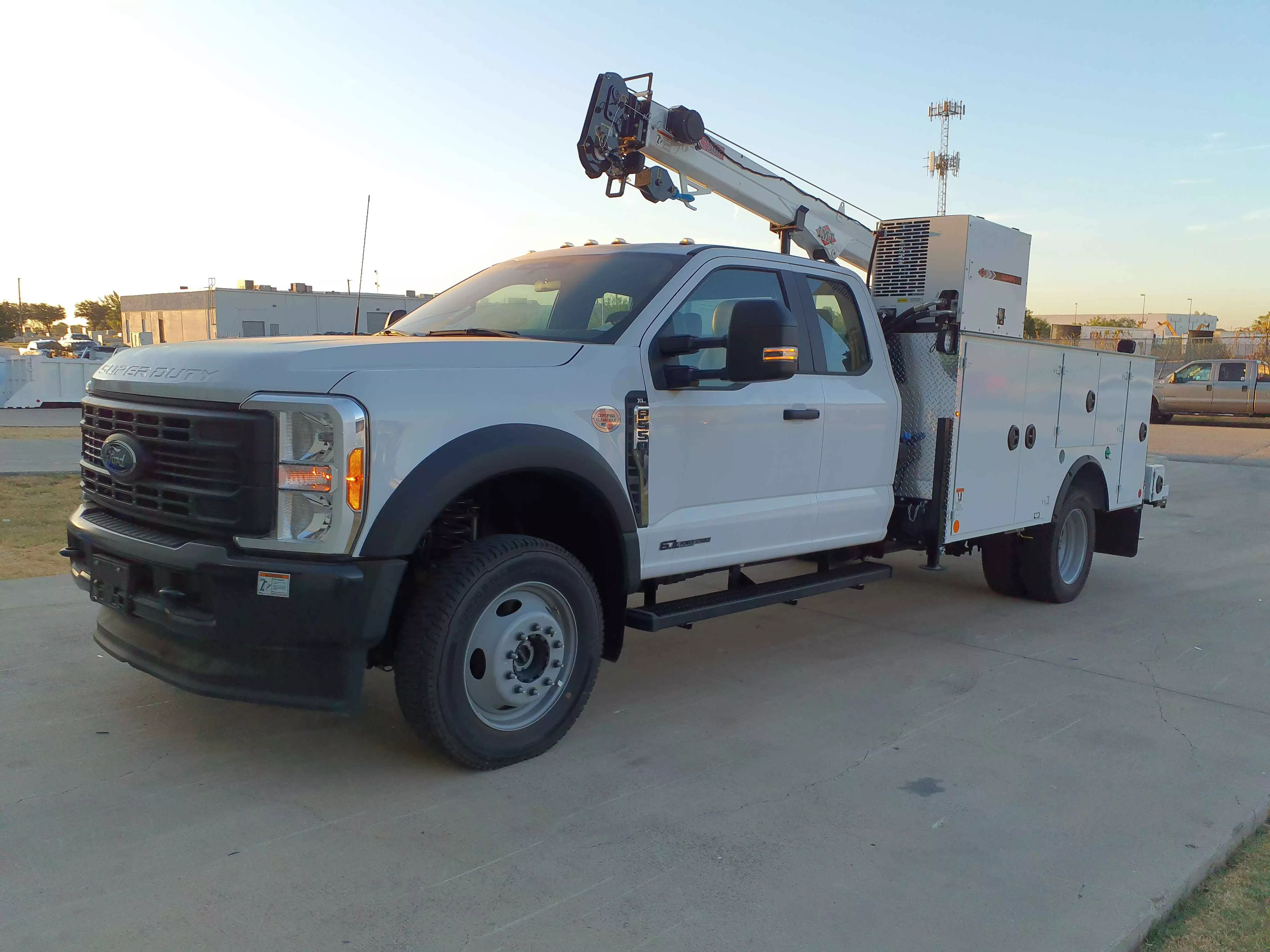
A medium-duty truck, like this Ford F550, would we on the lower end of the size scale for a crane truck.
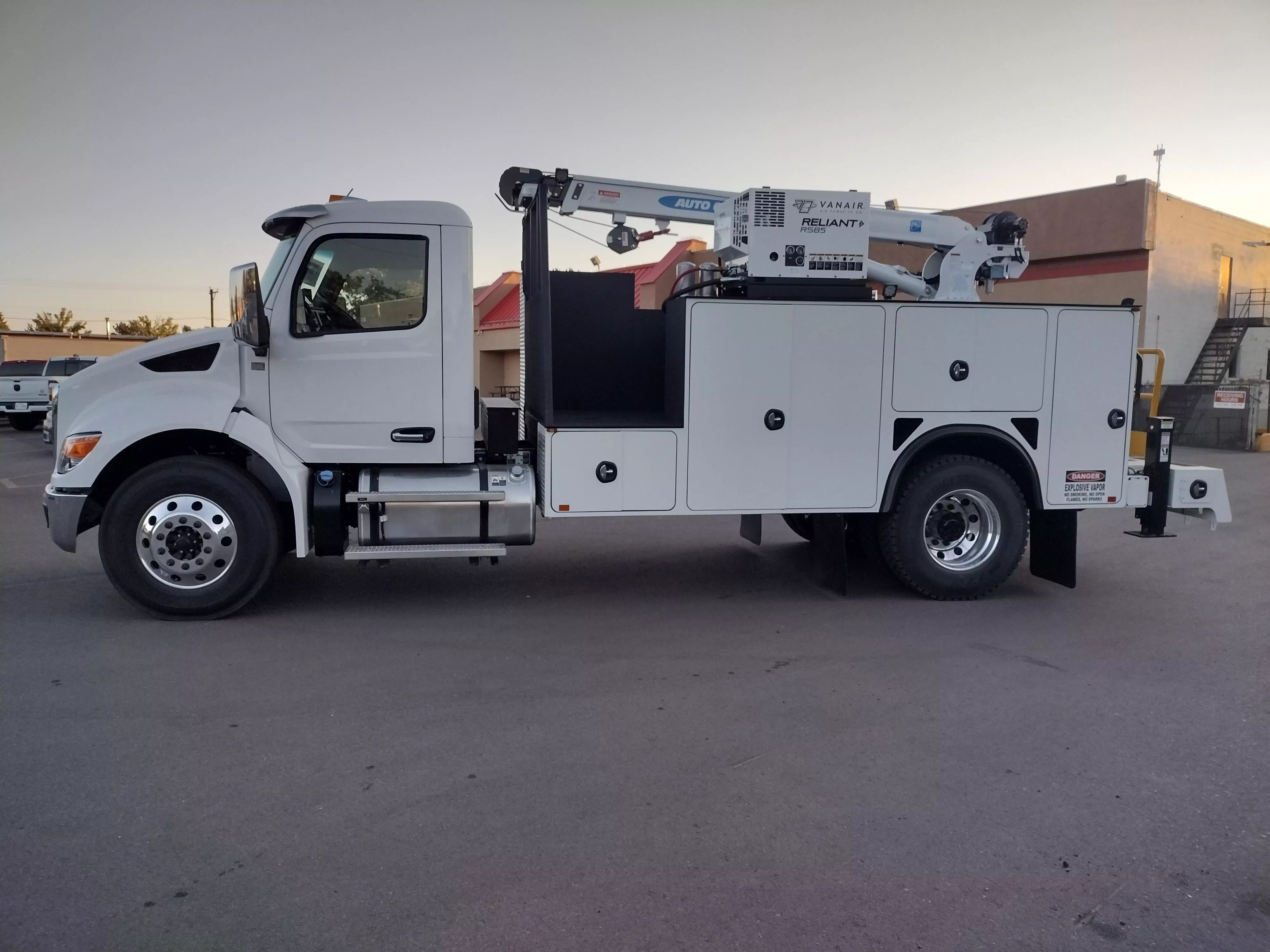
There comes a point where even a truck-mounted crane that can handle 14,000 lbs. is not enough for the job at hand.

Adding a crane to your fleet is not a do-it-yourself project.
Fleet managers wear many hats, and while they’re able to handle a variety of assignments and projects on their own, sometimes outside help is a must. Case in point: If you’ve been asked by your organization to add a crane to your fleet, this is not a challenge you’ll want to tackle on your own.
This is especially true if you have no experience with cranes of any type. While it may be tempting to take the “how hard could it be” approach, rest assured there’s more to cranes than meets the eye.
“When our customers say that they need a crane,” says Mike DeCesare, Manger, Order Management at Holman, “the first thing we ask them is what are they picking up?”
Most fleet managers typically want a crane mounted on a truck, DeCesare explains. “They want to be able to drive it to the job site and use the crane to lift something in the field,” he adds. “That’s the most common crane request we get.”
One of the most popular types of crane trucks is a mechanic’s truck, DeCesare says. “It’s basically a mobile workshop,” he adds, “with lots of compartments for tools and storage alongside a crane.”
Weight vs. distance
Before a fleet manager can decide whether a mechanic’s truck will do, or whether a more heavy-duty crane is needed, it’s critical to look at the numbers.
“You need to know approximately how much weight you’re lifting, and more importantly, how far you need to lift it,” DeCesare explains. “Is it a vertical lift, meaning simply up and down, or do you need to rotate your crane with the load? Are you reaching over the side of the truck or just in the rear? Does it need to move a significant distance? That's all going to determine what class truck and crane capacity you need.”
When it comes to trucks that you can drive on a day-to-day basis, DeCesare says that you would probably max out with a Class 7 truck, such as a Kenworth T880, with a crane mounted on it. “That would lift at about 14,000 lbs.,” he adds. Chassis stabilizers and/or outriggers will most likely be required.
At the other end of the size spectrum, DeCesare says that a Ford F350 (or something similar) would be the smallest vehicle he’d recommend equipping with a crane. “You could lift about 4,000 lbs a short distance with that class vehicle, and as you go up in models to a Ford F450 or F750, for example, you would be able to lift more, and lift it a further distance,” he says.
Off-road job sites
Another key issue fleet managers need to consider is the location of the job site. “Once we’ve decided what we’re lifting and what size truck we need, we then have to consider where the truck is going,” DeCesare says. “Are you going off road, staying on paved roads, or going on the rail system? That’s where we start having conversations about two-wheel drive or four-wheel drive, gas or diesel, electric or hydraulic cranes, etc.”
Adding a crane to a fleet is definitely a complicated process that requires advice from a fleet professional who understands cranes. Moreover, there comes a point where even a truck-mounted crane that can handle 14,000 lbs. is not enough for the job at hand. That’s when a dedicated crane (one that you can’t easily drive on public roads) is the only solution.
The best advice, DeCesare concludes, is to get the help you need in order to make an informed purchase decision, whether you’re buying new or pre-owned. “When you buy cranes used,” he says, “they are often undersized, and in some cases they haven’t been maintained properly. Either way, if you make the wrong decision, it can be a dangerous situation.”