
The Silent Workhorse
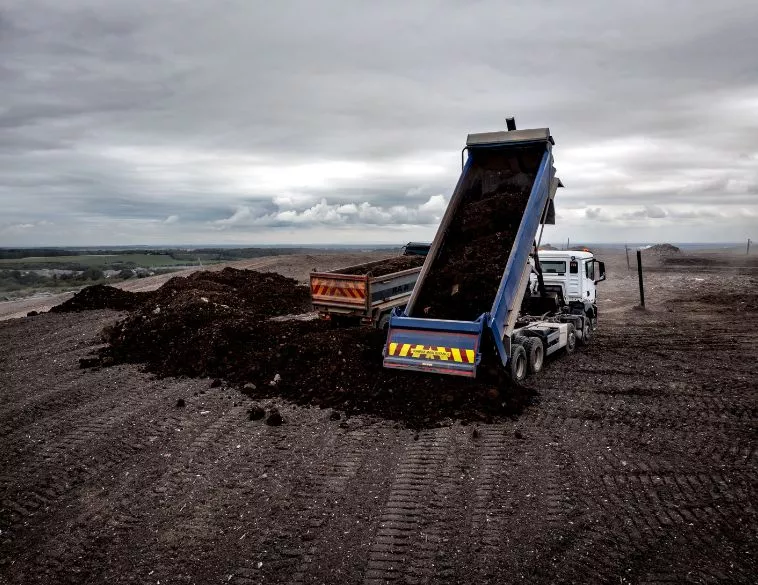

Smart hydraulic maintenance keeps dump trucks moving.
Hydraulic systems rarely get the spotlight, but it’s the hydraulic system that quietly does the heavy lifting on a dump truck, day in and day out. When it works, no one notices. When it fails, everything stops.
For fleet professionals, that silence can be deceptive. A small leak or a contaminated fluid sample can be the first whisper of a much bigger problem.
To understand where failures really come from—and how to prevent them—we spoke with two experts: Zac Hales, Business Segment Manager at Geotab, and Dave Broadwater, Manager of North American Fleet Management Services at Holman. Their combined insights point to one clear conclusion: Most hydraulic failures are preventable, if fleets know where to look and when to act.
Where hydraulics fail first
According to Hales, the most failure-prone components are those that move constantly or live in hostile environments. “Hoses are the most common failure point,” he says. “They’re subject to constant flexing, high-pressure surges, and external abrasion. Seals and O-rings also fail frequently; over time, heat and friction cause them to harden or tear, which leads to external leaks or internal ‘blow-by' that results in a loss of lifting power. Finally, pumps, which are the ‘heart' of the system, are susceptible to internal wear. If a pump begins to fail, it often sends damaging metal debris throughout the entire system.”
Broadwater agrees, adding that seals are often a big concern. “Seals are the most problematic component of hydraulic systems,” he explains, noting thatexcessive debris, minor damage, and unaddressed wear can accelerate seal failure.
“Additionally,” he says, “hydraulic hoses have several flex points and are commonly routed in tight areas, making them highly susceptible to failure as well.”
Broadwater stresses that wear or rub points need to be identified quickly and addressed immediately, “whether that’s rerouting the hose to prevent damage or adding extra protection to mitigate wear.”
The silent killer: contamination
Both experts point to contaminated fluid as the most common root cause of hydraulic failure. “Contamination is considered the silent killer,” Hales explains. “Even microscopic particles of dust, sand, or metal act like sandpaper inside the system, grinding down valves and pumps.” Unlike obvious leaks or broken hoses, contamination works invisibly, degrading components long before symptoms appear.
Other major causes, he adds, include heat (oxidation). Operating a system too hot thins the oil, reduces lubrication, and destroys seals. Add aeration and cavitation—where air enters the fluid and implodes inside the pump—and metal surfaces can be damaged in minutes, rather than months.
Broadwater connects contamination directly to maintenance habits. “More often than not, lack of preventative maintenance results in contamination, restricted filters, and/or low fluid levels,” he says.
Inspection: the first line of defence
Hydraulic failures rarely happen without warning. The challenge is training staff to catch those warnings early. Hales recommends daily inspections as part of a pre-trip walk-around. “Look for several key indicators of potential problems,” he explains. “These include weeping hoses (wet spots that mean a burst is coming soon), cloudy or bubbling fluid (a sign of water or air in the oil), strange noises (a high-pitched ‘whine' or ‘growl’ that usually means the pump isn't getting enough oil), and scored cylinder rods (scratches on the chrome cylinder rods that will shred the seals).”
Broadwater agrees. “A thorough preventative maintenance (PM) strategy should include daily or weekly inspections (determined by utilization) by operators in the field to identify potential issues early,” he says. “Additionally, a formal PM schedule specifically for hydraulic components should be included in the vehicle’s overall maintenance schedule, and performed by an authorized repair facility. This schedule should be based on OEM recommendations and further customized based on the unit’s operating parameters.”
Building a PM program
An effective PM program isn’t complicated, but it must be consistent. Broadwater says that a hydraulic system’s preventative maintenance program will vary by equipment, but should include a basic visual inspection to assess fluid level and condition, identify any hose damage, potential leaks, and note any performance issues.
“Additionally,” he says, “the PM program will include inspection of cylinder rods, control valves, breathers, filters, etc. Annual maintenance (potentially varying by utilization) should also include pressure checks, a full fluid drain and replacement, filter changes, and thorough hose inspections.”
Hales says that daily tasks should involve checking fluid levels and looking for puddles under the truck. Monthly (or every 250 hours), the program should include inspecting all hose routings for rubbing and greasing cylinder pins and pivot points. Annually, (or every 1,000–2,000 hours), the program should feature a fluid analysis (sending a sample to a lab to check for "invisible" contaminants or metal shavings), filter changes (replacing all return and pressure filters), and a system flush (draining the reservoir and refilling with fresh, filtered oil).
Hydraulic systems may be silent, but the cost of ignoring them can be expensive. For fleet professionals, the path forward is clear: consistent inspections, clean fluid, and disciplined maintenance.