
The Slow Transition to Alternative Powertrains




After a period of excitement and product launches, the alternative powertrain market for medium- and heavy-duty trucks is hitting a speed bump.
It would be tempting to blame the slowdown in the adoption of green transportation technologies on the Trump administration, which makes no secret of its disdain for green energy and its enthusiasm for fossil fuels.
While it is true that the Trump-era EPA has postponed, and even outright cancelled environmental regulations that support the development of less environmentally-damaging propulsion systems, that does not tell the whole story. This trend is not unique to the United States or North America, says Lars Martensen, Director of Environment at Volvo Trucks.
"These new alternatives, particularly in their early stages, rely on various forms of political support,” Martensen says. “Without it, development will slow down—infrastructure will be deployed more slowly, and investment in both technology and renewable energy infrastructure will decrease. From that angle, this is not a positive development."
At Cummins, the world's number one independent engine manufacturer, Marc-André Caza, General Sales Manager, On-Highway Market – Quebec Region acknowledges the impact of U.S. administration policies on the EPA.
"Yes, there is an impact in the United States,” he says, “but the impact is probably on the speed at which technologies will be adopted. Cummins' plan—Destination Zero—aims to reduce well-to-wheel emissions today, to promote the large-scale adoption of alternative technologies, and to reach zero emissions by 2050. Our strategy remains the same."
Here is an overview of the options now on the market.
Full electric
On the global stage, Volvo is establishing itself as a leader in the development and commercialization of electric trucks. In Europe, this manufacturer's entire lineup is available in battery-electric versions. While adoption of this powertrain continues to grow, it is progressing far more slowly than anticipated and hoped, according to Martensen.
"It is very fragmented,” he adds. “Some European countries, like the Netherlands and Sweden, have very effective policies that strongly incentivize our customers to invest in electric trucks. In other countries, however, the absence of incentives makes investing in charging infrastructure much more difficult."
In Canada—and in Quebec in particular—the return of the Écocamionnage program, which offers attractive subsidies to buyers of electric trucks, should reignite interest, all the more so as the range of products offered by manufacturers continues to grow. Virtually all OEMs offer at least one electric model. The Class 5 to 7 truck market is particularly well covered, with options from Freightliner and Rizon by Daimler Trucks, Kenworth and Peterbilt by PACCAR, International, Mack, Isuzu, and others. Regional tractors are not left behind either.
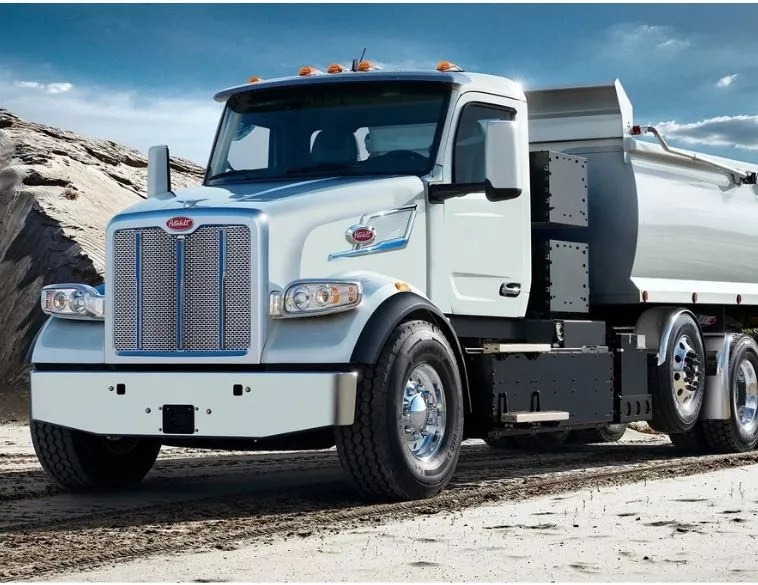
While Volvo leads in Europe, in North America the title clearly belongs to the two manufacturers within the PACCAR group. Peterbilt and Kenworth have in quick succession announced not only a significant expansion of their electric offerings—covering nearly every model—but both manufacturers also seized the opportunity to launch their all-new generations of electric trucks, the most innovative currently available in the North American market.
According to Martin Blanchet, National Sales Director, Alternative Energies at Peterbilt, range should not be the main obstacle standing in the way of battery-electric truck adoption.
"If you compare range alone,” Blanchet says, “diesel obviously has the advantage. But the real question is this: With the ranges we have today, are there routes in the trucking industry where electric trucks can operate and be profitable on long-term contracts? If such routes exist, how can you afford to leave that profitability on the table? The conclusion should be obvious: Electrify that route."
Electric trucks are often thought of as a short-haul or an urban delivery solution, but Blanchet sees an even stronger case for them in the specialized segment, such as service body vehicles, construction units, and everything in between—regardless of whether we're talking Class 5 to 7 straight trucks, or Class 8 tractors. In those applications, he argues, electric simply outperforms diesel.
"Why do we always only talk about range?” Blanchet asks. “Let's talk about real-world use. Can a truck do the job for a given application profitably? If the answer is yes, electrify it. Take a mobile workshop-type truck that spends the day on a street corner doing utility work. Why run it on diesel at idle when you can electrify it?"
Blanchet is quick to point out that, with the exception of the cab-over models, all of the electric trucks offered by the PACCAR group are now manufactured right here in Canada, at the Sainte-Thérèse plant.
Natural gas: an available option
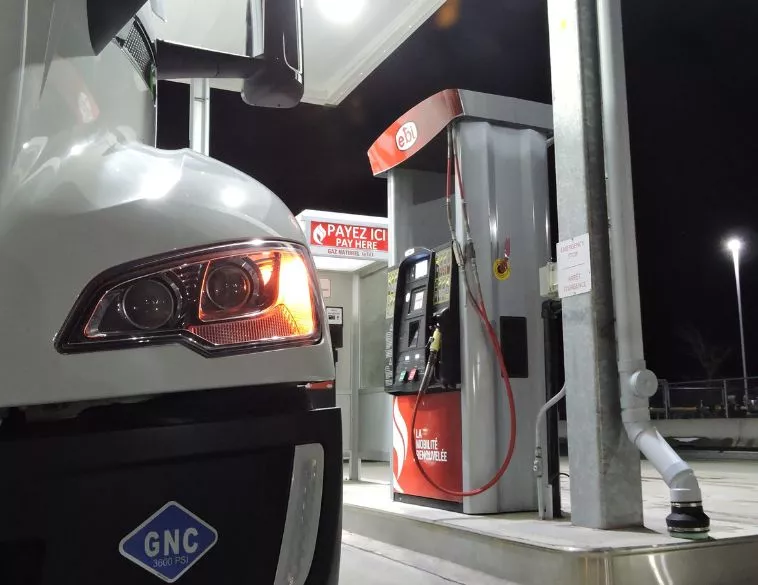
Globally, manufacturers agree that there cannot be a single solution for greening transportation operations. Among those solutions, natural gas remains the only option on the market that is economically viable and operationally realistic, especially since the launch of the Cummins X15N engine.
"Natural gas is an interesting tool for allowing trucking companies to reduce their emissions right now," says Marc-André Caza of Cummins. "It is a product that is ready, mature, and meets the needs of the Canadian market with its 500 hp output and 1,850 lb.-ft. of torque. We already have units in service across Canada and in the United States."
Prior to the X15N, natural gas engines consistently fell short of their diesel counterparts in terms of performance, but that is no longer the case. Moreover, by eliminating the need for exhaust aftertreatment systems—namely urea injection systems and diesel particulate filters—the Cummins X15N removes one of the industry's biggest headaches since those emissions control systems were first introduced.
Beyond the absence of diesel particulate matter, the natural gas engine reduces nitrogen oxide emissions by 90%. Even when running on fossil natural gas, it reduces GHG emissions by 15 to 20%. Combined with the injection of renewable natural gas (RNG) into the gas network, the natural gas engine effectively becomes carbon-negative.
At EBI Énergie, a renewable natural gas retailer, Richard Prévost oversees the RNG/CNG file for trucks. As a passionate defender of natural gas, long before the X15N came along, he has not held back his frustration since the latest Écocamionnage program wiped natural gas off the map as an emissions-reduction solution altogether.
"If you have a zero-emission vision without regard for the energy lifecycle, you've just eliminated gas,” he argues. “We forget that the enemy to defeat is diesel, and instead we limit ourselves to the fantasy of zero emissions. Rather than reducing emissions step-by-step, we're chasing a single, perfect solution. Meanwhile, diesel sales have never been higher."
Prévost is careful to clarify that he is not opposed to electrification. Rather, he takes issue with the tunnel-vision approach in which electrification is seen as the only solution for all applications.
"You cannot replace a large road train at 149,000 lbs with an electric tractor with a GVW of 80,000 lbs and a range that won't get you from Montreal to Drummondville and back,” he adds. “The electric option is the most expensive financially, and the most limiting operationally. We have no vision of complementarity. We have absolutely no grasp of industry reality."
The Cummins X15N is currently available from three manufacturers: Freightliner, Kenworth, and Peterbilt.
Hydrogen: from dream to reality
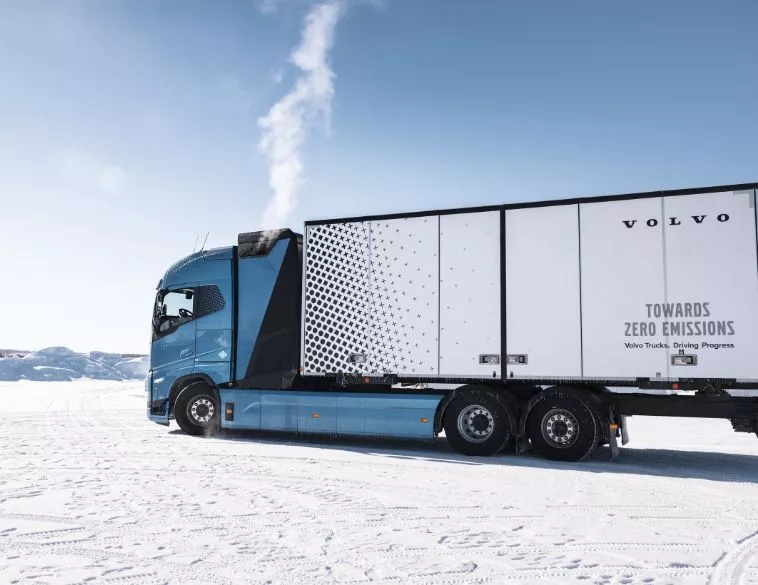
Of all the alternative propulsion solutions, hydrogen is the one that generated the most excitement, and understandably so. In fuel-cell applications, it promised diesel-like range with all the environmental benefits of electric. In combustion engines, it pointed toward near-zero emissions. But those promises have been slow to materialize, admits Volvo Trucks’ Martensen.
"I think there was excessive hype around hydrogen,” he says, “and we have come up against certain realities: The cost of producing hydrogen has not come down as quickly as expected. As a result, we are seeing a decline in investment in the production of green hydrogen from renewable sources. So there is a shift occurring, which means, from our perspective, that some of the activities we had planned are being pushed back. But development continues."
Track and road testing continues at most manufacturers, but beyond the complexity of the technology itself, the availability and cost of the energy source remain the primary barriers to the development of the hydrogen option. Cummins is also pushing ahead on hydrogen, notably as one of the fuels in its new multi-fuel common platform, HELM (High Efficiency Low Emission Multifuel).
"From our point of view, bringing hydrogen combustion technology to market is the best way to drive widespread adoption of a new fuel," says Caza from Cummins. "Because the internal combustion engine is a technology we have known for a long time, it is proven and reassuring for the industry. And it is currently the most economically viable option."
In short, don't expect to see hydrogen-powered trucks on our roads before 2030, at the earliest.