
Volvo’s New VNR: a Highly Agile Regional Tractor
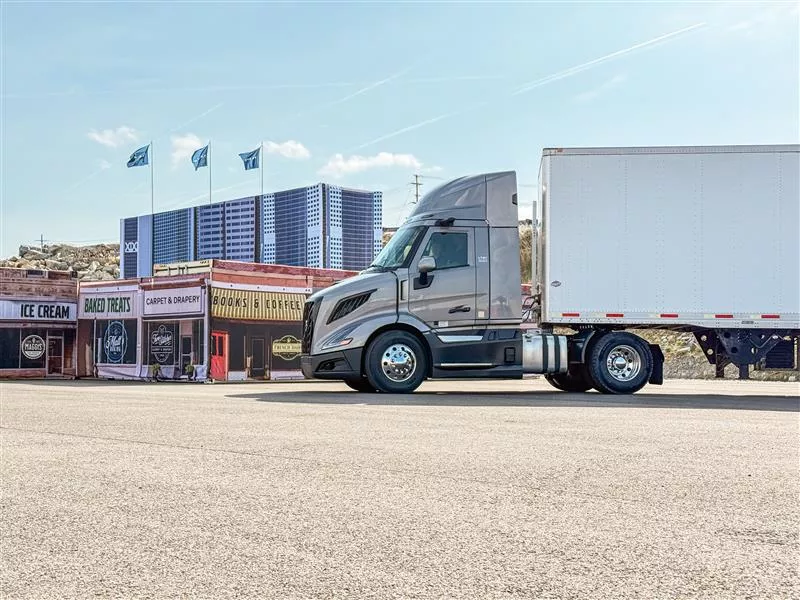
The Volvo VNR showcases its agility on a simulated urban circuit in Virginia. Its sloped-hood design enables precise maneuvering in tight spaces. Credit: Claude Boucher

It isn’t always easy to wow the crowd when presenting the second iteration of a new heavy-duty truck like the VNR, the regional transport version of Volvo’s VNL highway tractor.
Yet, that is exactly the feat accomplished by the Volvo Trucks North America marketing team.
The new Volvo VNR was unveiled last year, but production was just beginning when the Swedish manufacturer invited Fleet&Mobility to test it at the Volvo Trucks North America Customer Center track in Dublin, Virginia. Ahead of its new heavy-duty lineup launch, Volvo poured over $400 million USD into its New River Valley plant; this is the brand's largest truck manufacturing site globally. A major highlight of this investment is a brand-new, fully robotic cab assembly line.
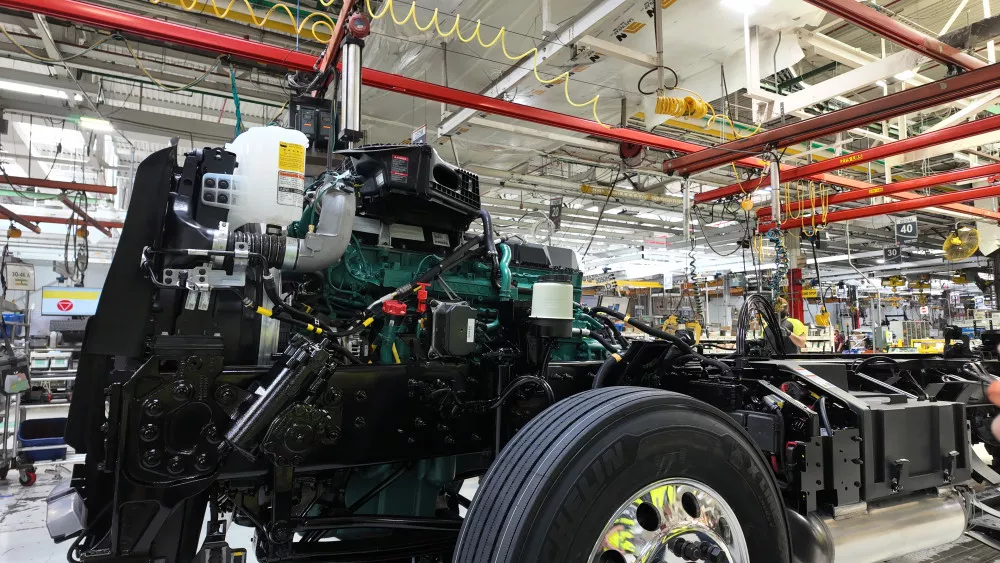
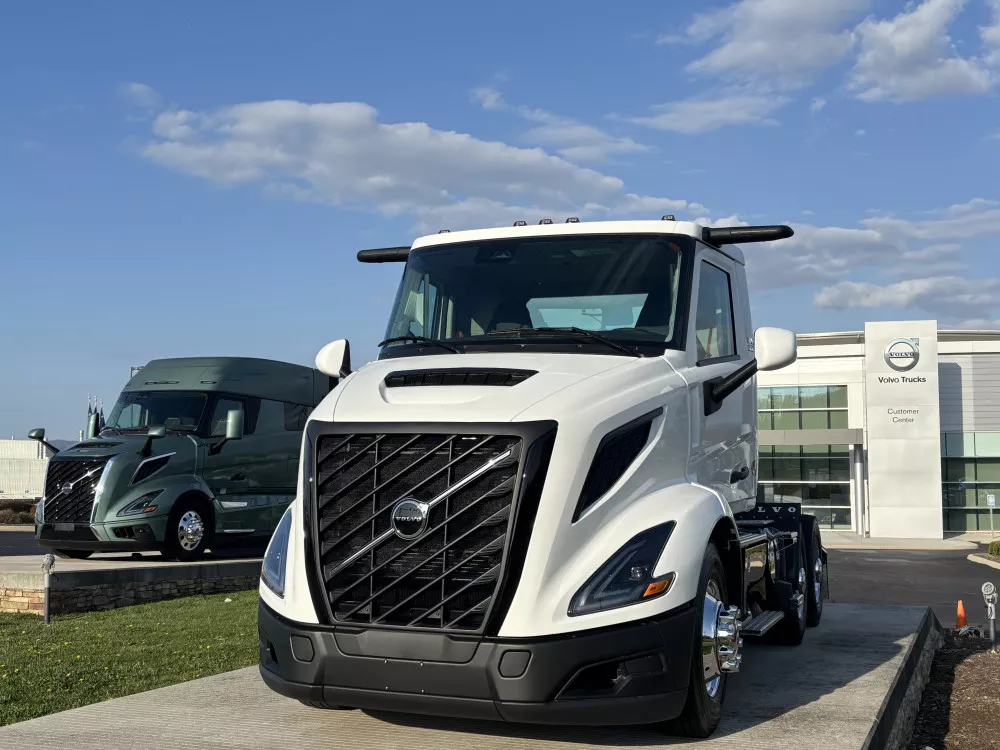
The new VNR essentially adopts the changes made to the VNL highway truck series launched last year: a fully redesigned truck featuring approximately 90% all-new components. Clearly more modern, equipped with cutting-edge technologies, and offering enhanced comfort, the VNR stands out from the typical regional truck, which is often devoid of amenities and offers a very limited range of trim and interior options.
The new VNR offers four different cab sizes, ranging from the VNR 300 daycab to the VNR 660 equipped with a 62-inch sleeper compartment. Two trim levels are available: Core and Edge.
Safety and economy
Since urban and regional transport trucks are the most exposed to road hazards and obstacles due to traffic, pedestrians, and tight spaces, Volvo offers an optional suite of safety and driver assistance technologies on the VNR. A prime example is the VDS (Volvo Dynamic Steering) system, where the steering gear is supported by an electric motor.
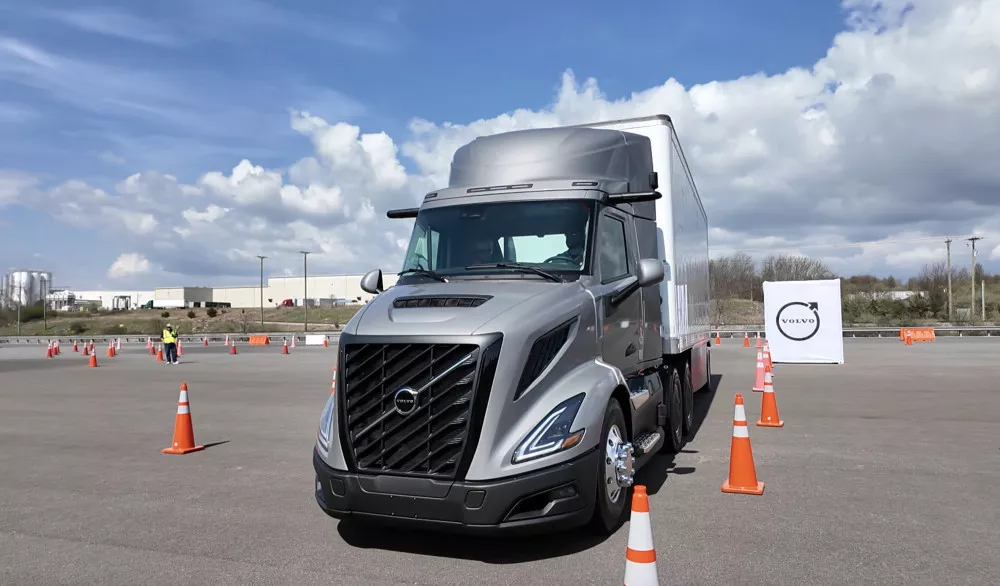
In terms of fuel efficiency, the new VNR offers a reduction in fuel consumption of up to 7.5%, an impressive figure for an urban heavy-duty vehicle. About 3.5% of this reduction is due to the completely redesigned cab, featuring a more sloped hood than before. The remaining 3% comes from Volvo’s powertrain refinements, including new pistons and injectors, a smaller turbocharger, a variable-speed oil pump, and an automated transmission that shifts 30% faster. In today’s economic climate, those fuel savings can add up to thousands of dollars in annual savings.
Track test: the WOW factor!
As mentioned at the outset, it is no easy task to impress specialized journalists with the presentation of a new regional truck. However, the Volvo team succeeded where many others failed by allowing them to take the wheel of the new VNR on its test track, just steps away from the factory.
The first portion of the tests took place on the main track, a rolling road with grades and curves simulating the scenic country roads of Virginia. This trial, involving various configurations and gross weights up to 82,000 lbs, proved that the VNR truly delivers the goods. Comfortable, quiet, and featuring precise steering, the VNR is just as pleasant to drive as its big brother, the VNL.
This route demonstrated how much the electronically assisted steering (VDS) reduces strain in the arms and shoulders, one of the primary causes of occupational illness for heavy truck drivers. The cruise control also adds a lot of value, particularly with its ability to automatically control speed on steep descents.
But it was on the "urban" track that the VNR made its biggest impact. In the center of the large track, the Volvo team had set up a cone circuit replicating tight urban turns and a backing corridor for a loading dock. Looking at the narrow lanes and sharp curves marked by orange cones, every journalist had the same reaction: there was no way to complete this course without killing a few cones.
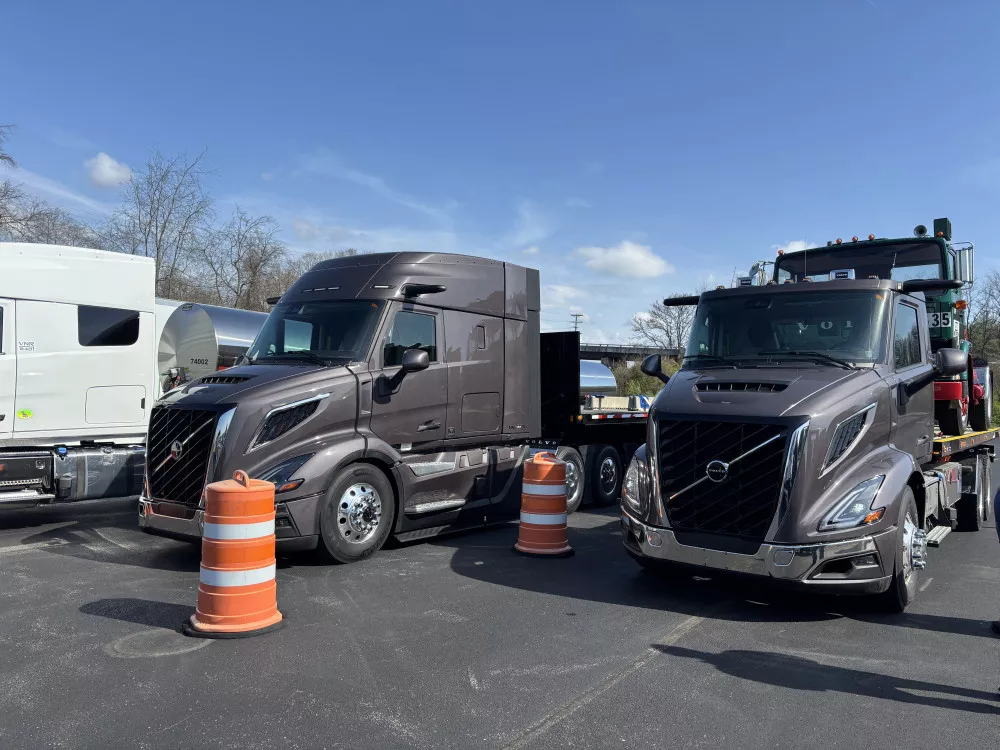
And yet! This is where the short nose and sloped hood of the new VNR make all the difference. In a quick, non-scientific calculation: from the usual driving position, we could see the ground just ten feet in front of the bumper.
Volvo thus allowed journalists to navigate this circuit and perform hairpin turns with incredible agility, further enhanced when the VDS system was engaged. This author not only managed to complete the course without sending a single cone to the morgue but was also among the elite group of three journalists who successfully backed the tractor-trailer into the dock in a single shot.
Cautious optimism
On the sidelines of these tests, Magnus Koeck, Vice President of Strategy, Marketing and Brand Management for Volvo Trucks North America, shared his reading of the current market. Although truck sales are heavily affected by the current economic climate, he believes that sales will inevitably pick up again in the coming months. The main reason: the average age of the truck fleet in North America is at its highest in over a decade, at 6.5 years.
"I am more optimistic now than I was just two months ago. There are positive signs; something is happening, even if it isn't reflected in sales yet."
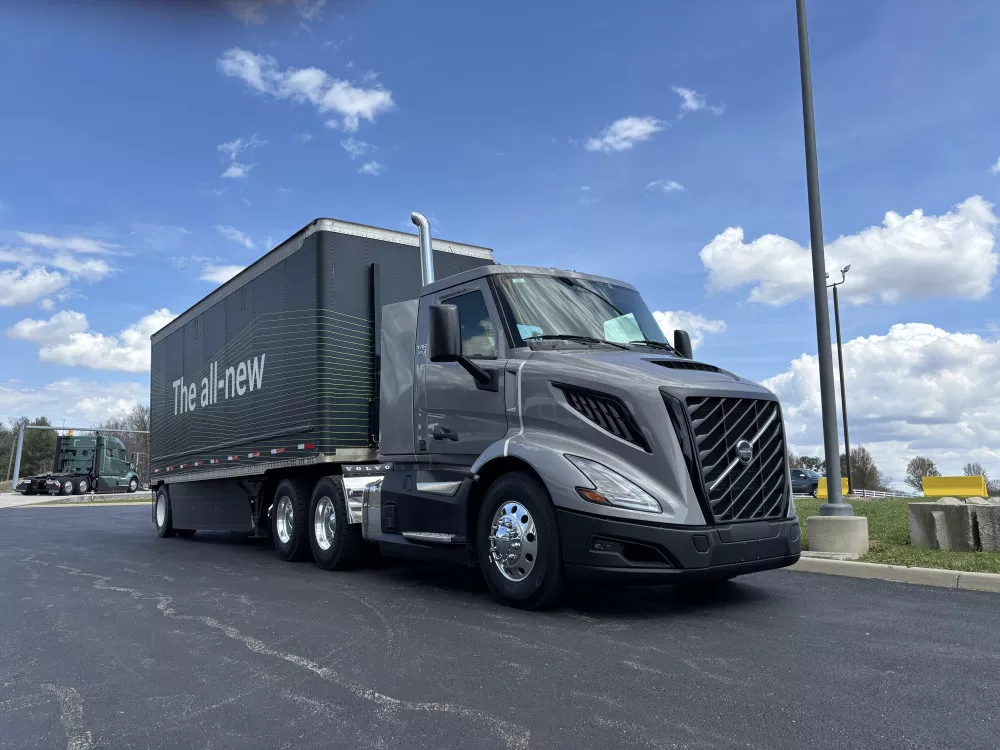
Volvo's market share for Class 8 trucks in Canada and the U.S. hovers around 11% (a figure that is actually higher in Canada). However, Koeck aptly points out that this calculation includes all trucks in this class, such as vocational heavy trucks for construction or waste collection—a segment where Volvo has a very limited presence.
In his view, in the freight transport segment (both highway and regional), Volvo's market share reaches a respectable figure of approximately 17%. Within the brand, the VNL highway tractor launched last year accounts for about 75% of Volvo's sales, compared to approximately 25% for the brand-new VNR.
Once the market bounces back, we’ll see if these highly efficient, high-tech trucks have what it takes to win over the North American market.