
Fleet Management in an Evolving World
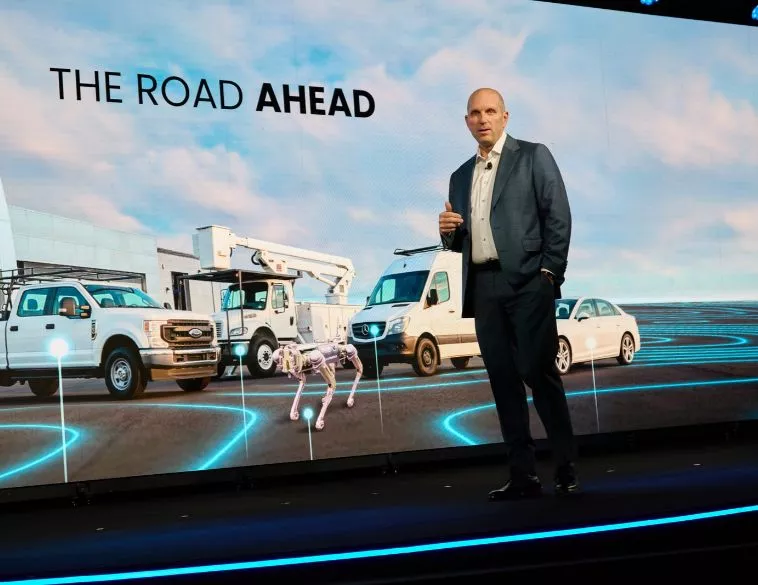
The event began with Holman CEO Chris Conroy recognizing the event's tenth anniversary. Credit: Jack Kazmierski
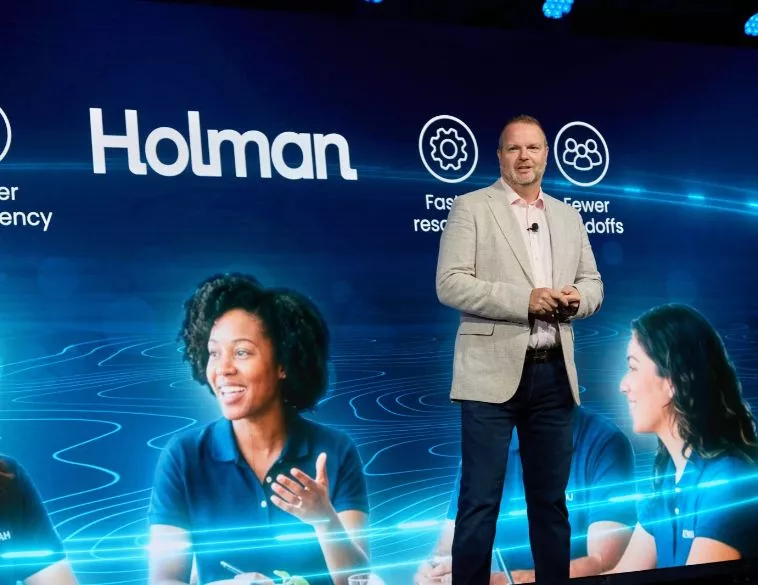
Nick Caller (pictured here) will succeed Bob White as President of Fleet at Holman. Credit: Jack Kazmierski
Industry experts and fleet professionals gathered at Holman Drive26 to discuss emerging challenges and practical solutions.
Holman brought together fleet professionals from across North America in Fort Lauderdale, Florida, on November 11 and 12 for Holman Drive26, the company’s annual customer conference. Now in its tenth year, the event featured two days of discussions, presentations and real-world insights into the challenges facing fleet operators, from economic uncertainty and rising operating costs to emerging technologies and opportunities to improve efficiency.
Putting innovation into practice
The event began with Holman CEO Chris Conroy recognizing the event's tenth anniversary and acknowledging the challenging operating environment facing businesses today, including high interest rates, volatile fuel costs and economic uncertainty.
He emphasized that standing still is not an option. Conroy highlighted how Holman continues to invest in technology and evolve its services to address current and future customer needs. He also shared how these investments are poised to deliver a more connected fleet experience that supports faster, more informed decision making through a new platform launching in a phased rollout starting in January, 2027.
To close out his opening keynote, Conroy announced that President of Fleet Bob White is set to retire after 37 years with Holman. White reflected on the industry's evolution and thanked the Holman family and customers for their support throughout his career.
Holman DRIVE26 demonstrated that navigating today’s complex fleet environment requires more than simply adjusting to change.
Economic uncertainty and market pressures
Mark Strand, Senior Director of Economic and Industry Insights at Cox Automotive, provided an overview of the economic trends impacting the fleet industry and automotive sector as a whole.
He described a K-shaped economy in which higher-income households continue to drive spending while lower-income consumers face greater financial pressure. Despite relatively positive GDP and employment figures in the U.S., consumer sentiment remains low.
Higher vehicle prices and interest rates are also stretching vehicle financing, with loan terms extending to 84 months.
Strand reported that U.S. retail light-vehicle sales were down 5% year-to-date, while fleet sales were up 7%. Hybrids continue to perform well, and used EVs are attracting more interest than many expected.
He forecasts that EVs could account for approximately 10% of the market over the next couple of years as technology improves and costs decline. In the meantime, hybrids are likely to gain further popularity.
For fleets remarketing vehicles, the outlook for used vehicle values remains positive, with limited supply and consumers increasingly holding onto older vehicles.
Trade policy was another important topic. Trey McKenzie, VP of Government Affairs at the U.S. Chamber of Commerce, discussed the 2026 midterm elections and the uncertainty surrounding U.S. trade policy.
A subsequent panel featuring McKenzie, Strand and Kevin Tynan of the Presidio Group explored the outlook for Canada-U.S. tariffs. While the timing remains uncertain, the panel expressed optimism that tariffs affecting Canada could be lower by this time next year.
Making telematics actionable
One of the most practical breakout sessions of Holman Drive26 focused on turning telematics data into measurable results.
Holman's Ed Powell and Emily Graham emphasized that telematics does not automatically reduce costs. Its value comes from turning information into action.
They compared it to wearing a fitness tracker: Collecting information does not improve your health unless you do something with it.
Graham and Powell identified four key areas where telematics can generate value: driver safety and risk reduction, vehicle utilization and right-sizing, maintenance and uptime, and fuel consumption and idling.
They encouraged fleet managers to establish clear objectives before investing, understand their baseline performance, assign responsibility for acting on data and ensure the expected benefits justify the cost.
Their message was particularly relevant to fleets that have invested in technology, but struggle to achieve meaningful results. Collecting data without follow-through will not deliver a return on investment.
Holman’s continued investment in technology & service enhancements
Day two of Holman Drive26 focused on Holman's investments in technology, people and processes.
Bob White returned to the stage to discuss the company's commitment to continuous improvement while also announcing that Nick Caller would succeed him as President of Fleet.
Holman’s CIO Jarrod Phipps provided further details about how the company is bringing together AI-powered technology, service enhancements, and fleet expertise through a new platform designed to make fleet management simpler, more connected, and more actionable for customers with a phased launch beginning in January. The goal is to simplify customer interactions and automate repetitive tasks, freeing fleet professionals to concentrate on more important responsibilities.
Caller stressed that technology will not replace Holman's experienced fleet professionals. Instead, it will give them better tools to deliver meaningful insights and recommendations while also enhancing the customer experience.
Customer success and operational improvements
Closing out the main stage session were two customer case studies demonstrating the practical benefits of fleet technology.
Sharyn Roberts, Senior Manager of Fleet Management at BGIS, described how adopting Holman's app helped consolidate multiple applications and simplify the driver experience.
Holman's vehicle inspection tool also helped BGIS address compliance challenges, increasing inspection compliance to 85% within months. The company additionally experienced significant reductions in accident rates and speeding incidents.
DJ Sagendorf, Global Fleet Manager at APi Group, discussed the challenges of standardizing a fleet following multiple acquisitions. At one point, the company had 72 different versions of essentially the same truck. Standardizing vehicles and processes remains an important part of its optimization strategy.
A separate work truck breakout session addressed rising fuel and operating costs, tariffs, supply-chain pressures and vehicle availability. The session highlighted how fleet managers are increasingly using telematics to identify underutilized vehicles, right-size their operations and consider smaller vans where appropriate.
Preventive maintenance is also becoming increasingly important as companies keep vehicles in service longer. Some fleets are exploring mobile maintenance services, including servicing vehicles at drivers' homes.
Benefit of strategic partnerships
Across two days of thought-provoking conversations and practical insights, Holman DRIVE26 demonstrated that navigating today’s complex fleet environment requires more than simply adjusting to change. It requires turning data in action, embracing emerging technology with a purpose, and aligning with strategic partners who can help you find smarter ways to improve efficiency, reduce costs, and keep your business moving forward.