
Ford Unveils 'Fathom'
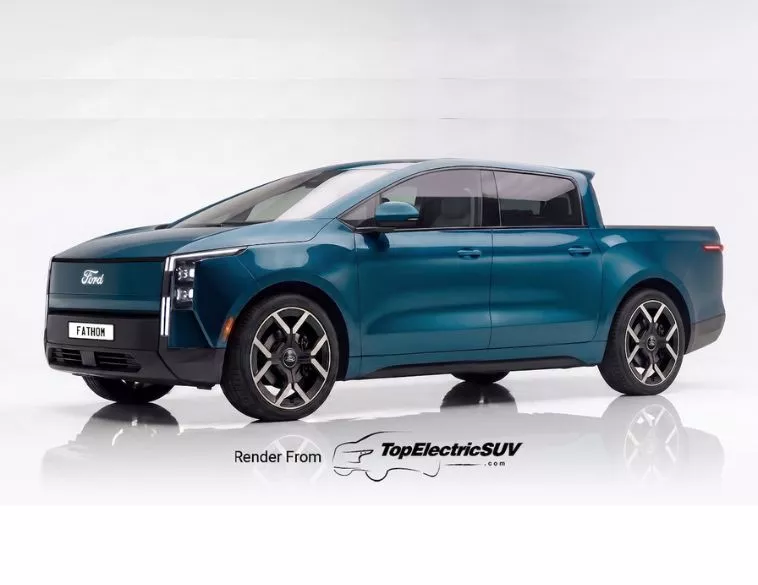
Ford Motor Company has officially revealed the name, production strategy, and technical targets for its upcoming affordable electric pickup: the Ford Fathom. Engineered by a dedicated hardware and software team operating in California since 2022, the Fathom serves as the launch vehicle for Ford’s low-cost Universal Electric Vehicle (UEV) platform.
Order banks for the Ford Fathom are scheduled to open in early 2027, with initial customer deliveries arriving late in the year. The standard-range battery model carries a starting MSRP of $38,690 after applying Canada's $4,000 federal iZEV purchase incentive. This pricing strategy positions the zero-emission truck squarely against gas-powered compact and midsize pickups like the Ford Maverick.
Cabin Packaging, 48V Tech, and Power Capabilities
While maintaining a compact-to-midsize footprint, the Fathom’s EV-native packaging provides more interior passenger space than a Toyota RAV4, offering seating for five adults. Key vehicle specifications include:
- 48-Volt Low-Voltage Architecture: Replaces traditional 12-volt wiring networks to significantly reduce component weight, harness complexity, and manufacturing cost.
- Connected Infotainment: Standard features include a high-resolution touchscreen with embedded Apple Maps EV route planning, wireless Apple CarPlay and Android Auto, digital key functionality, and hardware for Ford's BlueCruise hands-free highway driving system.
- Utility & V2L: Equipped with a front trunk (frunk), a flexible cargo bed, and bidirectional power flow capability to run jobsite power tools or provide home backup power during electrical outages.
- Target Performance: Powertrain tuning targets acceleration benchmarks comparable to a Mustang EcoBoost.
Tree-Assembly Manufacturing & LFP Cell Chemistry
To achieve target margins at a sub-$40,000 base price, Ford is investing $2 billion USD into its Louisville Assembly Plant in Kentucky. The facility replaces traditional linear assembly lines with a tree-shaped manufacturing flow utilizing large single-piece aluminum unicastings, allowing sub-assemblies to integrate directly into a structural battery pack. This process reduces build time by up to 40 percent.
The vehicle will utilize cobalt- and nickel-free Lithium Iron Phosphate (LFP) battery cells manufactured at the BlueOval Battery Park Michigan facility in Marshall, lowering raw material costs while enhancing thermal endurance.