
Holman Fleet Management: From Risk to Resilience
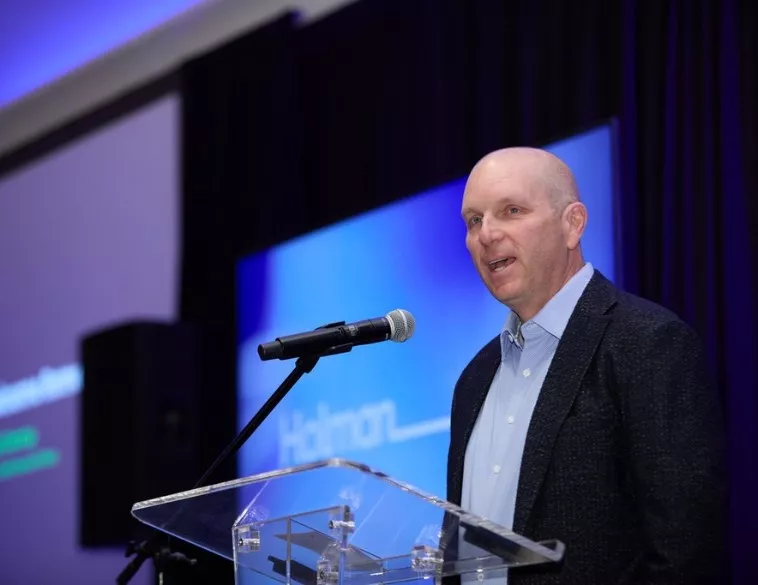
Holman CEO Chris Conroy emphasized Holman’s commitment to Canada. Credit: Jack Kazmierski

Telematics, economic forecasting and real-world benchmarking took centre stage as Holman brought its fleet forum series to Toronto.
Holman continued their 2026 cross-Canada fleet tour with a stop in Toronto on May 5, following the tour kickoff in Montreal. The 2026 Toronto Fleet Forum, which took place at the Angus Glen Golf Club, was well-attended and brought together a strong mix of fleet professionals, OEMs, media, along with Holman executives, who flew in from the company’s global headquarters in the U.S. for the event.
“We host these annual fleet forums across the country every year with the goal of informing, educating, sharing our latest insights and our best practices to help you manage your fleets,” Brent Scowen, Holman Canada’s Managing Director said during his opening remarks. “We're truly grateful for your continued business, and we appreciate you taking the time to be with us today,” he added, acknowledging the many Holman customers in the room.
Committed to Canada
Holman CEO Chris Conroy was among the executives who travelled from the company’s U.S. headquarters for the event. After welcoming the audience and thanking the company’s customers for their trust in Holman, he spoke about the breadth and depth of the Holman organization: a family-owned business, 102 years in business, $10 billion in revenue, and operating in five countries, including Canada.
Most notably, Conroy emphasized Holman’s long-term commitment to the Canadian market. “We’re going to be in Canada for the long haul,” he said, alluding to the challenges our country is facing because of economic and political uncertainty tied to the current U.S. administration.
Data-driven safety and risk reduction
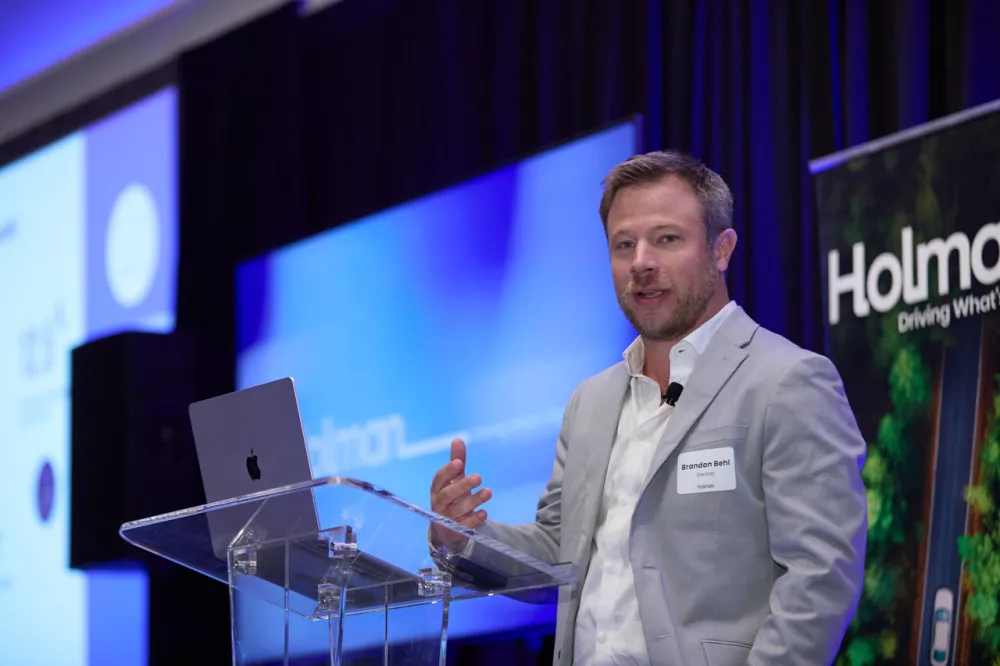
Geotab’s Steven Berube, VP Sales; and Brandon Behl, Channel Sales Manager spoke about leveraging telematics to reduce risk. Berube noted that Geotab is seeing a strong trend in the industry: Fleets are more focused on driver safety and reducing the risk of accidents.
Behl explained that Geotab has been offering third-party in-cab camera solutions for over a decade. However, recently they introduced a solution in partnership with Holman - the GO Focus Plus.
He pointed out that 95% of all collisions are caused by human behaviour, which is why it’s critical for fleets to know what their drivers are doing when they’re behind the wheel. “Using a phone while driving increases the risk of a collision by 12x,” he said, “and nuclear verdicts can cost fleets millions of dollars.”
The good news is that fleets have he ability to change driver behaviour. When using event-based video combined with driver behaviour coaching, Geotab’s fleet customers saw a 35% reduction in crashes with injuries.
“Cameras can reduce claims because you have a video record of what actually happened,” Behl added. ‘No more ‘he said / she said,’ and the footage can also help you fight litigation.”
Economic outlook: navigating uncertainty
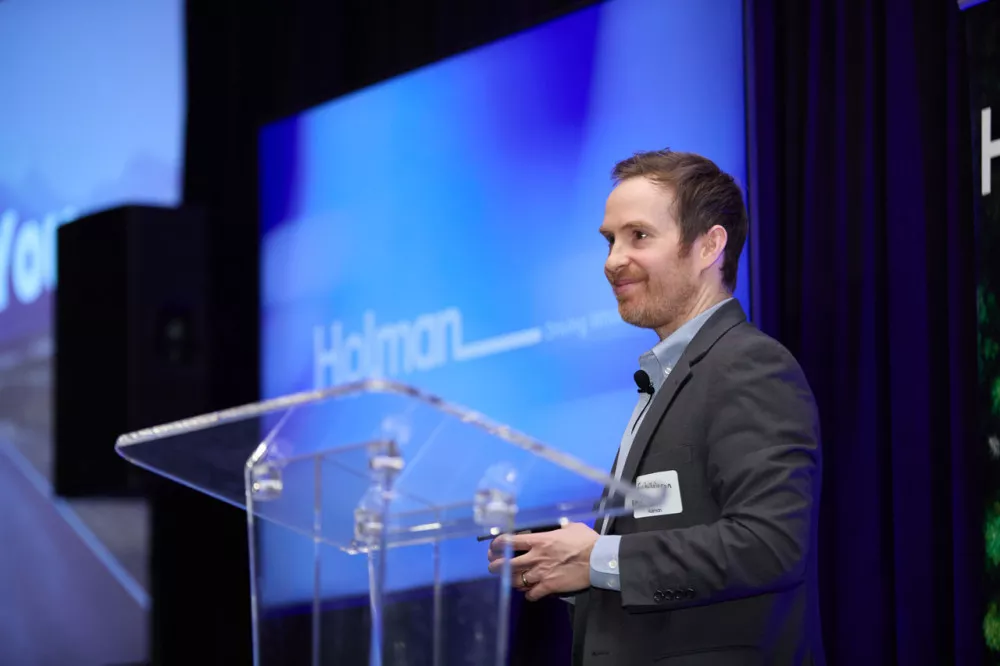
Erik Johnson, VP and Senior Economist at BMO offered a compelling overview ofwhere the Canadian economy might be headed, keeping in mind tariff, oil prices and the looming CUSMA deadline.
He pointed out that we are not likely to run out of fuel here in Canada because of the war in the Middle East, but we will continue to see high gasoline and diesel prices. “We are at an advantage since we don’t buy a lot of oil from the Middle East,” he said, “but it does impact the price of fuel here because it’s a global commodity.”
That said, nothing is carved in stone just yet. We live in unpredictable times, things can change overnight, and oil prices could fall very quickly, he explained.
“The good news is that the labour market is holding up in North America,” he added. “Hiring is weak, but at the same time, layoffs are really low. This should remain steady, unless we see another big shock.”
Interest rates should also remain steady, he added. However, if the conflict in the Middle East lasts into August, then we might have an increase in interest rates.
Turning data into action
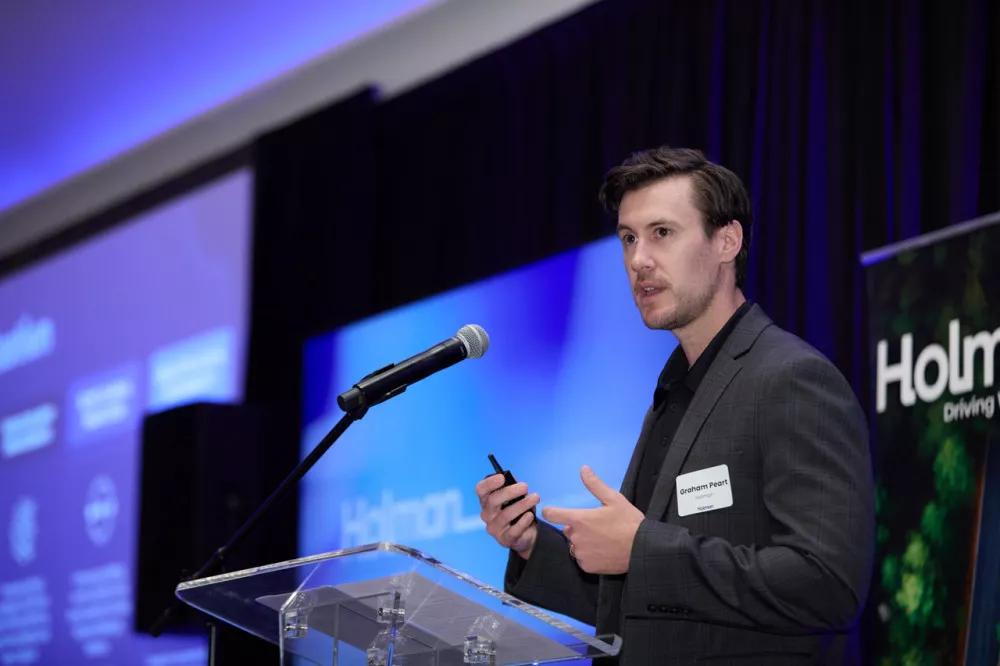
For fleet operators, one of the most actionable sessions came from Graham Peart, Manager of Strategic Accounts at Holman, who focused on how benchmarking data can be used to drive smarter decision-making.
Peart shared several key performance trends across Canadian fleets. Maintenance costs per kilometer are down 7%, and preventive maintenance compliance has improved by 8%, both signs that fleets are becoming more disciplined in managing routine upkeep.
However, other metrics point to emerging challenges. The average odometer reading has risen 2% to 95,360 km, while the average lifecycle has extended to 10.5 years, up 4%. Unscheduled maintenance remains high at 70.3%, indicating that many fleets are still reacting to issues, rather than preventing them.
For Holman clients, these benchmarks provide more than just industry context, they offer a roadmap for action.
Peart emphasized that extending vehicle lifecycles may reduce short-term capital spending, but it often leads to higher long-term operating costs, increased downtime, and greater risk exposure. Similarly, elevated levels of unscheduled maintenance can signal gaps in preventive maintenance programs or delays in cycling vehicles out of service.
By comparing their own fleet data against these benchmarks, organizations can identify where they are over-performing, or falling behind, and make targeted adjustments. That might include optimizing replacement cycles, improving maintenance compliance, or leveraging telematics data to anticipate issues before they escalate.
His key takeaway: Data is only valuable if it drives decisions. Fleets that actively benchmark and adapt are better positioned to control costs, improve reliability, and reduce operational risk.
Innovation through iteration
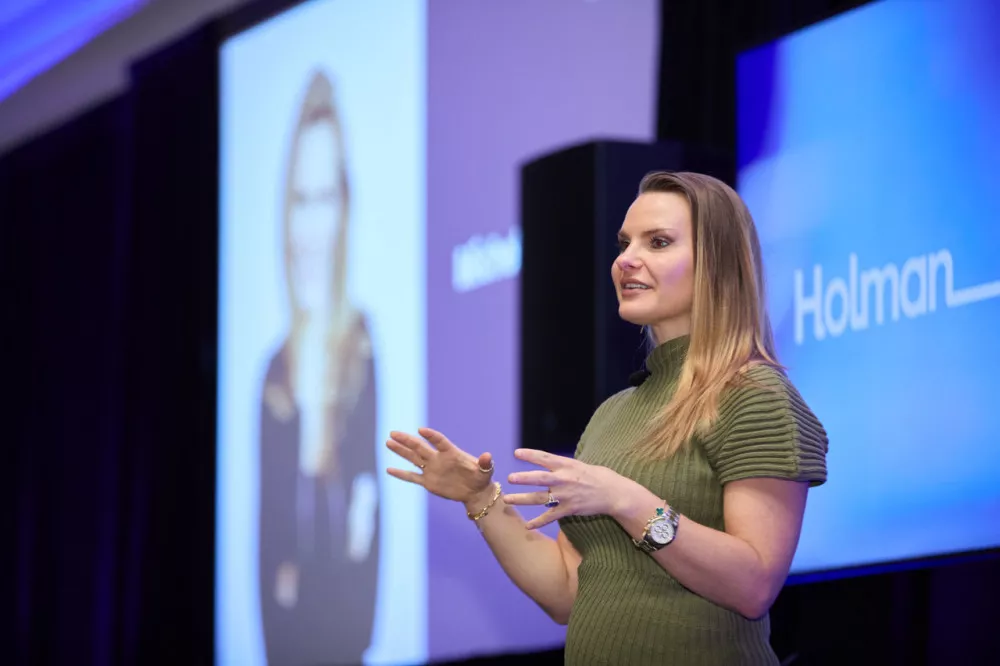
The event concluded with a keynote presentation by Michele Romanow of Dragon’s Den fame, who spoke about her journey as an entrepreneur. She stressed that success doesn’t come from one eureka moment - it comes from countless smaller iterations.
This serial entrepreneur started her first business (producing and selling caviar to restaurants) while still in school, and she explained how often you have to fail in order to succeed.
“Everyone gets to talk about all the good things that happen, but what never gets shared is all the failures along the way,” she told the audience. “All the things that don’t work give you the learnings you need to know what will work. It’s going to take a lot of black eyes to get you to being a winner. It’s a huge process.”
Her message to Holman’s guests was clear: Great innovation comes from iteration - from trying different things many different times. So if you’re going to innovate, don’t be afraid to fail first. It’s just part of the process.