
Giving Ambulances a Second Life
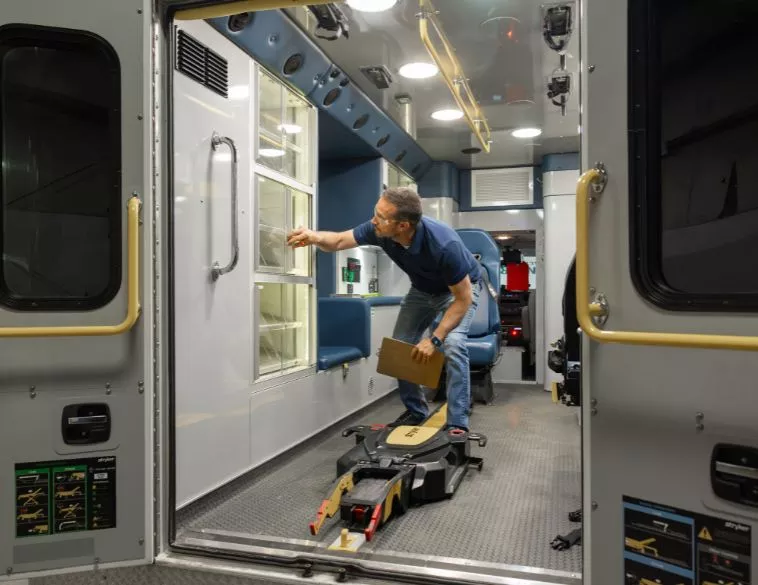

Remounting can help EMS fleets stretch capital budgets, extend the life of expensive ambulance conversions and get replacement vehicles into service faster.
For EMS fleets, replacing an ambulance is anything but a simple task. Ambulances are expensive specialized vehicles, and fleet managers must balance patient-care requirements, vehicle reliability and increasingly tight budgets.
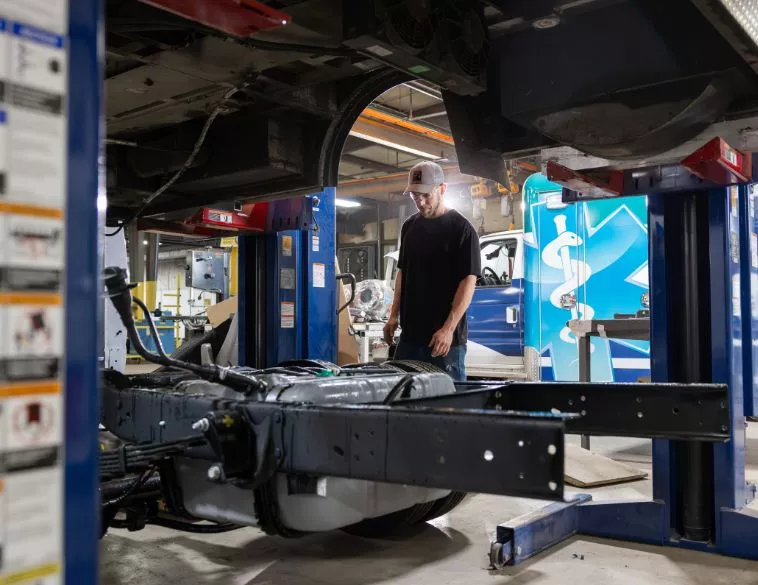
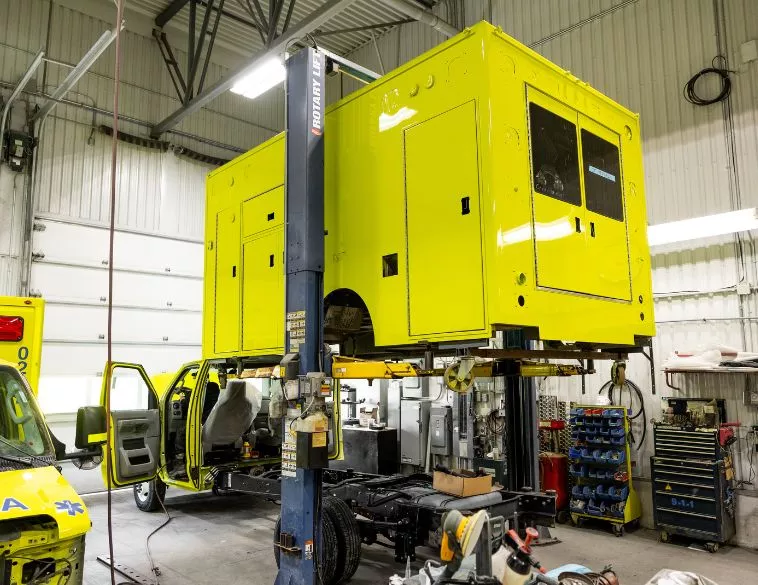
One option gaining attention is the remounted ambulance: Taking the ambulance body, or conversion, from an existing vehicle and installing it on a new chassis. “This is often done because the body can cost two to three times more than the chassis it is mounted on, and a well-constructed body can outlast the chassis,” explains Joe Korn, Consultant with Holman.
Marcel Fortin, Director of Ambulance Sales with Demers & Crestline Ambulances, says the chassis is generally the component that reaches the end of its economical service life first.
"When you get to 250,000 kilometres or more on an ambulance, that's when the transmission and engine start failing," he says. "The ambulance conversions—the boxes—are built to last a lifetime: 25 years plus.”
More than a chassis swap
For fleet managers, however, remounting shouldn't be viewed simply as transferring an old body onto a new frame.
Fortin says the process can be an opportunity to refurbish and modernize the ambulance conversion. Depending on the customer's requirements, that can include repainting, replacing flooring, updating equipment and bringing technology in line with newer units in the fleet.
"It's a way to freshen up the ambulance without having to spend the big dollars that come with buying a new ambulance," he says.
That ability to modernize an existing asset is particularly relevant for EMS organizations with specialized or expensive ambulance bodies. Korn notes that the economics can be especially compelling when a conversion represents a significant investment.
"For fleets operating on a tight budget it is often viable to move the body to a new chassis to maximize the unit's lifespan," he says. "This is particularly true for highly sophisticated or complex bodies that come with a higher upfront cost."
But Korn also cautions that the work isn't necessarily straightforward. "We rarely see this type of work performed as it can be extremely time consuming and rather costly," he says.
That is one reason fleet managers need to look beyond the apparent cost difference between a new ambulance and a remount.
The economics of remounting
Fortin estimates that a remounted ambulance can save approximately 30 to 35% compared with purchasing a new unit, depending on the configuration and options selected.
But Fortin doesn't advocate an all-or-nothing approach. Instead, he recommends a mixed procurement strategy that combines new ambulances with remounted units.
"It's not just about reducing the cost," he says. "It's understanding that municipalities and customers usually have set budgets. A remount allows you to expand the amount of vehicles that you put back into your fleet without having to play with those budget dollars. You can get more vehicle for that same dollar amount, rather than having a replacement strategy that is only focussed on new builds.”
Remounts can also help fleets deal with vehicle availability. Fortin says a remounted unit can typically be completed in six to eight months, compared with approximately 12 to 16 months for a new build.
"Most people… couldn’t tell the difference between a new and a remounted unit."
- Marcel Fortin, Director of Ambulance Sales, Demers & Crestline Ambulances
Timing is critical
The financial case for a remount can disappear if fleet managers wait too long. Fortin says one of the most common mistakes is allowing a potential candidate to deteriorate before planning for its remount.
"If you have a unit that's been neglected and not maintained, I'm not sure that will be the right candidate," he says. In that situation, the cost of repairs and refurbishment can outweigh the cost of simply buying a brand new unit.
Korn makes a similar point, identifying refurbishment and repairs to the body as "the biggest hidden cost" in a remount decision.
"While a unit may appear to be in good shape, until it is off the chassis, it is difficult to fully assess the extent of repairs it may need before being transferred to a new chassis," Korn says.
Fortin says his organization uses an inspection process to determine whether a conversion is a suitable candidate before accepting a remount project. "We have a checklist that out team goes through with the customer," he says.
In some cases, the inspection determines that a remount simply doesn't make economic sense, allowing the fleet to pursue another replacement option before significant money has been committed.
Don't overlook the provider
Both Korn and Fortin emphasize the importance of choosing a qualified organization to perform the work. For Korn, this is one of the most important considerations for any fleet contemplating a remount.
"Before you even consider potentially moving an ambulance body to a new chassis, you need to ensure there is a well-qualified upfit provider in your region that can perform this type of work," he says.
The reason is straightforward: Ambulance conversions are complex. "Facilities that are not familiar with the complexities associated with these ambulance bodies may overlook key items that, if missed, will create more work and additional costs after the transfer," Korn says.
Fortin argues that having the original manufacturer perform the remount can provide additional peace of mind because the manufacturer has access to the original engineering information and can certify the work.
"We have the original schematics, the material, the engineering team that built the unit the first time around," he says. "We know exactly the requirements, exactly what component, supplier, design to use to make sure that it's not only a safe and certified ambulance, but it's something that's going to be functional and able to serve your fleet for years to come."
A growing option
Remounting is hardly a new concept, but Fortin says its adoption in Canada is increasing as EMS organizations look for ways to manage capital costs without compromising fleet capacity.
He estimates that approximately 20 to 25% of ambulances currently delivered in Canada are remounted units. More significantly, he says demand for remounts has grown by approximately 25% annually over the past three years.
Thas growth is encouraging Demers and Crestline Ambulances to invest in additional remount capacity, helping address one of the key reasons fleets choose the option in the first place: faster availability.
For fleet managers, however, the numbers should not be interpreted as an argument that every ambulance should be remounted. The better approach is to determine which vehicles are suitable candidates and to build the decision into a broader lifecycle strategy.
That means considering the age and condition of the conversion, chassis mileage and maintenance history, anticipated refurbishment costs, downtime, replacement requirements and the availability of qualified remount providers.
Perhaps most importantly, fleet managers need to recognize that an ambulance being removed from service doesn't necessarily mean its entire useful life is over.
As Fortin puts it, when an ambulance is sent to auction or otherwise disposed of, managers should, "make sure that you look at what you're getting rid of because more often than not, the box is still going to be in a very good shape."
And for anyone concerned that a remounted ambulance will simply look and feel like an old vehicle, Fortin offers a simple counterpoint. At a 2025 trade show, his company displayed a remounted unit instead of a new one.
"Most people didn't realize it was a remounted unit," he says. "They couldn't tell the difference between a new and a remounted unit."
For fleet managers facing the twin pressures of aging vehicles and constrained budgets, remounted units may be worth a closer look.