

Reducing TCO with electric vehicles
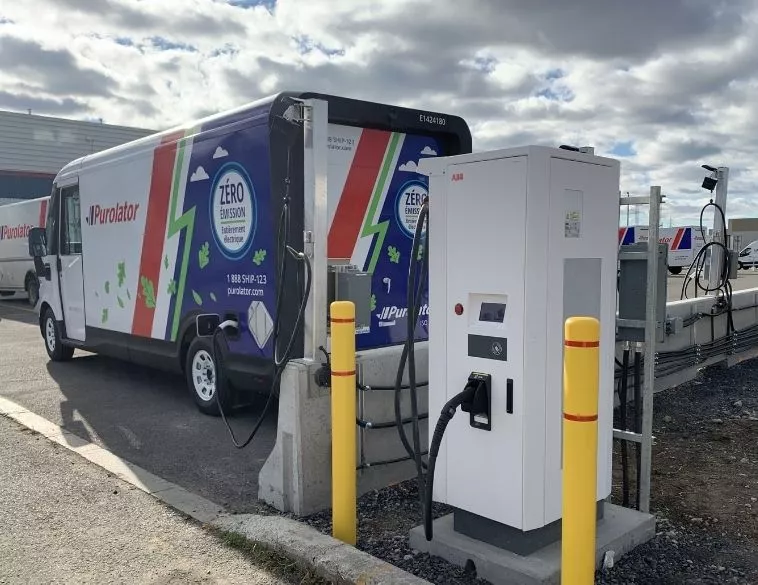

Lower TCO for electric vans: up to $10,000 in savings per year thanks to carbon credits, and 30–50% reductions in operating costs.
While the strategic importance of electrification is now widely recognized, high upfront investment costs still hold some organizations back. In Canada, however, the Clean Fuel Regulations are transforming electrification into a compelling financial opportunity. Over a 5- to 7-year horizon, total cost of ownership (TCO) analysis shows that electric vehicles are not only competitive, but clearly advantageous, largely due to the monetization of carbon credits.
Why electrification changes the financial equation
Electrification fundamentally reshapes how fleet operating costs are structured. Electric vehicles contain far fewer mechanical components, eliminate oil changes, and significantly reduce maintenance requirements. Energy costs are also more stable and generally lower than gasoline or diesel.
According to a PwC report, fleets can achieve cost savings of 30–50% over five years. These savings can be further enhanced by revenue from carbon credits. Each tonne of CO₂ avoided corresponds to one carbon compliance unit, with market values ranging from $175 to $350*. When combined with available incentives and subsidies, these benefits accelerate asset payback and improve long-term profitability.
Clean Fuel Regulations: A powerful financial lever
The federal Clean Fuel Regulations are built on a straightforward principle: every kilowatt-hour consumed by an electric vehicle generates carbon compliance units that can be sold on the market. While the regulatory mechanics can be complex, partnering with an aggregator simplifies the process, turning every vehicle charge into a revenue.
For a fleet traveling approximately 1,000 km per month, carbon credits can generate several hundred dollars per vehicle per year. Over a five-year period, these cumulative revenues directly reduce TCO and significantly shorten return on investment timelines.
The advantage of electric over gasoline
An electric utility van can deliver approximately $3,500 per year in fuel savings. When combined with carbon credit revenues, total annual benefits can be close to $10,000 per vehicle.
The financial impact is even more pronounced for heavy-duty vehicles. A truck traveling 50,000 km annually can generate $17,000 in fuel savings and up to $45,000 in carbon credit revenue, representing more than $60,000 in annual value compared to a combustion-engine equivalent.
While higher vehicle acquisition costs and charging infrastructure investments must be considered, these expenses are often eligible for government support programs, which helps offset upfront costs.
Electrification: A profitable choice, amplified by carbon credits
When carbon revenues are fully integrated into TCO analysis, fleet electrification reveals its true potential. Despite higher upfront investment, lower operating costs, recurring carbon credit revenue, and available funding programs dramatically accelerate return on investment timelines.
The result: electric vehicles emerge as a solution that is not only environmentally responsible, but decisively financially attractive.
Do the math!
*Values depend on market conditions and negotiation capacity; examples reflect average amounts negotiated by Polara since the launch of its Carbon program.