
B.C. Raises the Bar on Fleet Safety

New dash camera mandate reflects a growing industry belief that video technology can reduce risk, improve accountability, and support professional drivers.
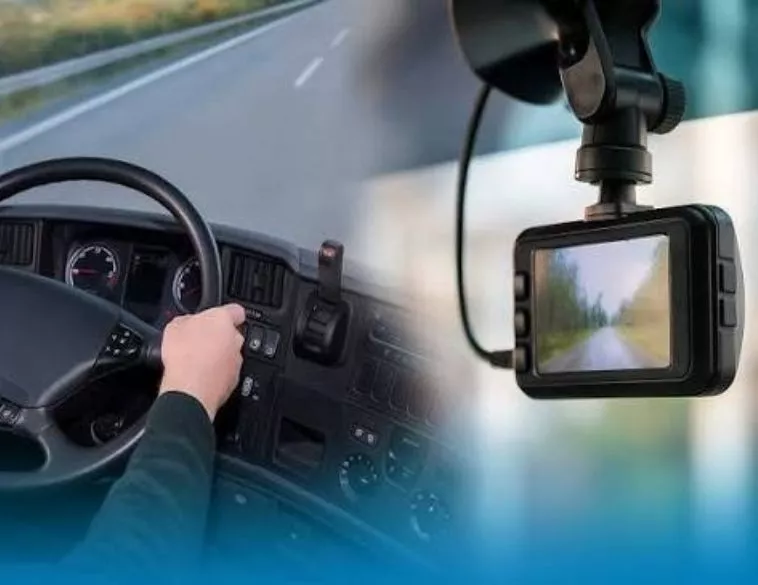
British Columbia is poised to become the first jurisdiction in Canada to require dashboard cameras in commercial vehicles, following the passage of a private member's bill that received unanimous support in the provincial legislature.
Bill M217, the Dashboard Cameras in Commercial Vehicles Act, introduced by Kamloops-North Thompson MLA Ward Stamer, passed third reading with bi-partisan support. Once it receives Royal Assent, the legislation will require outward-facing dash cameras on commercial trucks operating on B.C. highways, with implementation beginning six months later.
The move represents a significant shift in commercial vehicle safety policy and could influence similar discussions in other provinces as fleets increasingly adopt video technology to improve safety performance, reduce claims costs, and streamline collision investigations.
“There’s a general feeling that getting ahead of collisions is the right policy move.”
- Vince Hoffman, Associate Vice President, Product Design, Geotab
A response to highway safety concerns
The legislation emerged from growing concerns about serious and fatal collisions on Highway 5, one of British Columbia's most important commercial transportation corridors.
Stamer first advocated for mandatory dash cameras in 2023 while serving as Mayor of Barriere. According to Stamer, the legislation is intended to improve accountability and provide investigators with reliable evidence following collisions.
“Dash cameras save lives. They hold drivers accountable. And they make sure that when a crash happens, the evidence is there, not lost, not disputed, not buried in a year-long investigation,” he said following the bill's passage.
Vince Hoffman, Associate Vice President of Product Design at Geotab agrees. “There’s a general feeling that getting ahead of collisions is the right policy move,” he says. “This mandate speaks to a genuine public concern for safety.”
Hoffman sees this new law as part of a bigger picture. “Commercial drivers ought to be safe, and that’s a message that we need to drive home,” he explains. “They ought to be able to get home to their families at the end of the day, and the people who share the roads with them, ought to have the same benefit.”
Industry support
The proposal has received support from the British Columbia Trucking Association (BCTA), which has long advocated for broader adoption of onboard camera technology.
According BCTA President & CEO Dave Earle, although BCTA members are not opposed to mandatory outward facing dash cams, they believe that this type of mandate should be federal and not provincial.
“BCTA has communicated this to the province, and publicly, as we believe that failing to take a national approach will create a patchwork of regulations, and that it would be an example of well-intentioned regulation once again creating interprovincial trade barriers,” Earle explains. “We have raised this issue with our provincial association counterparts and our federal body, the Canadian Trucking Alliance, and will continue to advance this work.”
Earle points out that about 75% of the fleets with BCTA membership have already invested in dash cameras, with many running multiple cameras that show views all around the vehicle. “This level of deployment within the on-highway fleet appears to be consistent across the country,” he adds.
Assigning blame and determining fault
Industry representatives note that commercial drivers are frequently involved in collisions for which they bear little or no responsibility. In many cases, determining fault can take months and may rely heavily on witness accounts or limited physical evidence.
Stamer points out that according to the BCTA, commercial drivers are not at fault in approximately 75-80% of collisions involving a commercial vehicle. Outward-facing cameras can provide immediate video evidence that helps establish what occurred, potentially accelerating investigations and protecting professional drivers from unwarranted liability.
For fleet operators, the benefits extend beyond collision reconstruction. Many fleets already use dash camera systems as part of broader safety programs, leveraging video footage for driver coaching, risk management, insurance claims support, and litigation defence.
Privacy considerations addressed
One of the key issues raised during discussion of the bill was driver privacy. To address those concerns, the legislation applies only to outward-facing cameras that record roadway activity and does not require cameras inside the vehicle cab.
The distinction is important for fleets and drivers alike. While inward-facing cameras have become increasingly common among some carriers, they remain controversial within parts of the industry due to concerns about privacy, monitoring, and driver acceptance.
By limiting the requirement to forward-facing cameras, lawmakers sought to focus on collision evidence and roadway safety while avoiding debates surrounding driver surveillance.
Implications for fleets
For fleets already equipped with dash cameras, compliance with the new legislation may require little or no operational change. However, carriers that have not yet adopted the technology will need to evaluate equipment options, installation timelines, data management policies, and maintenance requirements before the law takes effect.
The legislation could also accelerate broader adoption of video-based safety technologies across Canada. As provinces continue to examine ways to improve road safety and reduce collision-related costs, B.C.'s experience will likely be closely watched by regulators, insurers, carriers, and industry associations.
Geotab’s Hoffman says that he is seeing a paradigm shift in the industry with respect to dash cameras. “Some [fleet managers] are still thinking that they have to treat the symptoms, which would be the crashes and collisions. Once they happen, they feel that their job is to be the ‘long arm of the law,’ which means they will try and create policies that stops them from happening again,” he explains. “However, once a crash or collision happens, it’s already too late.”
Rather than reacting to incidents, and trying to change behaviour after the fact, Hoffman suggests a more proactive approach. “The smart fleets realize that they can proactively coach drivers and change behaviour long before a crash or collision takes place,” he explains.
Setting a national precedent
The unanimous support the bill received in the legislature highlights the growing consensus around the role of video technology in commercial transportation safety.
As fleets face increasing pressure to improve safety performance, reduce risk, and protect drivers, dash cameras have moved from being an optional fleet-management tool to a technology that many industry stakeholders view as essential.
With Bill M217 now awaiting Royal Assent, British Columbia is set to establish a new benchmark for commercial vehicle safety regulation in Canada, which could ultimately reshape how fleets across the country approach onboard video technology.