
From Egg to Plate: Inside the Shoreland Transport Haul
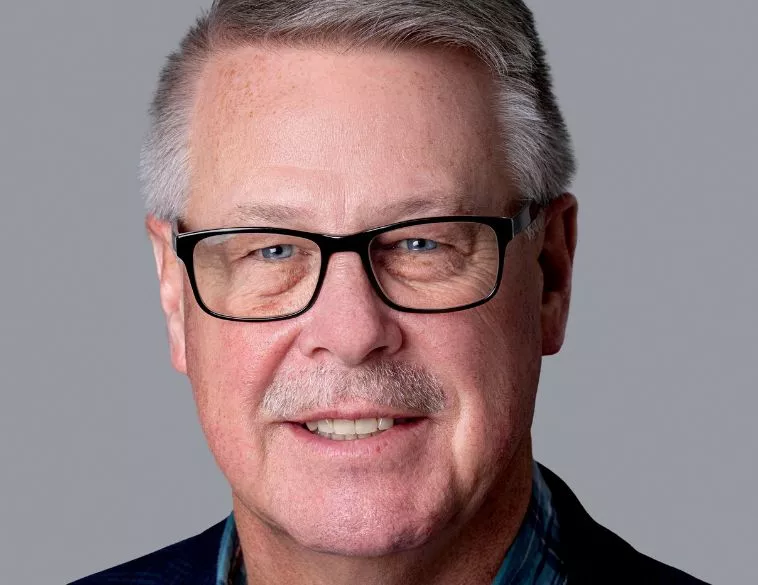

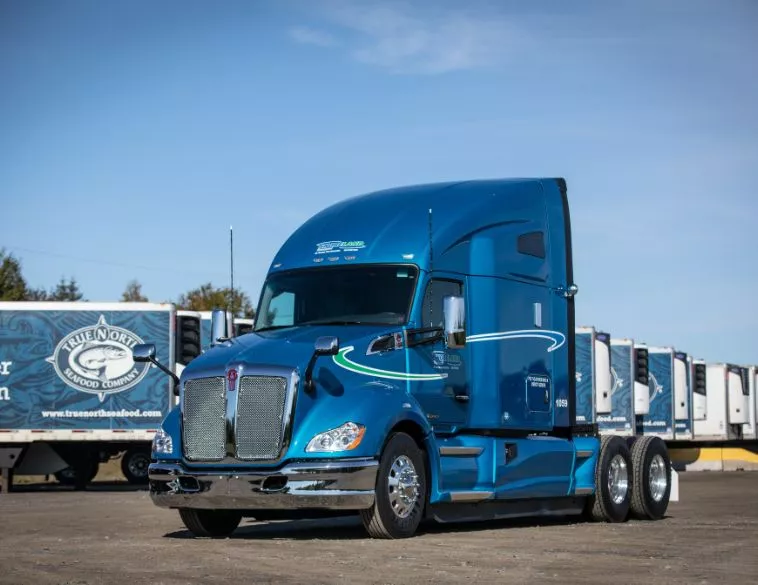
From the family trucking business to the halls of Parliament, and ultimately to the helm of a massive fleet, Rodney Weston has learned a fundamental truth: you don’t manage trucks, you manage people. "Back then, we would put a sheet of plywood between the two seats, and that’s where we slept," he laughs, recalling his years behind the wheel. Today’s sleeper cabs come equipped with a 76-inch lower bunk, an upper berth, a refrigerator, ample storage, and an inverter to power a TV and microwave. "I wish I had all of that back in my day," says the Vice President of Fleet Management for Shoreland Transport.
The shift from a makeshift wooden board to a rolling "five-star hotel" tells the story of how much the trucking profession and the role of fleet manager have evolved. Within the transport division of the Cooke group, Weston oversees all equipment. Today, that asset pool totals around 1,000 units, including highway tractors, trailers, as well as light-duty and corporate vehicles. But as far as he’s concerned, physical assets are only half the equation. The other half is the human being driving them.
Few fleet managers can boast such a unique career path. His journey began in his family’s sand and gravel hauling business in New Brunswick, which he operated alongside his father, brother, and brother-in-law. Then came the call of politics. First serving as a municipal councillor, he later made the leap to the provincial stage, where he led the Ministry of Agriculture, Fisheries and Aquaculture under Bernard Lord's administration. That role introduced him to salmon farming, the core of the Cooke business. After a subsequent stint as the Premier’s Chief of Staff, he left politics in 2006 to join the company.
However, the call of the ballot box caught up with him again in 2008. Elected as the MP for Saint John, he served two terms in the House of Commons before returning to the private sector to take the reins at Shoreland Transport for good. "Trucker and politician might seem like an odd mix," he admits. "But it’s who I am." This background shines through in his management style. He prefers to communicate, build consensus, and negotiate rather than dictate.
When he returned, the fleet consisted of about 25 tractors. "Do you think this will be enough to keep me busy?" he boldly asked Glenn Cooke. The CEO’s response, as a true visionary, set the tone: "We're going to build this to 200 trucks and then some." It was a challenge Weston accepted and met with flying colours. The fleet initially grew organically to reach 90 units. Then in 2022, the acquisition of Nova Scotia-based Connors Transfer boosted the numbers and added solid expertise in refrigerated transport. Mission accomplished and widely exceeded, the total fleet now stands at 232 tractors and roughly 530 trailers.
Masters of their own destiny
The fleet is an integral part of the group’s vertical integration model, which Cooke sums up with the phrase "from egg to plate." Established to support the parent company's operations, the subsidiary ensures that freight is moved at the best possible cost and within the tightest timeframes. This way, "we don't rely on external variables, we control our own destiny," Weston explains.
Shoreland hauls ingredients to the mill, transfers the feed to aquaculture sites, moves the fish to processing plants, and finally delivers the finished product to strategic markets across Canada and the eastern U.S. "The salmon you eat in Boston was swimming in the Bay of Fundy yesterday," the fleet manager explains.
Freshness dictates value, which is why it is critical to rely on dependable, fast, and efficient logistics. Every day, two trucks head to Boston, two to New York, and two to Montreal for same-day delivery. The trucks bound for Toronto arrive the next day. To maximize return-trip profitability and reduce empty miles, the company backhauls refrigerated freight to the Maritimes, sub-contracting for major retailers like Agropur, Sobeys, and Loblaws.
With fuel costs being a constant factor, the hunt for savings never stops. As an early adopter of the federal government's energy-efficient trucking program, Shoreland invested in aerodynamics, low-rolling-resistance tires, and Auxiliary Power Units (APUs) on board every tractor. However, these investments only pay off if the drivers buy into them, Weston warns. "I can install APUs on every truck, but if the drivers don't use them, it’s wasted money."
To back up his point, he recalls an idling reduction incentive he introduced during his time managing operations, which has since been rolled into a broader bonus program. Drivers who kept their idle time below 5% received a quarterly bonus, which increased if they kept it under 2%. It was a powerful selling point during job interviews. Out of a maximum pool of $7,000 per quarter for the entire fleet, the company was paying out $6,500. "The goals were achievable because we gave drivers the tools to get there." It was a win-win logic.
Shoreland was a true pioneer with electronic logging devices (ELDs), outfitting its trucks long before Canadian regulations required them. To test the pilot project, Weston approached his two most vocal skeptics, the ones who never missed a chance to complain. "If the loudmouths thought it worked, then it worked." Adoption went smoothly, and the fleet achieved full compliance well before the new mandate officially took effect.
Adapting to a new reality
These electronic logs are just one tool in the company's technological toolkit. The entire fleet runs on an integrated Trimble ecosystem: TruckMate for dispatch, TMT for maintenance management, and PeopleNet for electronic logs. Drivers, dispatchers, and shops automatically receive maintenance alerts, making all data accessible in just a few clicks. Weston justifies this strict discipline with a favorite quote from New Brunswick French fry magnate Harrison McCain: "You can't manage what you don't measure."
The human element is where the industry has changed the most. Mike, a road-weary veteran who fields after-hours emergency calls, found out firsthand. When a driver broke down on the road, Mike told him to pull out his screwdriver. "The guy didn't even own a screwdriver, Rodney!" he told him, completely incredulous. "We used to hire farm kids who grew up fixing everything themselves," says Weston. "The modern driver is just built different. It’s not better or worse, we just have to adapt."
Adapting to this new workforce also means welcoming drivers from Ukraine, India, the Philippines, and Romania. Shoreland even created a brand-new position dedicated entirely to driver recruitment, retention, and relations—a position that didn't even exist ten years ago. It falls on Linda, a 30-year veteran of the Cooke group, to act as a concierge for these newcomers. Where do you buy groceries in St. George? Who do you turn to? How do you settle in? She has all the answers. "If a driver can't buy groceries, he can't do his job," Weston stresses. This makes it essential to support newcomers through even the most mundane daily tasks.
To attract candidates, however, nothing beats a "five-star" truck, says the former driver. When two big rigs pass each other on the highway, questions fly across the CB radio waves. What’s it like working at Shoreland? The driver boasts about the spacious bunk, the APU, and the fridge, planting a seed of envy. "Your employees are your best recruiters," Weston says. A beautiful truck attracts the candidate, but a satisfied driver convinces them. And since most carriers charge similar freight rates, margins to increase wages remain thin. Working conditions make all the difference. In this "home away from home," comfort carries a lot of weight.
The lesson this politician-turned-fleet-manager brings to the table fits into a single sentence: "When they are happy, we are happy." From egg to plate, the most valuable variable to control is the one sitting behind the wheel.