
Interview with Roberto Bragagnolo of Orange EV


As the Canadian Director of Operations for the American terminal tractor manufacturer, Roberto Bragagnolo explains how Orange EV is expanding its footprint in the country by supporting transport companies through their shift to electric.
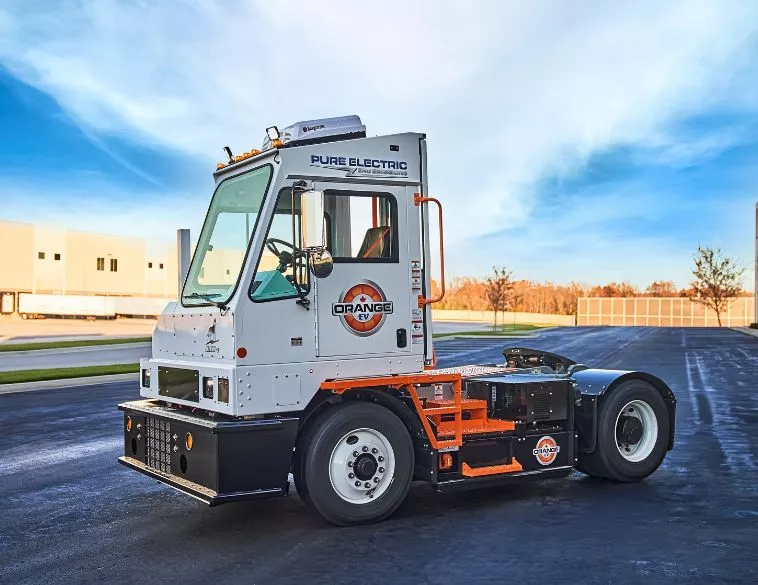
Orange EV, which has operated a Canadian division since 2023, serves around thirty clients. These include transport truck fleet managers and intermodal facility operators who use terminal tractors to move trailers. The use of these yard shunts is primarily concentrated in closed environments such as distribution centers, marine and rail terminals, or large industrial manufacturing complexes.
"These applications, which require powerful and agile vehicles, are particularly well-suited for electrification," explains Roberto Bragagnolo. "Our vehicles can complete their workday and recharge in two hours. And if charging is optimized—where every minute plugged in translates to seven minutes of additional runtime—the tractor can operate nearly all day."
In fact, optimizing utilization is the key to return on investment. "The more the electric vehicle is used, the faster you recoup the price premium paid to acquire it," he notes. For instance, with the Écocamionnage incentives currently in place, the gap can be closed within two years if the tractor runs at least 16 hours a day. Without incentives, it would take twice as long—a four-year period—which still represents less than half of the useful lifespan of this type of vehicle. It is also worth noting that winter operations have successfully proven the viability of this solution.
A Proven Technology
For Orange EV's Canadian director, freight transit facility managers have everything to gain by considering electric. "Financially, the solution holds up, especially since many of these distribution centers already rely on charging infrastructure for their over-the-road or delivery trucks," explains Mr. Bragagnolo, adding that his company’s primary role is to guide managers toward the best solutions.
"We also offer charging stations for the fast-charging of our electric vehicles," the director points out, "but the most important thing, in my opinion, is for managers who want to make the transition to electric to have a clear game plan."
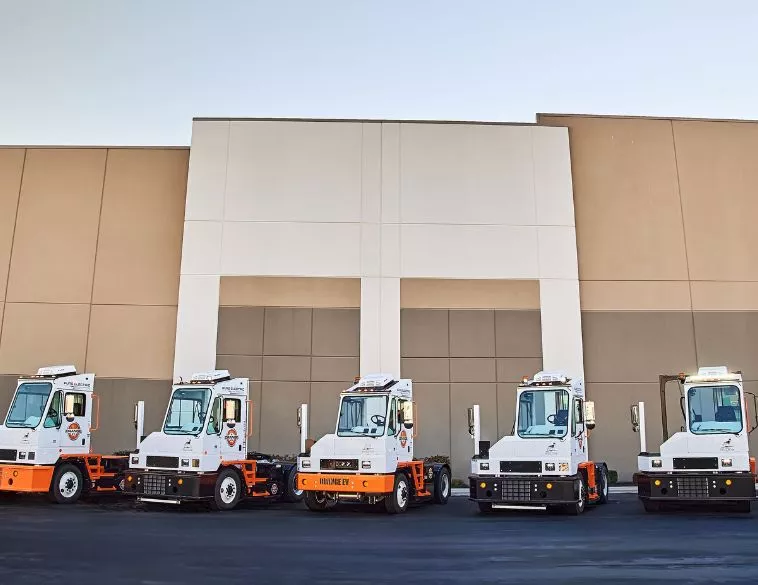
While the company Bourassa Transport recently announced the acquisition of a 100% electric yard tractor from Orange EV, earlier this year, carrier GLS integrated four of them into its logistics operations in Montreal, Toronto, and Winnipeg.
"These companies are seriously committed to decarbonizing their operations. Their decisions to electrify heavy yard operations on their sites are an extension of their vision," observes Mr. Bragagnolo. He adds that the benefit is not solely economic. Operating around a distribution center 24 hours a day tends to annoy the neighborhood, especially at night. The electric solution is highly appreciated for its silence by neighbors, but also by drivers, "who are rediscovering the pleasure of listening to the radio on board."
To ease the adoption of these solutions, Orange EV offers a demonstration program where companies can put a tractor to the test. "To smooth out the integration, we pair this trial period with driver training and the capture of all telematics data to measure usage—information that is crucial for decision-making," Bragagnolo explains.
The vehicles are manufactured in the United States, but the Canadian director is quick to point out that the manufacturer has a significant Canadian footprint. The company has offices in Ontario, where it also operates a parts distribution center, mirroring its setup in Montreal.
A Robust Trend
The electrification of local transport operations is a fundamental trend for distribution center managers, businesses where goods must move between production facilities on private routes, and large-scale sites like the Port of Montreal. Orange EV's offerings fit into a continuously expanding catalog. Trailer yard maneuvering on private sites, over short distances and with access to dedicated charging stations, creates the ideal scenario for taking the first steps into electrification, asserts Mr. Bragagnolo.
In fact, early adopters of these electric workhorses are reaping the benefits in terms of fuel consumption and corporate carbon footprint reduction. They report that the durability and simplicity of maintenance of electric tractors mean they would never go back to diesel versions.
What’s more, Scandinavian firm Kalmar is currently working with partners to make its terminal tractors fully autonomous within intermodal circuits—yet another compelling outlook for the future.