
Safe Heavy-Duty Driving: A Shared Responsibility
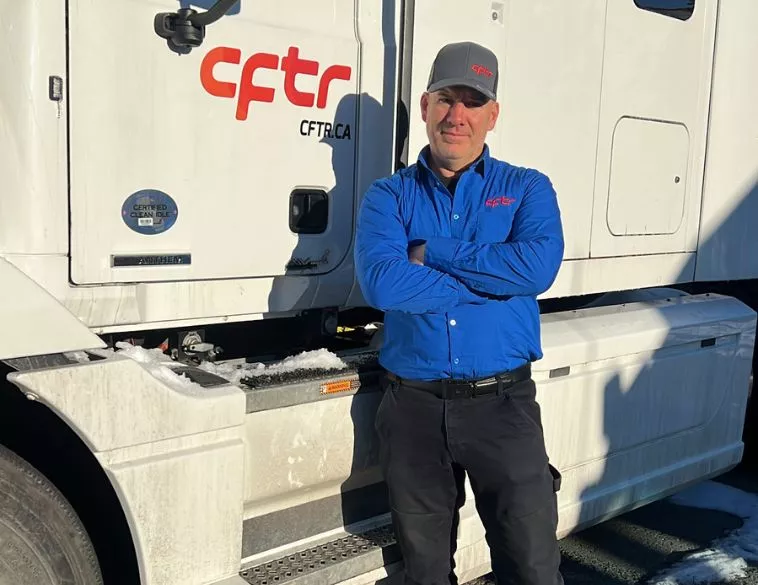

After two decades of teaching heavy-duty driving, Michel Beaulac has noticed an increase in driver distraction, partly due to smartphones and other technologies.
Recent months have brought road safety sharply back into focus. Collisions involving heavy vehicles keep piling up and all too often the same underlying problem reappears. Low-cost drivers, the so-called Chauffeurs Inc. brought in at minimal expense, poorly trained or barely supervised. Beyond this issue, which raises both economic and safety concerns, some long-standing industry practices need to be re-examined.
The Chauffeur Inc. scheme, which skirts labour rules and weakens training, undermines safety standards and exposes drivers, road users and fleet operators to unnecessary risks. In response, Quebec is making a major shift. As of December 15, 2025, obtaining a Class 1 licence will require 125 hours of mandatory training. This aligns the province with Mandatory Entry Level Training (MELT) programs used in Ontario and Alberta.
But unlike those provinces, Quebec is not starting from scratch. For decades, it has benefited from a strong public training network built around two specialized centres, the CFTR and CFTC. Their rigorous approach is recognized across the country. They shaped the backbone of the sector long before minimum standards appeared elsewhere.
This new requirement therefore brings consistency to a system that already had a head start. It also addresses persistent concerns in an industry worried about the risks created by unregulated recruiting practices. For Michel Beaulac, group leader at the CFTR with 25 years of professional training experience, this reform had become unavoidable.
Technology and distraction: a reality that extends beyond the steering wheel
Today’s safety challenges are nothing like they were twenty years ago. The job has changed, sometimes because of innovation, sometimes in spite of it. Michel Beaulac, who has been teaching at the CFTR for 17 years, sums up the evolution well.
“Back then, the good old CB played an important safety role. Drivers warned each other about obstacles, accidents and road conditions. Today, the CB has been replaced by the cellphone, which does not foster the same sense of community among drivers.”
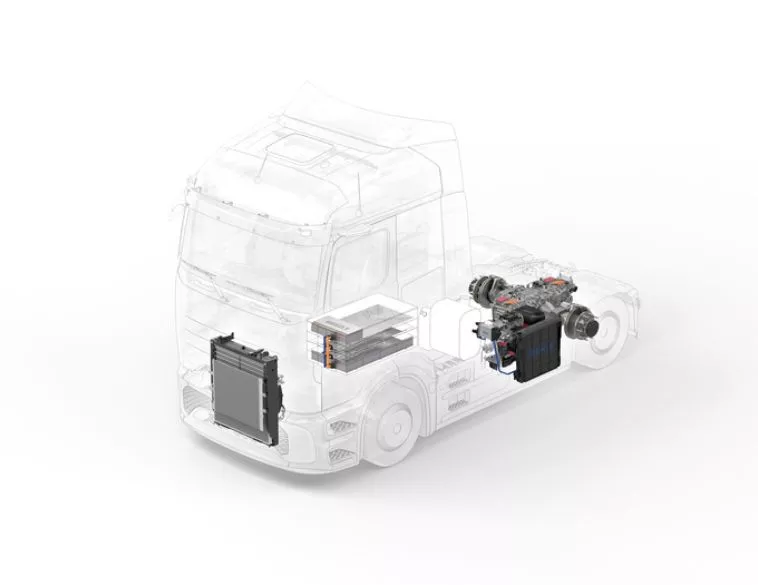
Heavy-duty vehicles have seen a steady influx of the communication tools we all use daily, even when they have no place in a truck cabin. Headphones worn continuously, endless calls, movies playing on tablets, constant notifications. Touchscreens, telematics systems and new digital mirrors keep multiplying, sometimes with little preparation.
This cognitive overload has contributed to an increase in incidents. Fleet managers are seeing the results:
• Loss of attention
• Delayed reactions
• Greater distraction caused by in-cab interfaces
• Difficulty adapting to different vehicles
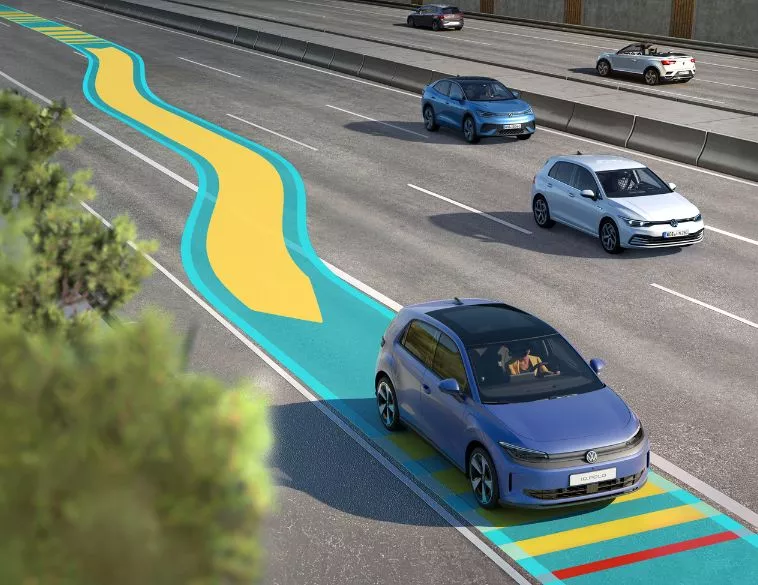
Another issue adds to the challenge: advanced driver assistance systems. Adaptive cruise control, lane departure warnings, multiple sensors. These tools are valuable, yet they can foster overconfidence. Michel Beaulac notes that technology can support drivers, but it never replaces human judgment. All of these systems require training, ongoing follow-up and proper supervision.
Restoring order in daily practices: training, adaptation, compensation
For fleets, mandatory training is only part of the solution. Safety depends on several factors that are not regulated by the government.
First, familiarization with new vehicles needs to become standard procedure. Carriers often teach fuel-efficient driving, but spend less time explaining in-cab systems. As a result, drivers become familiar with the truck’s systems only once they are already on the road.
The second factor is compensation. The long-standing pay-per-mile or per-trip model pushes drivers to speed up, make up delays and skip breaks. In some cases, a single late delivery can cost up to one thousand dollars, a penalty often charged to the driver. This model distorts behaviour and weakens safety.
According to Michel Beaulac, hourly pay should be the standard whenever the job does not involve mandatory rest time in a sleeper berth. In other words, when the work can be completed in a single shift, mileage or trip-based pay should not be used. This approach would ease pressure and support more preventive driving.
Internal policies must also evolve. Some carriers have adopted strict measures:
• Total ban on communication while driving
• In-cab cameras to monitor behaviour
• Mandatory stops before answering a call
These initiatives may be controversial, yet they have a measurable impact on risk.
A shared responsibility for a safer industry
Road safety no longer rests solely on the driver, as Michel Beaulac points out.
“We cannot place all the responsibility on the driver. Safety is a collective effort.”
This is perhaps the most important lesson of this regulatory turning point.
It involves
• Fleet managers, who oversee policies, pay models and technology use
• Shippers, who must adjust timelines and expectations
• Trainers, who need to keep pace with the rapid evolution of the job
• Government bodies, which set standards and provide structure
• Carriers, which must promote a culture where caution takes precedence over raw performance
Above all, adds Michel Beaulac, it requires effective enforcement by police forces and organizations such as Contrôle routier.
Quebec’s new mandatory training requirement, similar to those in Ontario and Alberta, sets the minimum standard. What happens above that will depend on the choices fleets make, including ongoing training, clear internal policies, fairer compensation models, and thoughtful integration of technology.
A safer road network and better coexistence between motorists and truck drivers are within reach. It starts with a shared understanding. Safe driving is, and will remain, a shared responsibility.