
Under Pressure

As Canadian mines focus on uptime, productivity and cost-per-hour, tire selection has become a strategic operational decision rather than a simple purchasing exercise.
As mining operations strive to boost productivity and control costs, tire performance has become an increasingly important factor in overall operational success. Today's mines are demanding more from their tires than ever before, driven by larger equipment, longer haul cycles, and a growing focus on uptime and cost-per-hour metrics.
Key trends are shaping the mining tire sector in 2026, from evolving tire specifications and compound technologies to the growing role of tire pressure monitoring systems and the impact of electrification on tire design.
Gregory Pickering, Product Segment Manager, Non-DOT at Dynamic Tire says that the Canadian mining sector has clearly shifted its focus away from upfront purchase price toward maximizing uptime and reducing cost-per-hour.
“This change reflects the critical role tires play in overall operational efficiency,” he says. “In some mines, operators are starting to use TPMS (Tire Pressure Monitoring Systems), allowing for real-time tracking of air pressure, temperature, and wear to prevent failures and optimize maintenance.”
The increasing adoption of tire monitoring technology reflects a broader trend within the mining industry toward data-driven maintenance practices. By identifying pressure loss, excessive heat buildup, or abnormal wear patterns before they become serious problems, mines can reduce unplanned downtime and extend tire service life.
“This change alone can increase the load carrying capacity of the tire by 12% or more.”
- Gregory Pickering, Product Segment Manager, Non-DOT, Dynamic Tire
Demand for stronger tires
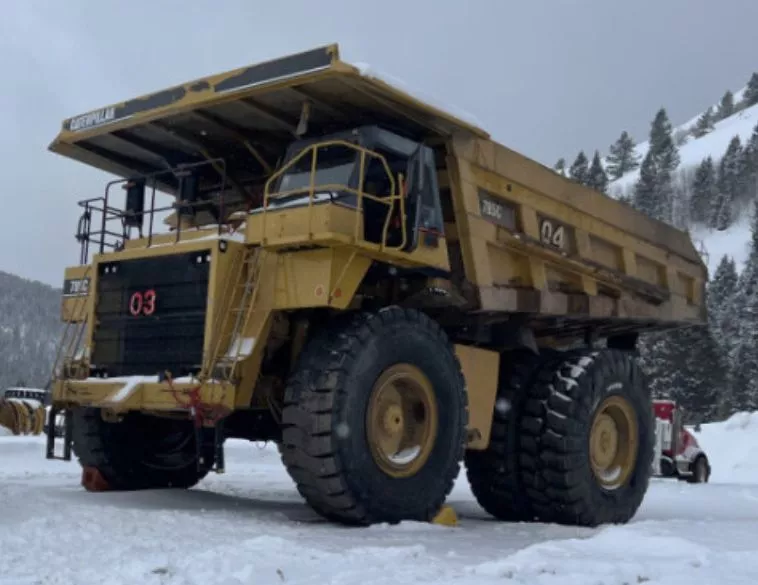
Pickering notes that mining equipment continues to grow larger and heavier, particularly in haul truck applications. As equipment capacities increase, tire manufacturers are being challenged to develop products capable of carrying greater loads while maintaining durability and reliability under extreme operating conditions.
“Mines are moving to higher star rated OTR tires,” he explains. “In the past, they used a 2-star tire. Now, they are starting to move to 3-star and in some cases 4-star tires.”
Higher star ratings indicate a tire's ability to carry heavier loads, making them particularly attractive for modern mining fleets that are constantly seeking productivity gains. The move towards higher-capacity tires allows operators to take advantage of larger payloads without compromising tire performance.
Mines are also moving to 65 series tires. For example, using a 750/65R25 tire in place of a 23.5R25 tire. “This change alone can increase the load carrying capacity of the tire by 12% or more,” Pickering says. “Brands like Triangle have responded by expanding their higher star-rated OTR offerings, particularly in rigid haul and loader segments.”
Electrification of mining equipment
The growing adoption of electric mining equipment is creating new challenges for tire manufacturers. Electric machines typically carry heavy battery packs and generate high levels of torque, both of which place additional stress on tires.
“Mining tires have to be engineered to handle significantly higher loads and the added weight of today’s equipment, particularly as machines become larger and electrified,” Pickering says.
Extreme torque forces place intense stress on the entire tire structure, from the tread that maintains traction with the haul road, to the casing and bead area where the tire meets the rim.
“This requires a balanced design that reinforces durability across all key contact points,” says Pickering, “ensuring the tire can reliably transfer power to the ground while maintaining structural integrity under the most demanding operating conditions.”
As a result, tire manufacturers are investing heavily in engineering improvements designed to increase durability while minimizing heat generation, one of the primary factors that can shorten tire life in demanding applications.
All these demands have seen tire manufacturers refine and enhance rubber compounds to meet the specific demands of different mining applications. “Rather than taking a one-size-fits-all approach, many producers now offer multiple compound options tailored to factors such as machine type, haul conditions, and ground severity,” Pickering explains. “This allows operators to better match tire performance to their environment.”
Impact on productivity
The fact that mining operations across Canada have undergone a clear shift from a price-driven purchasing model towards an uptime-driven decision-making model means that they recognize how tire performance has a direct impact on productivity and overall cost-per-ton, Pickering says.
This evolution has become even more important as mines push deeper into the ground and extend their haul cycles, placing greater pressure on tires to perform. “Mines are placing great importance on tire performance as it relates to cost-per-hour,” he adds.
Another notable trend is the growing focus on inventory management. Following several years of supply chain disruptions, many mining companies have become more proactive in securing critical tire sizes before they are required.
Rather than waiting until replacement tires are urgently needed, operators are purchasing tires in advance to ensure availability should supply challenges arise. This strategy helps reduce the risk of equipment downtime caused by delayed tire deliveries.
“Mines are also willing to try/test new tires and compounds to save money and lower their overall cost-per-hour on tires,” Pickering adds. “Because of this, there is a willingness to try alternative brands and compounds.”
The next five years
Looking ahead, the mining tire industry is expected to continue its evolution towards smarter, more application-specific solutions that help operators maximize productivity while reducing total operating costs. Advances in tire compounds, casing technologies, and monitoring systems will give mines greater ability to optimize performance and prevent costly downtime.
“Tire compounding will continue to evolve as manufacturers push to deliver more application-specific performance, enhancing durability, heat resistance, and overall lifecycle value, especially in increasingly demanding mining environments,” Pickering says. “At the same time, air pressure monitoring is expected to become more widely adopted across fleets, as operators recognize its critical role in maintaining optimal tire performance, improving safety, and preventing costly downtime through early detection of potential issues.”
As equipment grows larger and operating conditions become more demanding, the mines that view tires as a strategic asset rather than a commodity will be best positioned to improve uptime, control costs, and enhance overall operational efficiency.