
Volvo Details Next-Generation D13 Architecture for EPA 2027 Regulations
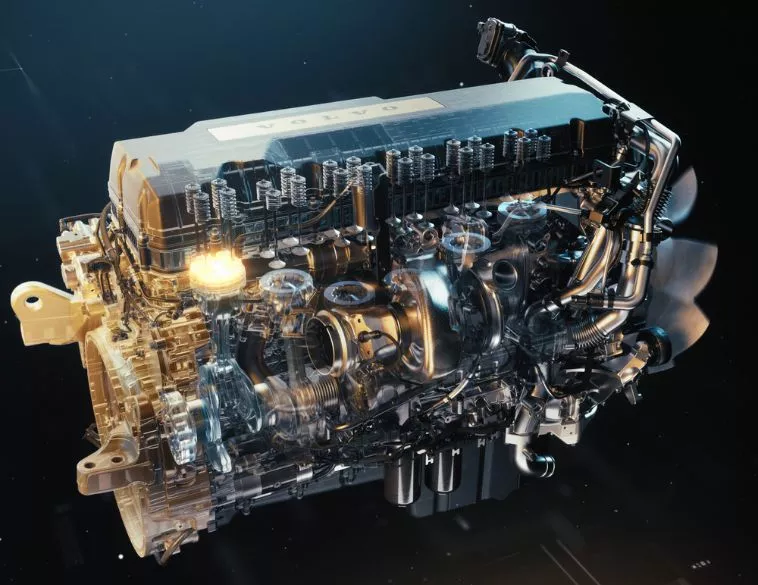
Volvo Trucks has released the comprehensive technical specifications for its next-generation integrated powertrain engineered to comply with the upcoming U.S. EPA 2027 emissions standards.
Driven by a complete top-to-bottom redesign of the 12.8-liter Volvo D13 engine and paired with the proprietary I-Shift automated manual transmission, the in-house commercial platform cuts nitrogen oxide (NOx) emissions by over 80 percent to hit the rigid 35-milligram standard. Despite the stricter limits, the new mechanical architecture secures a 3 to 4 percent improvement in fuel efficiency compared to legacy variable geometry turbocharger (VGT) configurations.
The structural foundation of the new D13 engine centers on a block cast from compacted graphite iron (CGI), delivering a 75 percent increase in tensile strength over standard grey iron. This upgraded structural integrity allows the engine to withstand higher cylinder pressures, enabling a compression ratio jump from 18:1 to 20:1. The exterior-mounted common-rail fuel system injects at a maximum pressure of 35,000 psi (2,400 bar), feeding a advanced 14-wave piston design that optimizes the fuel-air charge to reduce combustion soot before it reaches the tailpipe. For turbocharging, legacy turbo-compounding units have been phased out in favor of a refined swing-blade VGT featuring a specialized pre-turbine throttle. The engine lineup will offer vocational and highway ratings from 405 to 540 horsepower, with peak torque stretching up to 1,950 lb.-ft. at just 900 rpm to support aggressive fleet downspeeding.
To satisfy low-load and cold-start emissions requirements, Volvo completely redesigned the Exhaust Aftertreatment System (EATS). The unit packages a pre-heater, DOC/DPF, and dual SCR chambers into a compact configuration that minimizes valuable frame-rail space. Thermal management is controlled via an integrated 48-volt electrical grid heating infrastructure powered by a dedicated 48V alternator, which runs alongside the truck's baseline 24V electrical architecture. This dual-voltage design quickly heats critical catalytic surfaces during cold startups and extended idling cycles.
Operational modifications also include a significant boost in engine braking performance, delivering up to 630 braking horsepower at 2,300 rpm for superior downhill control. Compatible with renewable diesel (R100) and biodiesel blends up to B20, the fully integrated EPA 2027 powertrain lineup opens for order placement in August ahead of formal assembly lines spinning up for production.