
Ford Officially Opens Super Duty Production at Oakville
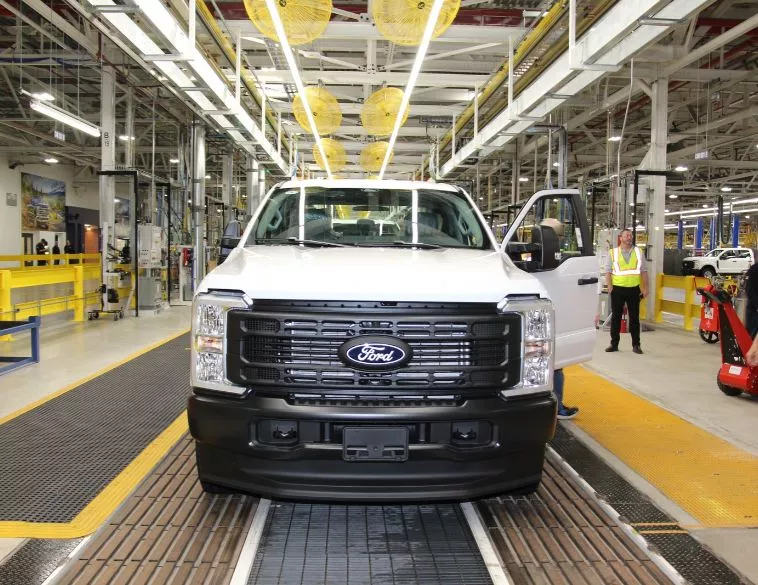
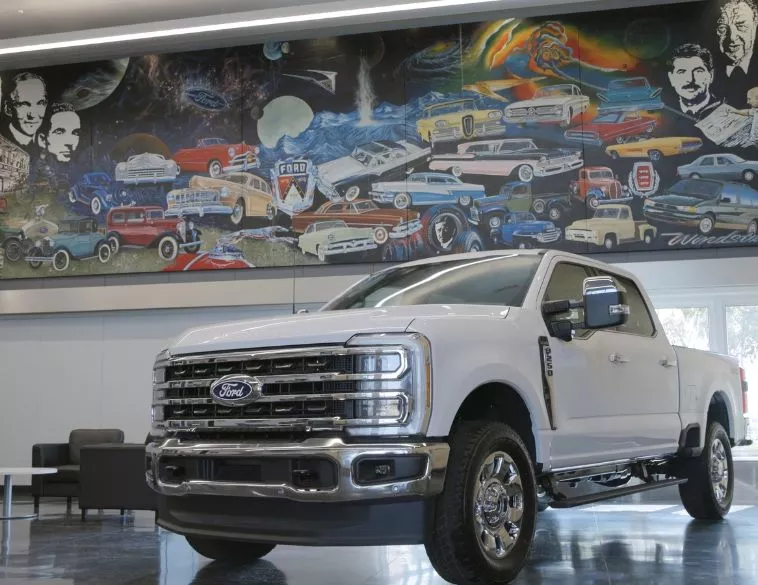
Ford officially announced the start of Super Duty production at Oakville on November 20. Credit: Huw Evans
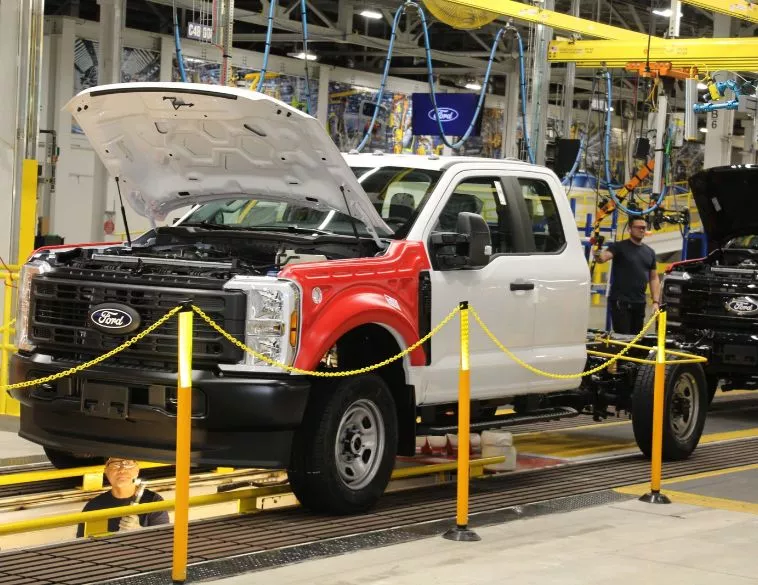
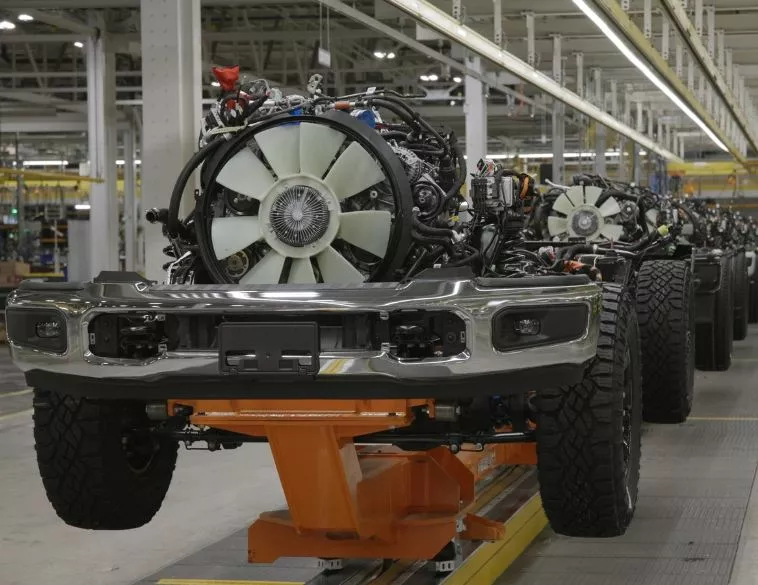
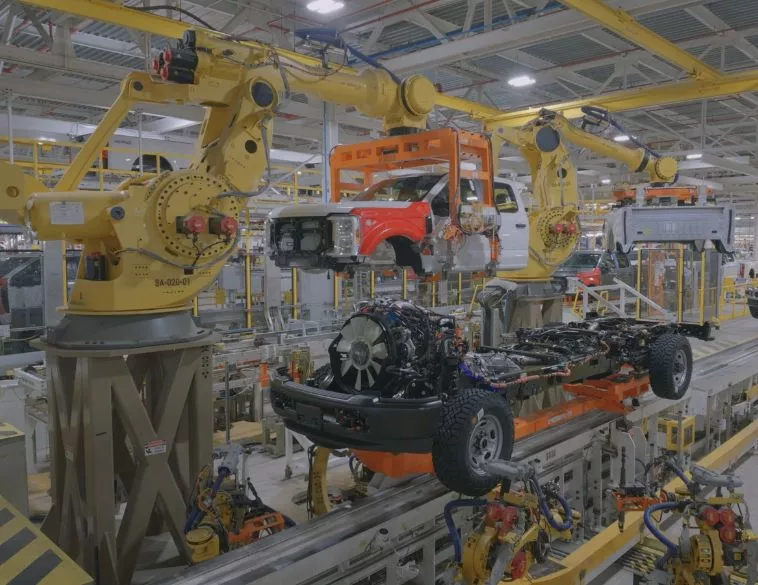
Completely retooled plant includes 1000 foot flat top assembly line. Credit: Huw Evans
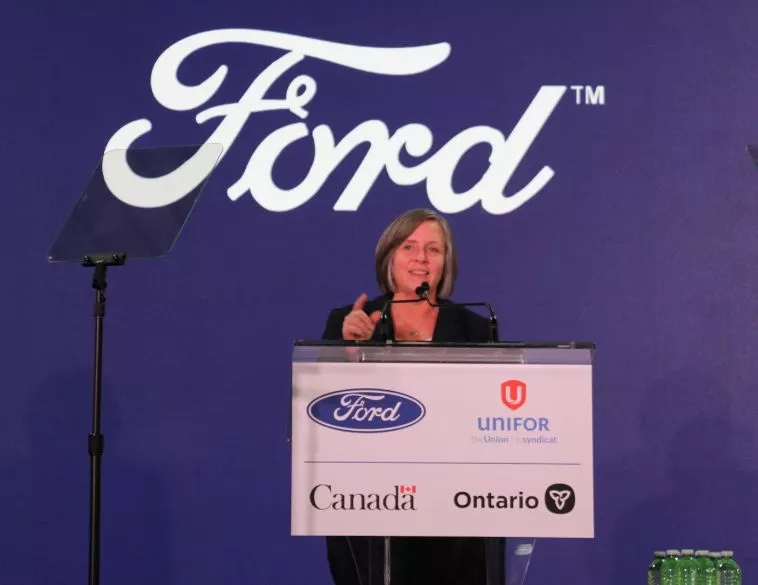
Ford of Canada CEO Bev Goodman addresses attendees at the opening ceremony on November 20. Credit: Huw Evans
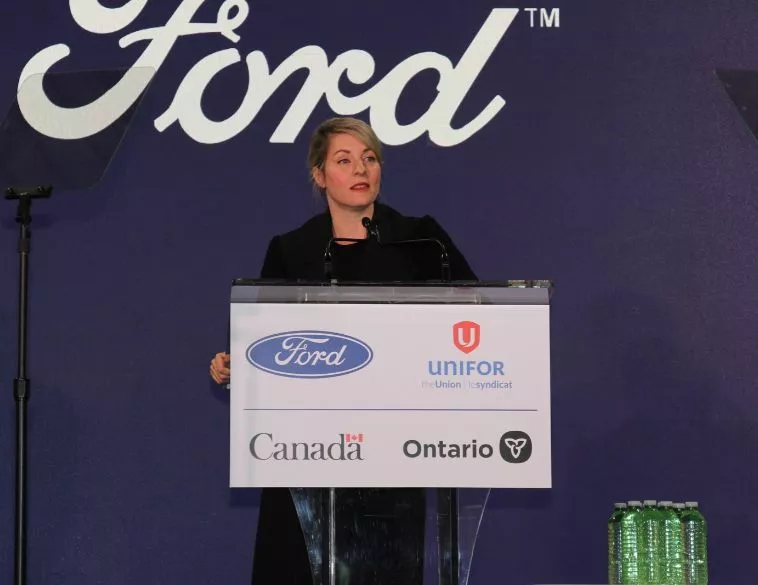
Federal Industry Minister Melanie Joly at the opening ceremony on November 20. Credit: Huw Evans
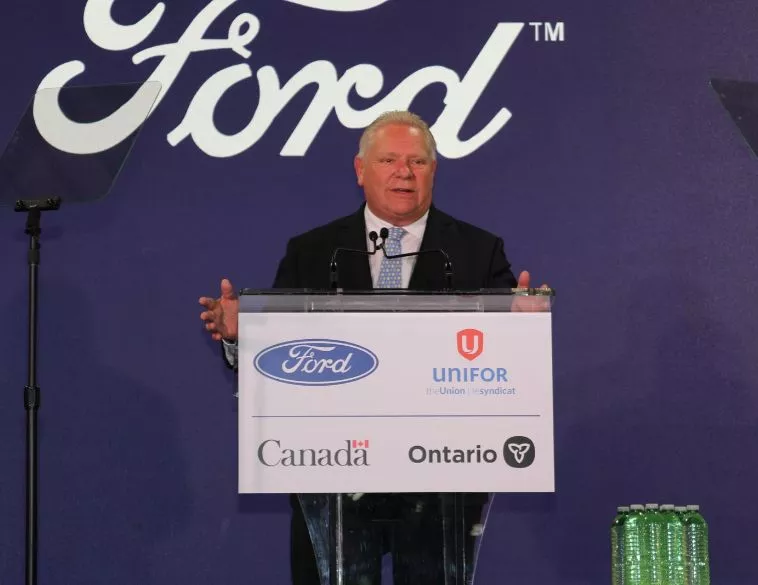
Ontario Premier Doug Ford addresses attendees at Ford’s Oakville Assembly. Credit: Huw Evans
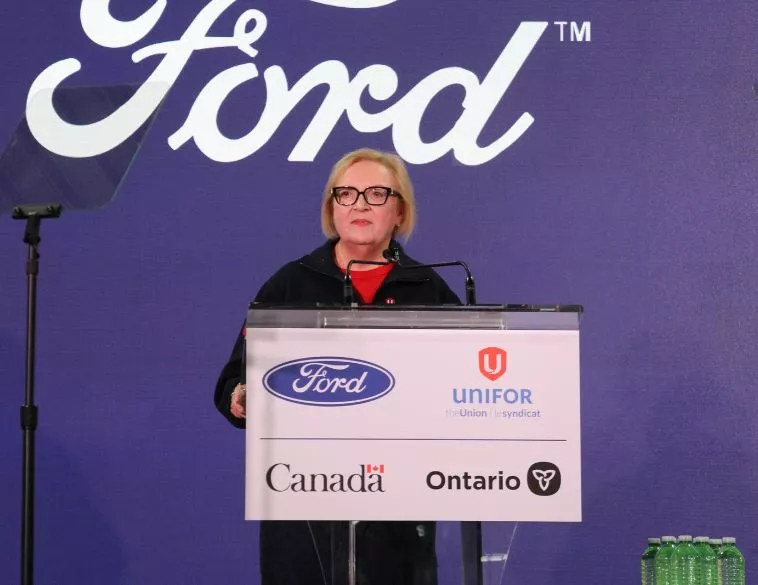
National Unifor President Lana Payne at the Oakville Assembly Super Duty production ceremony. Credit: Huw Evans
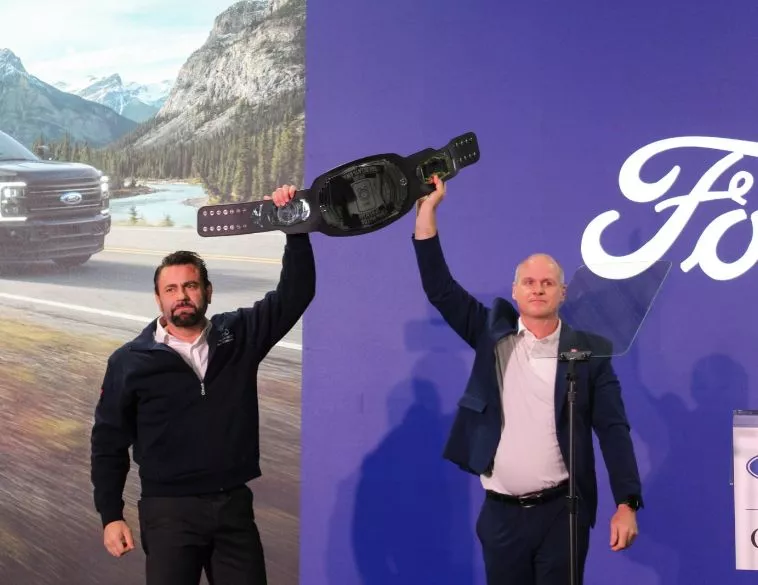
Oakville Plant Manager Kyle Cruji (right) and assistant plant manager Zoran Trbovic hold up the special World Class Award Belt given to Oakville assembly for Super Duty production. Credit: Huw Evans
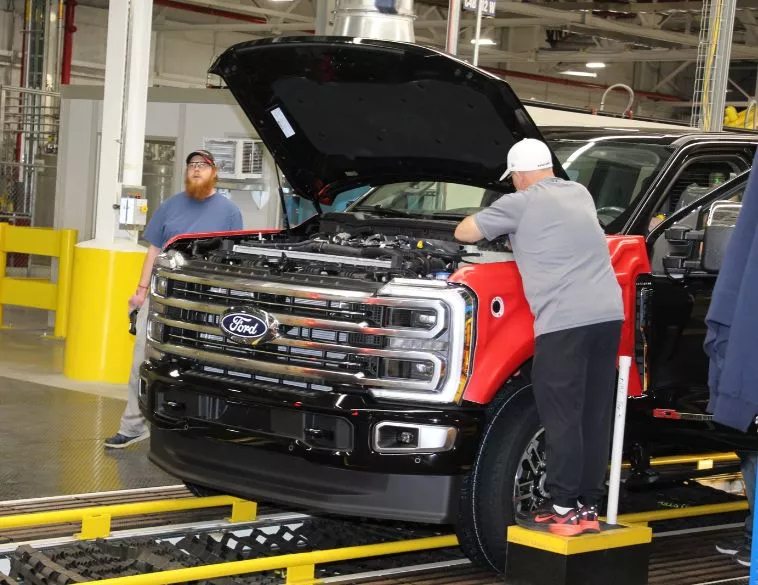
Over 2000 employees have been assigned to Super Duty production at Oakville. Credit: Huw Evans
Credit: Huw Evans
Credit: Huw Evans
Credit: Huw Evans

Retooled plant represents a major boost for Canadian vehicle manufacturing and commercial medium duty truck production
On November 20, Ford Motor Company held a special ceremony at its Oakville Assembly Complex, in Oakville, Ont. This marked the official start of Ford Super Duty truck production at the facility, which following an extensive retool, is among the most advanced vehicle manufacturing facilities of its kind in North America.
Complete retool
According to Ford, the transformation of the plant (which previously manufactured Ford Edge and Lincoln Nautilus SUVs and had been scheduled for EV production prior to the change to truck assembly), the retooling for Super Duty production resulted in a $5 billion investment, that not only included a complete revamp of the assembly facility, but also the opening of an on-site stamping facility, which is the first of its kind in Canada.
Ford has already begun shipping Super Duty trucks from the plant, and produced 3,488 examples during October. Once full capacity ramps up next year, Oakville will be able to produce over 400 trucks per day, including pickups and chassis cabs, with 7.3-litre “Godzilla” gasoline fuelled V8 engines supplied from Ford’s Windsor, Ontario engine assembly operations.
According to Bev Goodman, President & CEO of Ford Motor Company who addressed Oakville Assembly staff, plant and corporate management and staff, gathered dignitaries, including provincial and federal government ministers, members of the media and other special guests, the investment in Oakville Assembly “reflects our confidence in Canadian manufacturing.” Goodman added that “Oakville gives [Ford] the capacity to build more of the trucks our customers count on.”
“What our teams in Oakville [and Windsor] have accomplished is bigger than a successful launch. They’ve shown what Canadian manufacturing can do.”
- Bev Goodman, President & CEO Ford Motor Company of Canada
Integrated network
Oakville assembly is part of Ford’s newly integrated manufacturing network across North America, which provides the OEM with links between its engine assembly facilities such as Windsor and truck manufacturing plants in both Canada and the U.S. With Oakville representing the third plant to now produce Super Duty trucks (alongside Avon Lake, Ohio, and Louisville, Ky.) this integrated network enables further flexibility when it comes to meeting customer demand as well as smoothing the process of changing over vehicle production from one model to another.
According to Ford, Oakville Assembly earned approval to ship Super Duty trucks two weeks ahead of schedule and the quality of those trucks produced in Oakville already matches those assembled in Louisville, Ky.
Fleet & Mobility attended the opening ceremony, where we got to listen to remarks from Bev Goodman, as well as Unifor National President Lana Payne, who championed Local 707 workers employed at Oakville Assembly. “What a great day of celebration this is,” said Payne.
“In a very short period of time you have basically rebuilt an entire assembly plant from the inside out as well as increase its capability and footprint by adding a stamping plant, all in just 18 months,” she said.
Industrial rebirth
She gave credit to both the team that made Super Duty production possible at Oakville, and also a special acknowledgement to Ford’s global President and CEO Jim Farley for his leadership and believing in the future of Oakville Assembly. “What has happened [here in Oakville] is nothing short of an industrial rebirth for Canada,” said Payne.
Also in attendance was Government of Canada Industry Minister Melanie Joly, federal Foreign Affairs Minister Anita Anand; Ontario provincial Minister of Economic Development Vic Fedeli, and Ontario Premier Doug Ford.
In touring the assembly complex following the official remarks, we became quickly aware of the incredible size and scope, not to mention the speed in which Oakville Assembly was retooled. Even though the plant has been in operation since 1953, it looked for all intents and purposes like a brand new facility. In less than two years, the facility has undergone a huge transformation, employing 2,000 workers and skilled trades professionals, and includes features such as a 1,000 foot flat top assembly line, collaborative robots, as well as state-of-the-art AI enabled cameras that enable fast, accurate quality checks to be performed during the assembly of each Super Duty Truck as it moves through every stage of production.
Any combination
Oakville Assembly is capable of building any combination of F-250 through F-450 Super Duty, including pickups for both commercial and personal use, as well as chassis cabs that can be used for a variety of uplifts, from ambulances, to dump trucks, cranes, utility trucks and other specialized uses.
Getting this plant ready to build Super Duty meant learning new skills and putting them to work on a completely different vehicle,” explained, Kyle Cruji, Plant Manager, Oakville Assembly Complex. “The trucks our team builds here in Oakville will help keep our customers’ businesses moving. That’s something to be proud of.”
Bev Goodman added that “every Super Duty that leaves Oakville carries the skill and pride of the people who built it,” Goodman said. “What our teams in Oakville [and Windsor] have accomplished is bigger than a successful launch. They’ve shown what Canadian manufacturing can do.”