
IIHS Launches First-Ever Commercial Vehicle Ratings Program
In a milestone shift for the commercial transport sector, the Insurance Institute for Highway Safety (IIHS) has released its first-ever safety evaluations dedicated strictly to commercial fleet vehicles.
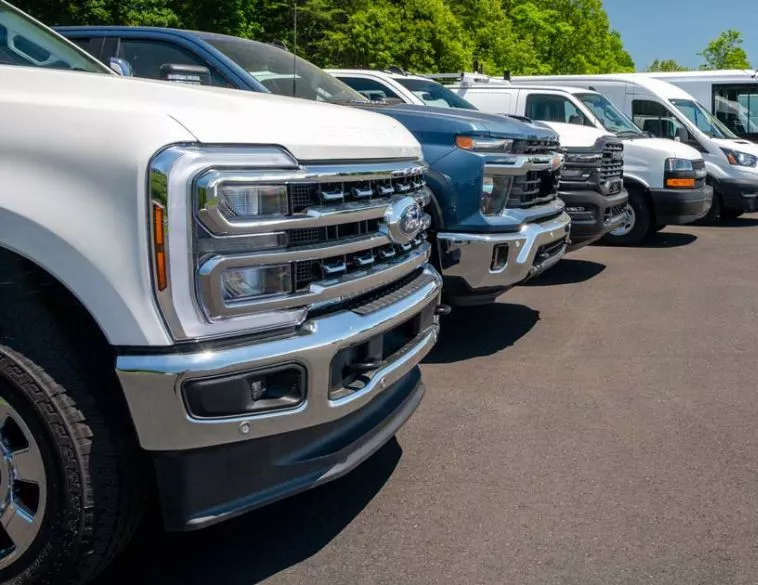
The inaugural safety pool targets Class 3 heavy-duty pickups (GVWR of 10,001 to 14,000 lbs) and high-volume cargo vans—assets that anchor regional last-mile delivery and vocational vocational fleets across North America, but have historically escaped stringent passenger-vehicle safety mandates.
The specialized testing program addresses a glaring highway safety deficit: in 2023, crashes involving medium-duty, heavy-duty trucks, or commercial vans accounted for 6,535 fatalities, representing 16% of all roadway deaths. Mitigating this risk factor is foundational to the Institute’s "30x30" operational framework, which aims to slash highway fatalities by 30% by 2030.
Regulatory Disconnect Puts Fleet Drivers at Risk
The IIHS highlights a significant regulatory blind spot for fleet procurement managers: many federal motor vehicle safety standards governing passenger cars do not legally apply to cargo vans, box trucks, and heavy-duty work pickups. Consequently, equipment as fundamental as side-curtain airbags or advanced seat belt technologies are not mandated by law. Furthermore, regulators do not currently require commercial-grade automatic emergency braking (AEB) or advanced headlight metrics for these weight classifications.
This initial evaluation phase focused strictly on structural occupant protection parameters: standard driver-side front and side airbags, advanced seat belt technologies (pretensioners and force limiters), and seat belt reminder logic. Statistically, front airbags reduce driver fatalities in frontal crashes by 29%, while side airbags mitigate the risk of driver death by up to 52%. In crash dynamics, pretensioners and force limiters dictate the threshold between acceptable occupant load and fatal thoracic trauma.
Seat Belt Reminders: The Delivery Sector's Weakest Link
The most prevalent point of failure across the commercial test fleet involves seat belt reminder configurations. Delivery drivers operating under aggressive route schedules frequently bypass seat belts during rapid, short-distance delivery intervals. While current federal standards only mandate a brief 4-to-8-second audible alert, the IIHS applies rigorous metrics: to achieve an effective rating, a vehicle must deploy a loud, persistent audible tone and a visual indicator lasting at least 90 seconds if the driver remains unbelted while the vehicle is in motion.
IIHS Evaluation Breakdown: Fleet Assets Benchmarked
Out of the first nine commercial vehicles evaluated, only four platforms standardly integrated the complete driver protection package mandated by the IIHS:
Class 3 Pickup Truck Segment:
- Chevrolet Silverado 3500HD & Ford F-350 SuperCrew: Successfully checked all occupant protection and seat belt reminder protocols.
- Ram 3500: Outfitted with appropriate airbag and restraint hardware, but failed due to an inadequate, non-persistent seat belt reminder system.
Chevrolet Silverado 3500HD & Ford F-350 SuperCrew: Successfully checked all occupant protection and seat belt reminder protocols.
Ram 3500: Outfitted with appropriate airbag and restraint hardware, but failed due to an inadequate, non-persistent seat belt reminder system.
Cargo Van Segment:
- Chevrolet BrightDrop 400 & Ram ProMaster 2500: Secured top scores, standardizing all occupant protection and warning architectures.
- Ford Transit T250, Mercedes-Benz Sprinter 2500, & Rivian Delivery 500: Retained solid physical airbag and belt protection but failed due to sub-standard seat belt reminder durations.
- Chevrolet Express 2500: Recorded the lowest safety profile in the test group. GM’s legacy fleet van failed the reminder evaluation and lacks standard driver-side seat belt force limiters.
Chevrolet BrightDrop 400 & Ram ProMaster 2500: Secured top scores, standardizing all occupant protection and warning architectures.
Ford Transit T250, Mercedes-Benz Sprinter 2500, & Rivian Delivery 500: Retained solid physical airbag and belt protection but failed due to sub-standard seat belt reminder durations.
Chevrolet Express 2500: Recorded the lowest safety profile in the test group. GM’s legacy fleet van failed the reminder evaluation and lacks standard driver-side seat belt force limiters.
Future Projections: Pedestrian Safety and Class 4-6 Truck Testing
“For decades, IIHS has helped consumers prioritize safety in their car-buying decisions,” stated IIHS President David Harkey. “These initial evaluations mark our first foray into commercial vehicles, which for too long have been an afterthought when it comes to regulations and safety information.”
The IIHS confirmed that in the coming months, this same vehicle cohort will undergo specialized track testing to evaluate exterior road-user protections, focusing heavily on commercial headlight performance and AEB crash-avoidance systems. Additionally, procurement planning is underway to expand the testing matrix to include larger Class 4 through Class 6 commercial trucks (GVWR of 14,001 to 26,000 lbs). For logistics operators, risk managers, and commercial insurance underwriters, these independent benchmarks will serve as critical baseline metrics for future vehicle spec'ing and safety risk mitigation.