
From Tracking to Trust
Today, customers want to know when their shipment will arrive, with as much transparency as possible.
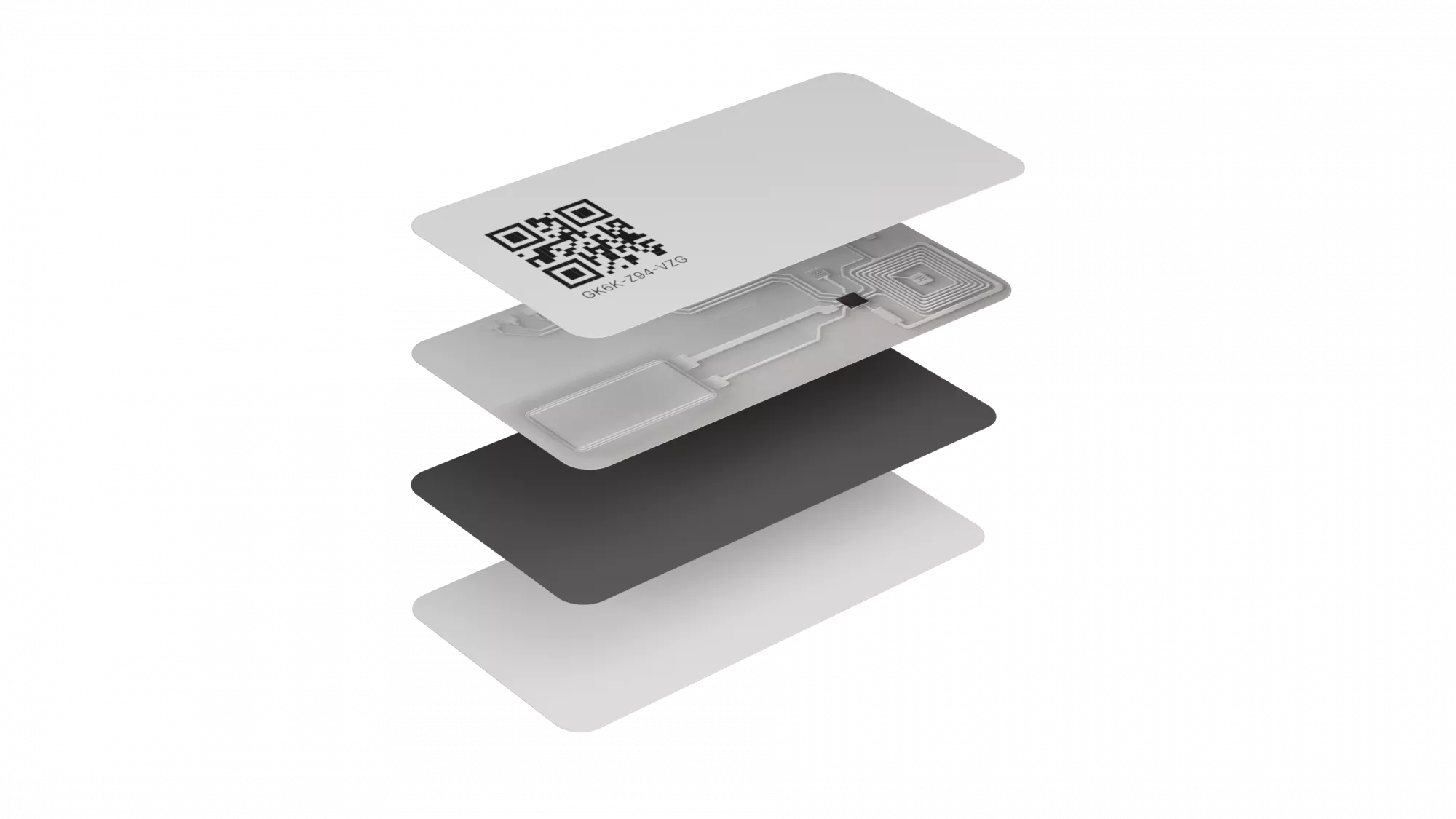
The disposable Samsara Tracking Label. Credit: Samsara

Real-time visibility and transparent delivery data that can help fleet operators manage disruptions, strengthen customer confidence and support business growth.
Companies like Amazon have reshaped delivery expectations, making real-time shipment visibility and accurate arrival information the new standard. Customers want to know when their shipment will arrive, whether a delay is developing, and whether customs or other supply chain issues could affect delivery.
“Fleet operators are working in an increasingly complex and demanding business environment, and efficiency is everything,” says David Gal, Vice President of Product and Engineering for Connected Equipment at Samsara. “Downtime, cargo theft, and the investigations and disputes that follow a missing shipment are a constant drain, eating into hours and margins that are already thin.”
For many operators, however, visibility has historically disappeared at critical points in the shipment journey. “Once a shipment leaves a carrier’s truck or a third-party warehouse, its status goes dark,” Gal says. “Traditional barcode scanning simply says 'departed facility.' As a result, shippers lack visibility into delays and exceptions, leading to a poor customer experience and delayed dispute resolution.” The solution, Gal says, is a technology like the disposable Samsara Tracking Label (see sidebar).
“For us, best-in-class communication means being proactive rather than reactive.”
- Marianne Campey, Co-Owner, EverTrust Truck Parts
From package tracking to operational planning
For businesses serving fleet customers, detailed delivery information can be particularly important when a delayed shipment means a vehicle remains out of service.
“For fleet operators, every hour a vehicle is off the road can have a real financial impact,” says Marianne Campey, co-owner of EverTrust Truck Parts. “When one of our customers’ orders a replacement bumper, grille or headlight after an accident, they're not just waiting for a package; they’re waiting to get a truck back into service.”
Shipping visibility, she adds, allows her to give customers reliable answers instead of estimates, “which builds trust and helps them plan their own operations.”
The value, in other words, is not simply providing a customer with a dot moving across a map. It is giving that customer information they can use to make decisions.
“Knowing a package is in a sorting facility doesn't help a customer schedule a repair,” Campey says. “What matters is knowing when it will actually arrive.”
Visibility and ETAs
When a shipment is delayed, the quality of communication surrounding that delay can have a significant effect on the customer relationship. A customer may be willing to accommodate a problem if they have enough notice to adjust their own plans. They are far less likely to be satisfied when the delay comes as a surprise.
Simply knowing where a shipment is, however, is not necessarily enough. The more valuable information is often what that location means for the expected delivery time.
“An accurate ETA depends entirely on knowing exactly where a shipment is right now,” Gal says. “The difference is how current that location is. In today's world, you typically know where a shipment was 12 hours ago; with continuous, real-time tracking, you know where it was a minute ago.”
The technology behind shipment tracking is evolving. “The Samsara Network is a major breakthrough in enabling visibility and ultimately, more accurate ETAs,” Gal says. “But visibility alone isn't what makes today's ETAs more accurate. It's combining that real-time location data with AI-based exception detection and automations that turn a data point into something actionable, flagging a shipment at risk and triggering the right response immediately, rather than after the fact.”
Campey notes that customers do not necessarily need an endless stream of notifications. “In our experience, customers aren’t looking for constant updates; they are seeking accuracy,” she says.
If everything is on schedule, they simply want confidence that their shipment is arriving when promised, she adds. If there's an unexpected delay, they want to know as early as possible so they can adjust their plans.
“For us, best-in-class communication means being proactive rather than reactive,” Campey says. “Having reliable tracking information allows us to answer questions quickly and communicate with customers before a delay becomes a bigger issue.”
Tomorrow’s technologies
Looking ahead, both interviewees expect shipment visibility to become more predictive and more closely integrated with other operational data.
“I think customers will continue expecting even more precision and transparency, Campey says. “They'll want increasingly accurate delivery windows, faster updates and even more visibility and control throughout the shipping process.”
Gal envisions a future where all the moving parts are not only faster, but more interconnected. He sees a world where companies can predict delays at the root cause, and not just when a package is in transit.
“Technology today already knows a truck's maintenance status,” he explains. “Connecting that signal to the shipment it's carrying means predicting a delay before the truck even leaves the yard, because the vehicle itself is the risk, not because a shipment has drifted off its expected route.”
Once a shipment is determined at risk, he adds, the next step isn't a notification; it's a recommendation: move that load to a different truck before the problem ever happens. “Visibility stops being something you react to and becomes something that prevents the miss in the first place,” he says.
Gal also sees a future where artificial intelligence (AI) plays a bigger role. “As more of the shipment lifecycle, vehicle health, routing, exception handling, dispute resolution, runs on AI and automation instead of manual monitoring, shipments arrive on time more consistently, and customers feel that reliability directly, not just when something goes wrong.”
Finally, the ability to detect problems earlier rather than later will dramatically improve the odds of recovering a lost or stolen shipment, “compared to the industry standard today of a seven-day trace that rarely finds anything,” he says.
“The next few years will bring tighter, faster recovery loops between detecting a problem and acting on it,” Gal adds, “including working with carriers and, where needed, law enforcement.”