
Rolling Smart

How tire choices and maintenance can curb soaring fuel costs.
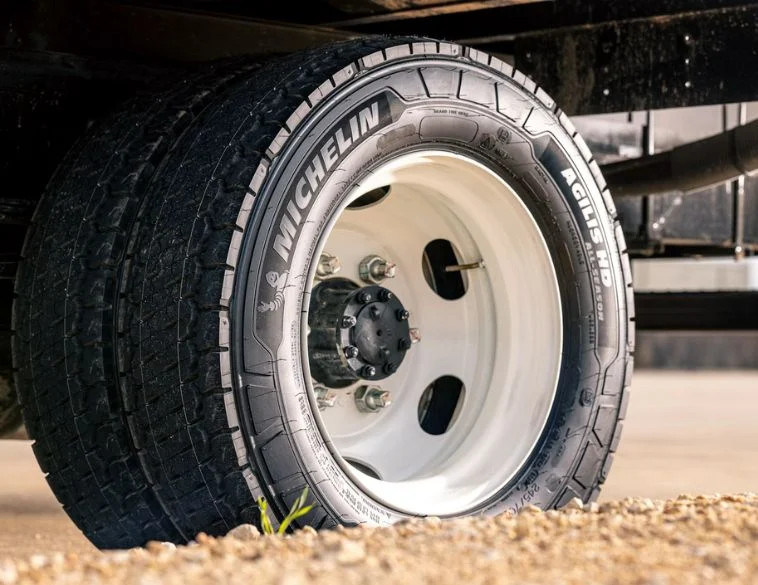
Rising diesel prices are enough to bring tears to the eyes of even the most experienced fleet professionals. While we can all agree that limiting fuel consumption and reducing operating expenses is a complex multi-pronged undertaking, one of the low-hanging fruit when cutting costs is the humble trailer tire.
“Fuel is one of the largest operating expenses, and tires directly impact consumption,” says Dave Hatch, Vice President of Sales and Operations at Huayi Tire Canada. “The trailer is the biggest contributor to rolling resistance with between 40–50% of tire-related fuel impact. According to EPA modelling, roughly 42% comes from the trailer axle group.”
Counting the real costs
Hatch notes that fleet mangers who are shopping for new tires need to consider that the cheapest tire is not always the best investment. “It’s the tire that delivers fuel efficiency, long wear and a strong casing for multiple lives,” he adds. “That’s where real fleet profitability is built.”
James McIntyre, SVP Sales Canada / Product Development North America for Sailun Tire Americas agrees. “Fleets looking to manage both upfront costs and ongoing fuel spend need to focus on total cost of ownership rather than just the purchase price of the tire,” he explains. “The biggest lever on fuel efficiency is low rolling resistance (LRR), and even small improvements can translate into meaningful savings over time.”
Beyond the tire itself, one of the most effective ways to reduce long-term cost is through a well-structured retread program, McIntyre adds. “By working closely with a retread partner to maximize casing life and recovery, fleets can significantly lower their overall tire spend.”
Maintenance = longevity
Ultimately, none of these benefits are fully realized without proper maintenance, as even the best tire technology depends on consistent upkeep to deliver expected results.
“Maximizing tire life comes down to consistent execution of a few key fundamentals,” McIntyre explains. “Proper inflation is the most critical factor, but it needs to be based on actual load and application rather than a one-size-fits-all pressure.”
McIntyre stresses the importance of using load and inflation tables to determine the correct pressure for each axle position, as both under-inflation and over-inflation can lead to irregular wear and reduced tire life.
Mike Matesic, Product Segment Manager, TBR at Dynamic Tire adds another key piece to the longevity puzzle. “Alignment on tractors and trailers will not only extend the life of the tires, but it will also provide fuel savings,” he says.
Matesic explains that you can’t simply purchase LRR tires for your fleet and assume that you’ll automatically get better fuel economy numbers. “Low rolling resistance is not achieved just with tire construction,” he adds. “Alignment is also key. If the tire is scrubbing the road surface when rolling in a straight line, the rolling resistance of the whole truck is lowered.”
Proper alignment will also lowers wind resistance, Matesic adds. “If the trailer is not stepping out of alignment and creating undesired wind resistance, you’ll see some fuel savings there too,” he adds.
Another key contributor to fuel economy and tire longevity is tire rotation, Matesic says. “This does get neglected,” he admits, “but it so so simple and it provides great results.”
As fuel prices continue to rise, paying close attention to the quality and health of your fleet’s tires can help you cut at least some of the costs. “To obtain the best performance and extend tire life, your goal should be a continuous optimal tread contact patch, the least amount of scrubbing, and no excessive heat,” Matesic concludes. “This is all possible if you focus on proper inflation, as well as tire and vehicle maintenance.”
—-
Key Takeaways
According to Sailun Tire Americas, fleets can manage both acquisition costs and fuel efficiency by focusing on a few key areas:
- Low Rolling Resistance (LRR) tires – biggest fuel lever
- LRR tires deliver measurable fuel savings, and even small improvements can have a significant impact, given today’s fuel costs. The key is consistency—fleets see the full benefit when LRR tires are spec’d across all positions (steer, drive, and trailer), not just one.
- Spec the right tire for the application
- Matching the tire to the duty cycle is critical. Long-haul applications benefit from fuel-efficient, mileage-focused designs, while other applications may require more durability or traction.
- Wide-base singles vs. duals – situational decision
- Wide-base singles can offer weight savings, allowing for increased payload in operations where fleets “weigh out” before they “cube out” (e.g., bulk hauling). However, advances in LRR technology have significantly narrowed the fuel efficiency gap between wide-base and modern dual tire setups, making this a more application-specific choice than it used to be.
- Retread strategy – biggest long-term cost reduction
- A structured retread program is one of the most effective ways to lower lifecycle cost. Fleets should work closely with their retread partner to define casing requirements, repair standards, and number of retread cycles, while regularly reviewing casing rejection reports to maximize recovery.
- Maintenance discipline – often overlooked but critical
- Many of the expected savings from premium tire technologies are lost without proper maintenance. Fuel efficiency gains from LRR tires, for example, are directly tied to maintaining correct inflation and overall tire condition.