
Changing the Game
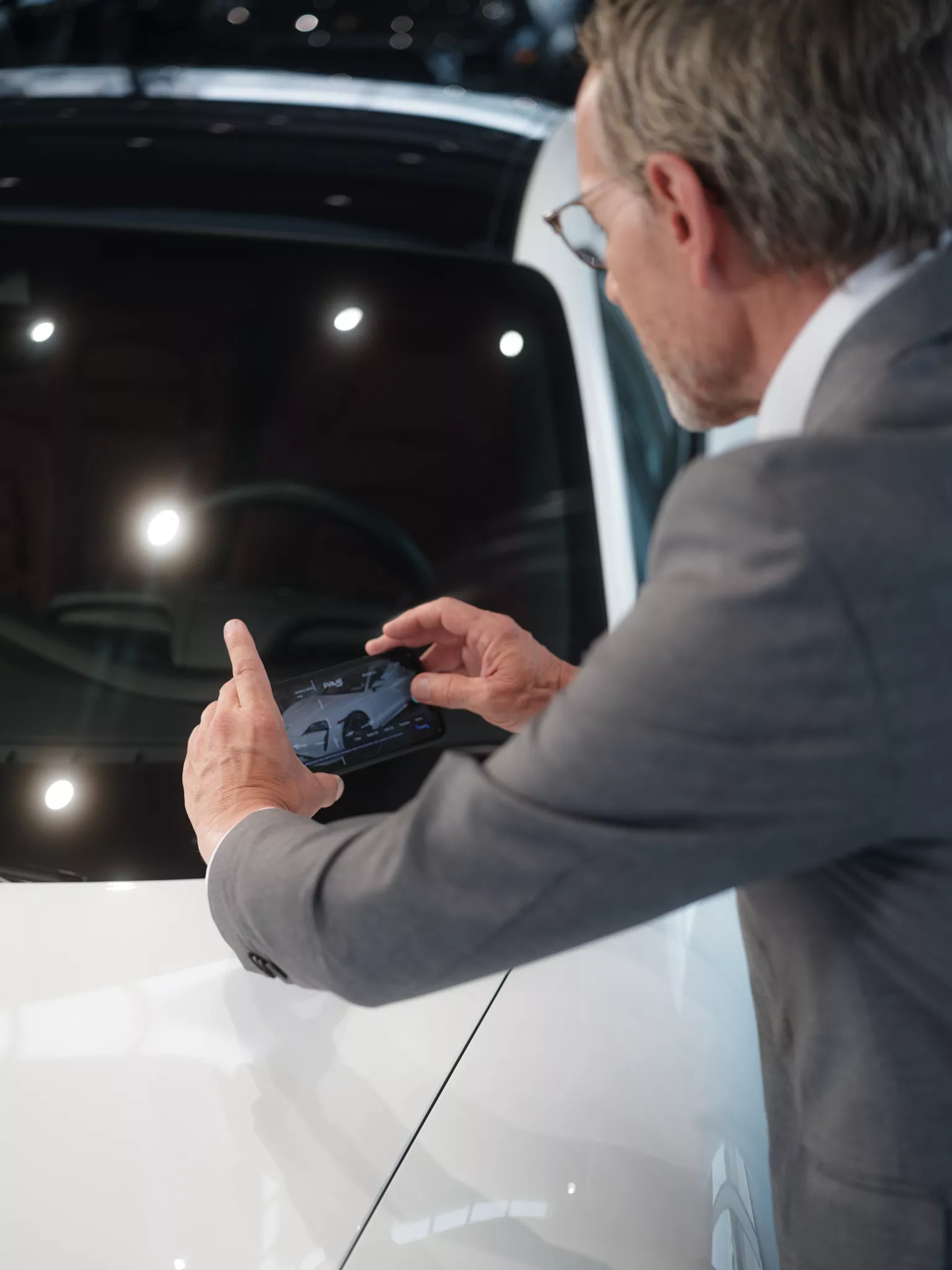
Ease of use was a key factor in developing PAVE’s AI driven inspection technology. (Credit : PAVE)

Kenny DellaPorta, CEO, PAVE. (Credit : PAVE)

PAVE’s vehicle inspection technology is providing new opportunities for fleets says CEO Kenny DellaPorta.
PAVE, A Canadian founded AI automotive company, launched in 2017, has been recognized as one of Deloitte’s 50 fastest growing technology companies. Recently, PAVE introduced an advanced virtual inspection platform.
Co-developed with Canada’s Vector Institute, the AI powered platform is designed to deliver efficient, automated and accurate vehicle inspection reports using just a smartphone or tablet. According to PAVE, the new platform can detect over 350 specific types of vehicle damage, across 249 different components on more than 23,000 passenger and commercial vehicles in operation.
To gain insight into what this new platform does, and how it can help fleets, we sat down with PAVE’s CEO, Kenny DellaPorta.
AS: From your perspective, what do you think is essential for fleet managers today when it comes to vehicle inspection technology?
KD: A major factor, and a big advantage, is being able to have vehicles inspected by an independent, third party. Essentially, they serve as a score keeper and impartial resource, presenting the facts so the fleet can assess and correct the issue. Secondly, there needs to be consistency in the inspection process, and it needs to be efficient. Additionally, it needs to be cost effective, given the conditions and budgets many fleets have to contend with in today’s operating environment. We took the approach of creating software that would make it easy and efficient for the fleet agent to operate, from the image capture process to an interface that’s intuitive and allows them to quickly identify issues with the vehicle.
AS: Can you tell us a little about how PAVE’s inspection technology has evolved and what that means for fleets and fleet managers?
KD: Our initial offering was a manual inspection platform, but in partnering with Vector Institute’s Fast Lane program, we saw an opportunity to automate a lot of the inspection process using AI. It is important to stress however, that AI isn’t the magic wand it’s sometimes portrayed as. Out of the gate, you may be able to achieve 80% accuracy on your inspections using AI, but you want to come to market with a product that is highly accurate, and we’re talking in the high 90% range. Achieving that requires a great deal of time, resources and training. At PAVE our approach has been to focus on delivering that level of accuracy and quality so we can provide a practical and highly effective solution out of the gate—one in which we continually focus on improving and driving value for our customers.
AS: Tell us a little about how it works, from a fleet management perspective?
KD: Firstly, it really begins with the customer and their objectives. If they run a fleet of delivery vans, contractor pickups or rental cars, they will likely have different inspection needs. Secondly, it’s important that in providing this kind of technology, fleet customers don’t look at it as an expense, but rather as a tool to save them time and money. Overall, our data shows that there is a significant reduction in the percentage of vehicles that are damaged when you start to inspect them on a regular basis, but. depending on the organization, the threshold could be different. Some fleets will want to perform daily inspections, some weekly inspections, some on monthly basis, while some could even be quarterly inspections. It really is up to the fleet customer. Obviously, the impact is going to be different depending on the frequency of the inspections and the vehicle use case, but overall, by implementing this type of technology fleets will see a significant reduction in damages. Plus, when you inspect vehicles on a regular basis, and you know who has been driving that vehicle, there’s greater accountability since you can take steps to ensure they are more mindful in the future. And if you’re able to communicate that to your drivers and take steps to improve education and training, this, combined with high quality, consistent inspection technology can mean less damage and also, fewer repairs, saving the fleet time and money. There’s also the issue of documenting the inspection and ensuring that excessive repairs aren’t needed, such as repairing or repainting a fender or quarter panel and not the whole side of the van or truck. Additionally, the platform can be used via a smartphone or tablet and it’s intuitive. It shows you what to take photos of, including the tires and the interior and how to take them to ensure the damage is properly documented. For fleet managers trying to navigate expenses and manage costs, this can be a huge benefit.
AS: From what we understand, there are significant benefits from a remarketing perspective too, can you tell us a little about that?
KD: Saving time can often be a huge benefit when it comes to remarketing. If a customer can document the damage in their driveway or place of business and send the report directly to the fleet management company it can save a great deal of time and ensure the vehicle is repaired faster and can be turned more efficiently for more money. With PAVE’s inspection technology, the user doesn’t even need to download the app, they can access it via the Internet and the fleet company can send them a link to perform the inspection at their home or place of business, or wherever they happen to be.
AS: For rental car operators it’s evident that technology like this can be a huge benefit, correct?
KD: The Delta version of PAVE’s Inspection Technology can be hugely beneficial for rental car fleets, since they need to document the damage on each vehicle, but they aren’t going to put a vehicle in the shop for repairs every time it incurs a dent or scratch. The Delta allows them to see damage alerts on their dashboard and they know when this damage occurred and who was operating the vehicle at that time. It simplifies the claims process and ensures there are no disputes when it comes to who is responsible for what damage to the vehicle and when it occurred.
AS: Anything else you’d like to mention?
KD: We’re very proud of our technology and we’ve seen it adopted by a wide range of fleet operators, from some of the largest online retailers and delivery companies, to small independent fleets. There really is no client that is too big or too small for this kind of technology and those who’ve adopted have seen real results. We’re continuing to grow and expand internationally, and I think a big part of that growth is due to having a product that’s easy to use, delivers high-quality results, on a consistent basis and resonating with fleets who need real world solutions when it comes to inspection technology.