

Hyundai Unveils Larger, AI-Powered 2027 Tucson
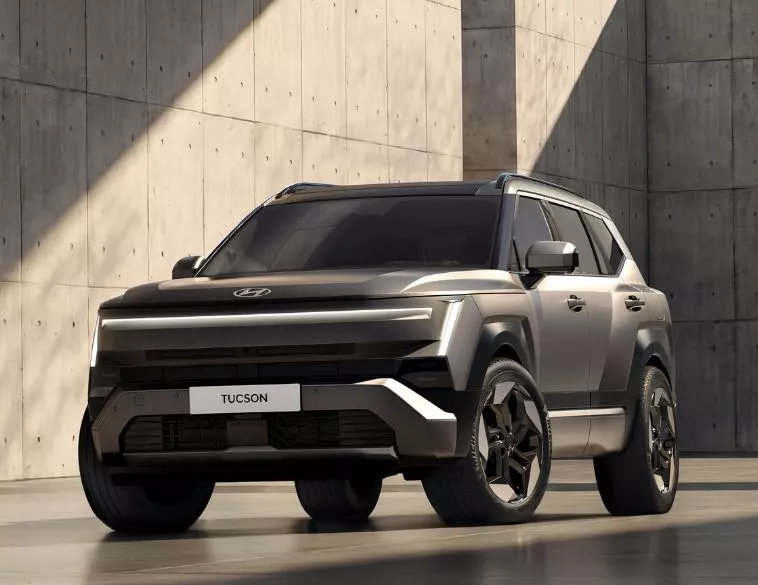
Redesigning its top-selling global nameplate, Hyundai debuts the 2027 Tucson with expanded dimensions, advanced off-road capability, and next-generation AI cabin technology.
Hyundai Motor Company has officially unveiled the all-new 2027 Tucson in New York. Built on the "Art of Steel" design philosophy, the redesigned compact SUV is longer (+60 mm to 4,700 mm) and wider (+40 mm to 1,905 mm), expanding interior cabin dimensions to deliver 1,064 mm of rear legroom for commercial and retail buyers.
Inside, the vehicle introduces the AAOS-based Pleos Connect infotainment platform featuring up to a 17-inch display and integrated Gleo AI conversational technology. Off-road functionality expands via Hyundai's first Smart Terrain Assist (STA) system and Memory Reversing Assist, showcased on the new rugged XRT PRO grade, which features a 210 mm ground clearance and all-terrain rubber.
Powertrain offerings encompass a 1.6L turbo gas engine, an advanced hybrid targeting up to 42 mpg with a 3,000-lb towing capacity, and a 292-hp plug-in hybrid variant offering an estimated 81 km of all-electric range. The 2027 Tucson is scheduled to arrive at North American dealerships in 2027.