
Nissan Unveils Advanced Driverless Technology
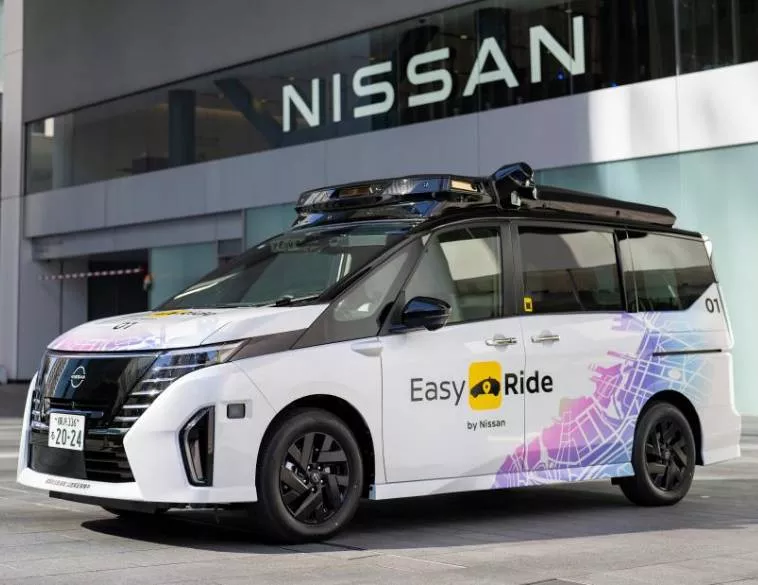

Nissan Motor Co., Ltd. showcased its latest autonomous-drive (AD) technology in Yokohama's Minato Mirai area. For the first time in Japan, a test vehicle with no driver in the car has navigated a public road in a complex urban environment. Nissan has developed this proprietary technology for a mobility service it plans to launch in Japan.
This is a significant step to empower mobility by resolving transportation service challenges faced by local communities, such as driver shortages resulting from an aging population. By leveraging its technology, Nissan will provide a broad range of new services that enable freedom of mobility.
Tailored to different traffic conditions worldwide
Nissan is maximizing its efforts to establish and verify the safety of AD technology tailored to different traffic conditions worldwide. To do this, it is utilizing insights and technologies gained through research in Japan, research in Silicon Valley conducted by the Nissan Advanced Technology Center, and participation in the U.K.'s evolvAD project.
The latest test vehicles are based on the Serena—Japan's top-selling minivan—and incorporate 14 cameras, nine radars and six LiDAR sensors. The roof-mounted sensors offer significantly expanded detection by taking advantage of the height of the Serena and enabling more accurate detection of its surroundings compared to earlier test vehicles. In addition, the use of AI has significantly enhanced recognition, behavioural prediction and judgment as well as control, delivering smooth operation in a variety of complex scenarios.
Ensuring the utmost safety
To ensure the utmost safety for the test vehicle demonstration, Nissan engineers verified an extensive number of possible scenarios along the driving route, added an immediate stop function for emergencies, and introduced intentional redundancies.
Since fiscal year 2017, Nissan has been demonstrating and testing AD technology. Currently, Nissan is planning service demonstration tests involving approximately 20 vehicles to take place in Yokohama in fiscal years 2025 to 2026 and is building an operational framework and service ecosystem with stakeholders. Leveraging the test results, in fiscal year 2027, Nissan aims to provide autonomous driving mobility services, in collaboration with municipalities and transportation operators, with remote monitoring.
This initiative will be promoted in close cooperation with Japan's Ministry of Economy, Trade and Industry; the Ministry of Land, Infrastructure, Transport and Tourism; other government ministries, and Yokohama City. The ministries will also promote initiatives to create new autonomous mobility services through their Level 4 Mobility Acceleration Committee.
Nissan will continue to advance its technology while establishing services in Yokohama based on development and verification results both in Japan and abroad.