
Betting Big On Electric
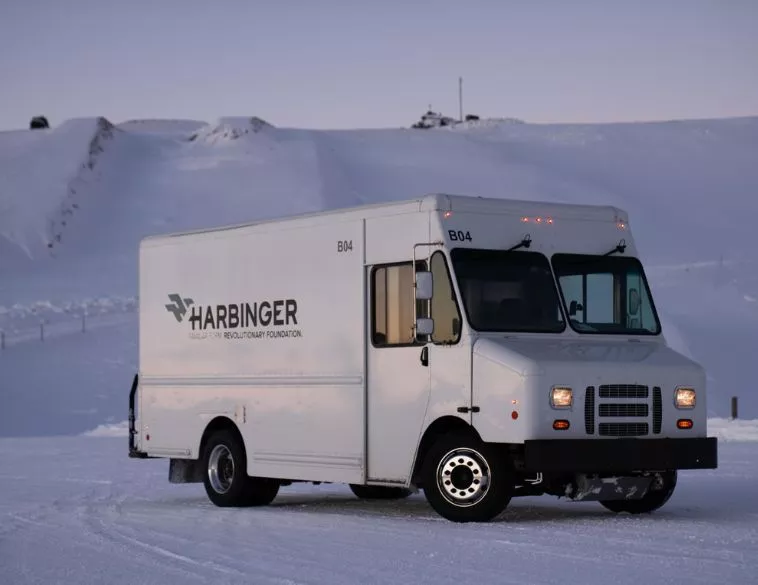
Harbinger’s electric delivery van is especially well-equipped to deal with Canadian winters. (Credit : Harbinger)
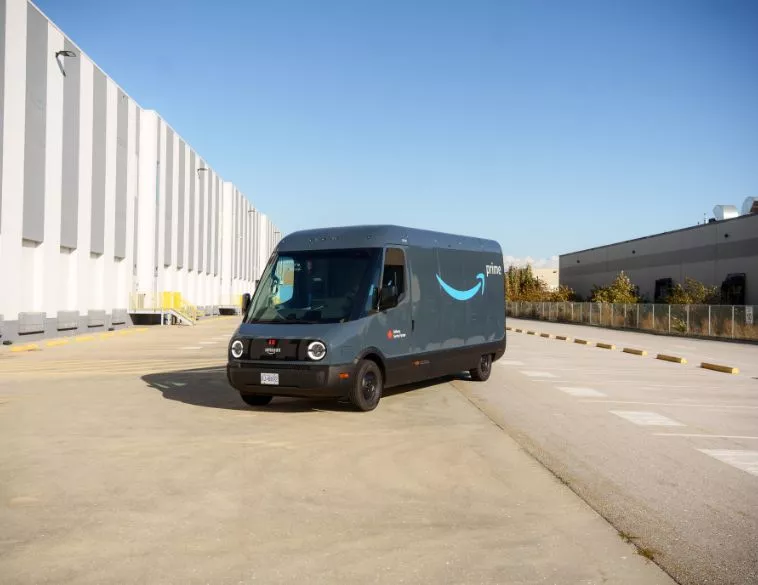

Amazon has placed an order for 100,000 Rivian trucks. (Credit : Rivian)

Shipping giants, Amazon and FedEx are investing heavily in electric delivery vans.
Earlier this year, General Motors announced that they’re discontinuing production of the Chevrolet BrightDrop electric delivery van. As a fleet manager, this may have left you wondering if electric delivery vans are a dying breed, or if they have a future that’s worth investing in.
Two newcomers to the Canadian market are betting that electric delivery vans definitely have a future in our country: Rivian and Harbinger. In October of this year, Rivian announced that their first electric delivery vans arrived in Canada as Amazon put 50 of their vehicles in service on Vancouver streets.
“The vans that Amazon ordered were built with safety, sustainability and comfort in mind,” says Erica Tsypin, Director of B2B Sales and Partnerships at Rivian. “These vans come with a number of really wonderful software features that are very intuitive and easy to use, when you consider how extremely advanced this piece of technology is.”
Rivian’s vans offer 360-degree visibility and proximity awareness (sensors that detect obstacles in all directions), which makes these rather large vans easy to operate.
“It doesn’t feel as big once you’re behind the wheel,” Tsypin adds, “because you have all this technology that brings awareness to your surroundings. So if the driver gets a too close to a bush, another vehicle or anything else, they’ll know it, and they’ll be able to avoid hitting it.”
Tsypin says that Amazon has placed an order for 100,000 Rivian trucks (globally), to be delivered by 2030, which is why Rivian has been able to accommodate Amazon’s request for, “a very bespoke software that fully integrates Amazon’s delivery workflows within the vehicle, and gives drivers seamless access to routing, navigation, driver support, package organization, and other information.”
Two great choices
Rivian offers their electric commercial van in two versions—Delivery 500 and Delivery 700—and Tsypin says that Amazon has ordered both for their fleet.
The Delivery 500 has 487 cubic feet of cargo space, while the Delivery 700 has 652. The former has a payload capacity of 2,663 lbs (1,208 kg) while the latter can haul as much as 2,258 lbs (1,024 kg).
The electric powertrain is the same for both models: single-motor, front-wheel drive, 320 hp and 299 lb.-ft. of torque. The range for both models is roughly 260 km, and both come with a CCS Type 1 charging connector, able to accept as much as 100 kW or power when connected to a DC fast charger (also capable of AC charging at 11 kW).
Purchasing and servicing Rivian trucks
Rivan has service centres in Vancouver, Calgary, Toronto and Montreal—a total of four across Canada. “Our service works a bit differently that what you might be used to with traditional OEMs,” Tsypin says. “We sell directly to the end user or to their fleet management company. We have our own service centres with our own Rivian technicians, as well as a third-party service network.”
These third-party providers, including collision repair facilities, have access to Rivian’s service portal, which provides the tools and the training necessary to fix and maintain Rivian trucks. Fleets that prefer to service and repair their vehicles in-house can also take advantage of this portal.
“The service portal gives them access to service manuals, diagnostic tools, online training, and the ability to order parts,” Tsypin says. “We also offer in-person training courses for more heavy-duty or high-voltage repairs.”
Harbinger delivery vans
Electric truck manufacturer Harbinger started selling their medium-duty trucks in Canada through Safetek Specialty Vehicles in October of this year. Harbinger’s electric vehicle chassis can be upfitted to suit a variety of fleet applications, including walk-in vans, box trucks, delivery vans, emergency and disaster response vehicles, and more. In fact, earlier this year, Entegra Coach took the wraps off the world's first range extended electric Class A motorhome, built on Harbinger’s EV chassis.
Harbinger started offering their electric trucks for sale at the start of 2025, but according to company Co-Founder and CEO John Harris they were working with key customers long before that in order to determine what fleets were looking for, and how the product could be improved and refined.
Harris believes that his company is able to fill a need that others simply couldn’t. “Customers looking for medium-duty vehicles, electric or not, have been stuck in the stone ages with what the OEMs are willing to build,” he says.
He argues that the automotive world has changed dramatically over the past 100 years, with many advancements in technology. The same can be said for long-haul trucking, with advancements in safety features, telematics and other technologies.
“But medium-duty is very different,” he explains. “When you look at a leading medium-duty vehicle on the road today in the U.S., chances are it was designed in the 1970s, and that’s atrocious.”
Harris recalls one of his customers telling him that there’s no reason why his medium-duty drivers don’t deserve every opportunity to get home safely at night, the same way his light-duty and long-haul truck drivers do. “But the comfort features, the safety features—they’re decades behind,” Harris adds.
Harbinger is trying to change that, Harris explains, by bringing industry-leading technologies and manufacturing approaches into the medium-duty segment.
Challenging Canadian market
Harris is well aware of the challenges he faces as he introduces electric delivery vans to Canada, including our harsh winter climate. “The Canadian market is a particularly tough place for EVs,” he admits. “People have been very disappointed with EVs because the range they enjoy on a warm sunny day can be cut drastically when they operate their EV in subzero temperatures.”
This is a key concern that Harris and his team set out to address, and during cold-weather testing, Harbinger’s trucks saw a drop in range of only 10-15%.
“We were able to accomplish this because we built a multi-zone heat pump architecture to provide cabin heating,” Harris explains. “So in a typical combustion vehicle, you don't have any real impact on fuel economy when you're running the heater because all that heat is free. The engine produces a lot of heat, and we just take some of that heat and send it into the cabin.”
In EVs, that hasn’t been the approach, he adds. Heating the passenger cabin meant stealing power from the battery that would have otherwise been used to power the vehicle, thereby reducing range.
“In our vehicles, we collect the waste heat from the motor to heat the cabin,” Harris says. “Harbinger makes the only commercial vehicle available that uses that kind of thermal architecture in an EV.”
That said, Harris notes that when temperatures plummet, and extra heat is needed, an auxiliary heater kicks in to augment what the waste heat from the motor can supply.
Maintenance and service
Currently, Harbinger sells and services their vans through Safetek, and they also offer customer training for fleets that prefer to service and repair their vehicles in-house.
The Harbinger van is available in three different wheelbase lengths, four different GVWRs, and three different battery pack options. Customers can order four, five or six battery packs offering a range of roughly 225, 280 and 336 km, respectively.
FedEx investment
Harbinger recently announced that FedEx has not only invested in the company, but has also placed an initial order for 53 Harbinger electric vehicles, which will be delivered ready for upfit by the end of this calendar year.
“These vehicles—a mix of Class 5 and Class 6 models—reflect the shipping giant’s ongoing network transformation and resulting need for larger-capacity pickup and delivery vehicles as it continues to optimize its network and routes,” Harbinger said in a statement.
While not every delivery van can be (or should be) electric, there’s a place for electric delivery vans in the fleet ecosystem. Companies like Amazon and FedEx are investing heavily in these technologies, paving the way for smaller fleets to follow suit, whenever doing so makes business sense.