
Hino and Mitsubishi Fuso medium-duty trucks become ARCHION


A major shift is rocking the global Asian truck market as Toyota and Daimler Truck merge their respective brands, Hino and Mitsubishi Fuso, under a single new banner: ARCHION.
The creation of this new mega-corporation, which employs more than 40,000 people, was announced last fall. On April 1, ARCHION executives rang the opening bell of the Tokyo Stock Exchange. The goal is to create a synergy that will benefit both brands.
The new holding company, ARCHION, owns 100% of the shares of Hino and Mitsubishi Fuso. Daimler Truck and Toyota each plan to retain approximately 25% of ARCHION's capital and remain long-term strategic shareholders.
Karl Deppen, who has been with Daimler Truck for over 35 years and was leading Daimler Truck Asia at the time of the transaction, takes the helm of ARCHION as CEO of the new entity.
“ARCHION brings together two of Asia's strongest commercial vehicle brands – FUSO and Hino – each with deep roots, strong technology, and the trust of customers built over decades. By combining our strong Teams, we will be even better equipped to support our customers and partners in Japan, Asia and the world. As the industry is undergoing severe transformation, we are confident that we can fully leverage our synergies and capabilities to create even better value for our stakeholders.”
“Building the future of commercial vehicles together.”
The vision for ARCHION clearly expresses the objective behind the creation of this new commercial vehicle giant. When questioned by Fleet&Mobility, the ARCHION communications team shared the rationale for the merger and how the new entity will manage both brands while allowing them to maintain a degree of independence.
“By combining the complementary strengths of Fuso and Hino, we believe we can bridge product gaps, offer a more comprehensive lineup in key markets, and provide customers with a wide range of specifications and technologies that neither company could have achieved on its own.”
According to the financial newspaper Nikkei, the merger of Hino and Mitsubishi Fuso under ARCHION will control approximately 14% of the global commercial vehicle and heavy truck market. Operating in over 170 countries, the new banner is a strategic response to the mounting pressure from Chinese manufacturers, who are aggressively carving out larger shares of the global market.
“Furthermore, the standardization of platforms through our integrated platform strategy will allow us to deploy competitive products more efficiently, particularly in markets where one brand’s presence has been limited. Additionally, as market demand for carbon-neutral vehicles increases, both brands will be able to rapidly deliver competitive ZEV (zero-emission vehicle) products.”
North America: a distinct market
As is the case with almost all global manufacturers of medium and heavy-duty commercial vehicles, the North American product offering for the two ARCHION brands differs greatly from the portfolio intended for the rest of the world.
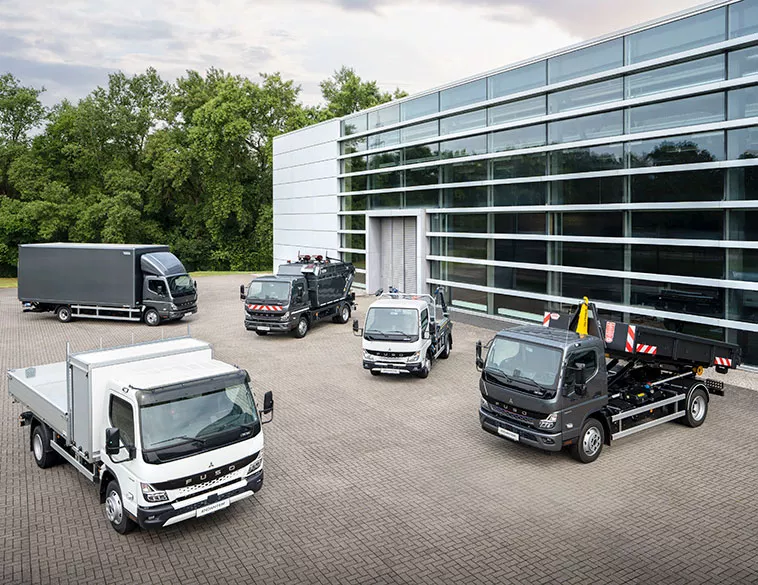
On one hand, under the management of Daimler Truck, Mitsubishi Fuso offered medium-duty cabover trucks in Canada and the United States, but this offering was limited. Having become practically absent from the North American market in recent years, Mitsubishi Fuso recently returned via its sub-brand Rizon, a small medium-duty battery-electric truck distributed through the Daimler Truck dealer network.
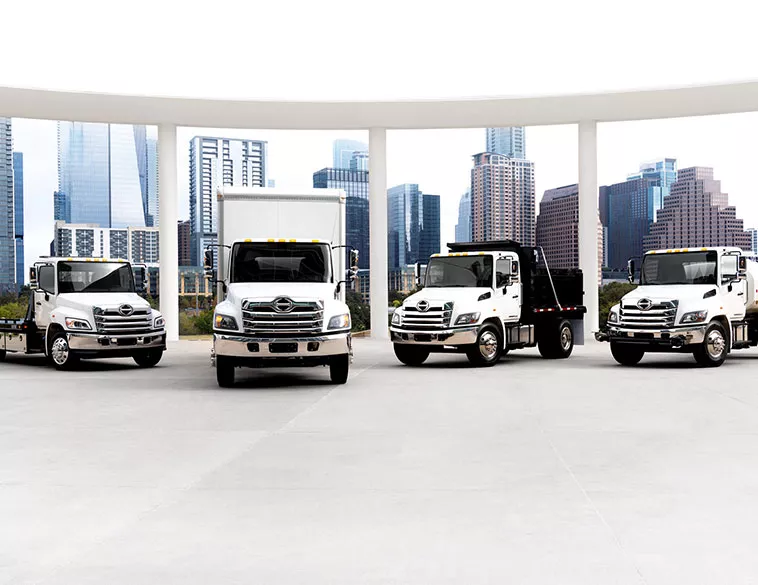
As for Hino, the distribution of cabover trucks in North America was halted in 2022 due to setbacks related to Japanese engine emissions. Since then, Hino has been manufacturing and distributing its L-Series and XL-Series trucks in the United States and Canada, featuring conventional cabs and equipped with Cummins B6.7 diesel engines.
Hino once boasted medium-duty sales figures that placed it among the top manufacturers in North America, particularly in Quebec. However, the loss of its cabover models has since resulted in a substantial decline in market share.
The North American market is less fond of cabover trucks, which explains the absence of this type of truck from European manufacturers here. However, the truck rental market has continued to opt for these products due to their ease of operation for inexperienced drivers. The near-disappearance of Fuso and Hino in recent years allowed another major Japanese player, Isuzu, to dominate this segment in North America.
For the time being, ARCHION has only confirmed the continued sales of the electric Rizon by Mitsubishi Fuso in the Canadian and American markets. Similarly, we are told that Hino will maintain its distribution network of 243 dealers in the U.S. and 52 dealers in Canada, which will continue to offer L-Series and XL-Series trucks equipped with Cummins engines.
For the Canadian market, these Hino trucks are assembled at the Woodstock, Ontario, plant. This leaves Hino as the only major medium and heavy-duty manufacturer, alongside PACCAR and its Ste-Thérèse facility, to maintain a domestic production footprint for Canadian customers.
The creation of ARCHION also raised questions about the survival of the Hino Woodstock plant. In a positive development, when specifically questioned on this subject, ARCHION management indicated that Hino's production operations in Canada will be maintained for the foreseeable future.
With a clear focus on conquering global markets, will ARCHION succeed in revamping North American sales for the Hino and Fuso brands? To be continued!