
When Idling Isn’t Optional
A bucket truck needs power on the job site. It’s non-negotiable

Sometimes the engine has to idle, just to keep the light on the job at hand.

Emerging alternatives can reduce reliance on engines without compromising performance.
Engine idling has long been viewed as an operational inevitability in many fleet environments, but in today’s landscape of rising cost pressures, sustainability mandates, and heightened scrutiny on efficiency, it has become a critical area of opportunity.
For fleet professionals, the question is no longer whether idling should be addressed, but how aggressively and intelligently it can be reduced without compromising productivity. With fuel representing one of the largest variable expenses, and with external geopolitical forces continuing to create volatility in energy markets, every litre burned unnecessarily is a direct hit to both the bottom line and to environmental performance.
Money down the drain
It’s almost hard to believe how much money goes down the drain when idling is either not monitored, or not addressed by fleet oversight. “Engine idling is a significant contributor to fuel usage across all fleet types, averaging between one and two or more hours per operating day,” explains Charlotte Argue, Senior Manager, Sustainable Mobility at Geotab.
Argue says that Geotab has been following fuel costs closely, as well as their impact on fleets of all sizes. “Our analysis, based on 3 million gas and diesel fleet vehicles in the U.S. and Canada (March 2025 to February 2026) shows that trucks spend about a third of their operating time idling, while light-duty cars and vans tend to idle up to a quarter of the time,” she says. “On average, a heavy-duty truck consumes approximately 3.8 litres per hour of idling, compared to around 1.4 litres for cars.”
Bigger trucks, bigger issues
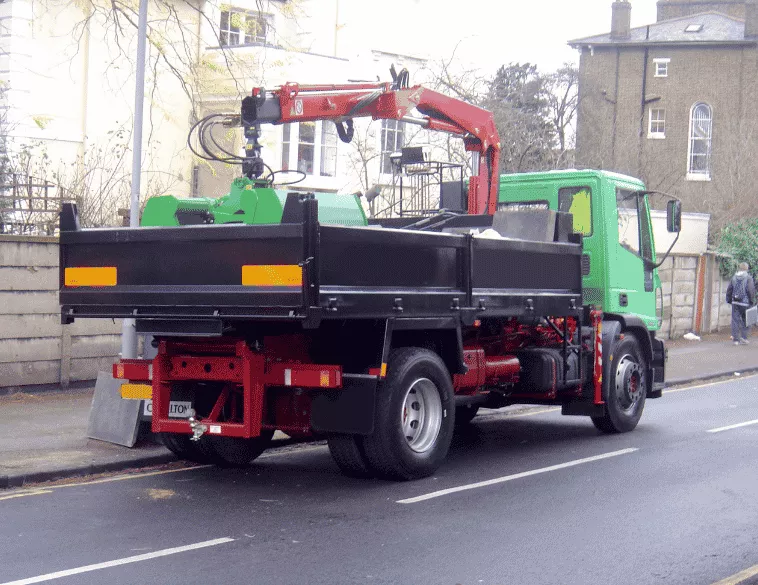
Considering today’s sky-high diesel prices, that 3.8L/hr burn rate can significantly impact fuel costs for trucks fleets. However, sometimes idling isn’t a bad habit that needs to be corrected with driver training. Sometimes, truck fleets need to keep their engines running in order to generate the electricity workers need to power the equipment they use on the job site.
“For many vocational fleet operators, excessive idling can be a significant challenge,” admits Pete Petrizzo, Regional Engineering Manager at Holman. “Depending on the specific job or role within the fleet, a truck may idle for several hours each day, and that quickly adds up in terms of fuel use and excessive wear on the engine.”
Petrizzo acknowledges that a lot of the equipment frontline workers rely on in the field, including air compressors, hydraulics, PTO systems, cranes, bucket lifts, and even job-site lighting typically requires the truck’s engine to be running to power these tools. “In many cases, this isn’t unnecessary idling but rather equipment-driven idling,” he adds.
Practical solutions
The good news is that there are a number of viable options to power equipment without the need for excessive engine idling, Petrizzo says. “That said, fleet operators will need to assess several factors – job function, size of the vehicle, equipment required, etc. – to determine which solution may be the best fit for a particular scenario,” he adds.
A few of the available options (and their pros and cons), according to Petrizzo, include:
- Lithium-Ion Auxiliary Power Systems: These systems are increasingly popular and provide strong, clean power without noise or emissions. They also last a long time and recharge quickly, but they typically cost more upfront.
- Inverter/Charger Setups with AGM or Lithium Batteries: This is a terrific option for lighter electrical loads and is often relatively cost effective. These systems work well in certain situations, but they are not ideal for heavy hydraulic equipment.
- ePTO (electric PTO) Systems: These systems are typically a great fit for bucket trucks or anything with hydraulic equipment. ePTOs eliminate a significant amount of idling on the job site, however, they need to be spec’ed correctly for the given application so there is more planning and engineering involved.
Impact on idling
While implementing one of these solutions will have a significant impact on your fleet’s bottom line, the amount of idling these systems can eliminate or reduce varies by application. In other words, instead of trying to eliminate all idling, Petrizzo says that these solutions can reduce it by whichever amount might be possible or practical, given your fleet’s specific needs.
“In many vocational use cases, these systems can eliminate a significant portion of job-site idling,” he adds. “Since a work truck can burn nearly a gallon of fuel per hour while idling, even cutting back a few hours per day can result in meaningful fuel savings over the course of a year.”
Less idling also means fewer engine hours, which typically leads to longer service intervals and fewer idle-related maintenance issues. “When you combine fuel and maintenance savings, the reduction in operating costs can be significant over the life of the vehicle,” Petrizzo adds.
Working with the right partner
Implementing a solution that will effectively address engine idling as it affects your particular truck fleet is far from a simple “plug and play” process. That’s why Petrizzo recommends consulting with experts that can offer insight and direction, instead of trying to implement a solution on your own,
“The best advice I can offer fleet operators is to do some research and make sure you align with an upfit partner who is well versed in these alternative solutions,” Petrizzo says. “The engineering associated with these various systems can be rather complex for some applications, so you’ll need a strategic partner who can help you determine the best fit for your use case, and design (and buildout) a configuration that meets your specific needs.”
For today’s fleet professionals, tackling engine idling is no longer just about curbing waste. It’s about unlocking measurable operational gains across fuel efficiency, maintenance, and asset longevity.
The reality is that while some idling is unavoidable, a significant portion can be reduced or eliminated through the right combination of technology, spec’ing, and strategic partnerships. Those who take a proactive, data-driven approach will not only see immediate cost savings, but also position their fleets to meet evolving regulatory and sustainability expectations.
In an industry where margins are tight and performance matters, reducing idling is one of the most practical and impactful steps a fleet can take.