
The Future is Electric

North American fleets are charging towards an electrified future.
This year’s EV and Charging Expo in Toronto, organized by Electric Autonomy, gave me renewed confidence that the transition to zero-emission vehicles (ZEVs) is going strong in the fleet market, even if retail sales are levelling off.
The government of Canada, the City of Toronto and New York City all provided plenty of evidence that the growth of electric vehicles in their fleets is impressive. With over one thousand electric and hybrid law enforcement vehicles, New York City shows that a fleet serving different business areas that have nothing in common can get its act together on this effort.
The human factor
The main barrier to ZEV adoption is still a human barrier, which is resistance to accepting electric vehicle technology. Keith Kerman, the chief fleet officer for New York City said this barrier can be removed by having people drive one. His fleet has reduced fossil fuel use by 67% since 2013.
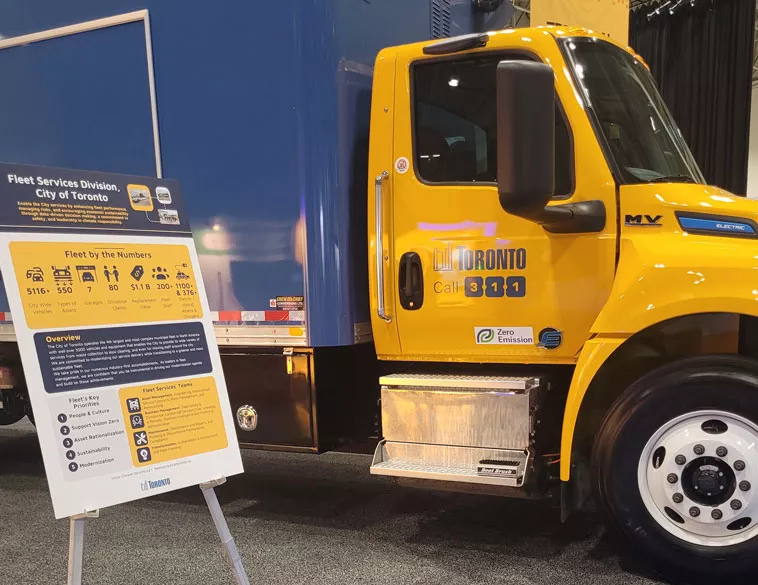
The heavy-duty truck sector is also making progress towards electrification. The City of Toronto displayed a Freightliner straight truck with electric drive.
There was news of megawatt charging stations being built by Hydro Quebec and planned for the Highway 401 corridor between Toronto and Montreal. I find this especially interesting because of my work in putting electric transit buses into service. The idea of electrifying transit buses is a good one, but won’t significantly change greenhouse gas emissions from the overall transportation sector. If electric drive expands from buses to trucks, the impact will be far greater.
It was evident from many speakers that electric vehicles are going farther between charging stops and costing less to buy in comparison to internal combustion engine vehicles. Manufacturers like Volvo are still committed to EVs and PHEVs being a high percentage of sales in the next few years. European demand continues to exert a strong pull for a broad range of electric vehicles.
Recognizing leadership
Electric Autonomy and the Pembina Institute announced a new recognition award for fleets that reduce their fossil fuel use and greenhouse gas emissions. The Canadian Clean Fleet Awards are being established to provide a badge of credibility to successful applicants.
This fills the gap left by the E3 Fleet standard, which was established by the Fraser Basin Council, and ran for nearly 20 years until 2023. The Pembina Institute will audit and score applications, which initially will be available only to commercial fleets. I spoke to the contacts at Electric Autonomy and Pembina at the show, and asked that municipal and other public sector fleets become eligible as soon as possible. Recognition is a strong motivation for these fleets as I learned from my experience as a municipal fleet manager and an E3 Fleet auditor.
Incentivizing change
The EV and Charging Expo indicated a bright future for electric transportation. Oil prices remain volatile, and dependable supply chains are uncertain, while electricity prices are regulated, and the supply is not reliant on fossil fuel in much of Canada.
Canadian buyers are eligible for a federal payment up to $5,000 on EVs with a purchase price below $50,000. Canada has announced that imports of Chinese automobiles will begin, which may include some of the leading EV brands. EV sales remain strong everywhere in the world, except Canada and the U.S. Not convinced? All you have to do is drive one!